


First solar eclipse of 2026: Debunking myths on radiation, eyes, pregnancy
From warnings for expectant mothers to fears of harmful rays, here is what science actually says about eclipse-related health risks
 "solar eclipse myths")
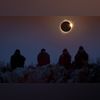
A solar eclipse in progress as viewers use proper eye protection to watch the rare celestial event. (Photo: Adobestock)
Listen to This Article
Eclipses have always fascinated humanity and they continue to inspire awe and curiosity across cultures. Along with that sense of wonder comes a swirl of misinformation and old wives’ tales, particularly about health and wellbeing.
Across the world, health claims linked to eclipses range from harmless folklore to deeply misleading warnings. Some arise from ancient traditions, while others endure simply because they are repeated often enough to seem true rather than because they are backed by evidence. As people prepare to witness the solar eclipse tomorrow, it becomes essential to separate fact from fiction.
Myth 1: Does a solar eclipse produce harmful rays that cause blindness?
Fact: A solar eclipse does not emit new or more dangerous rays than the sun normally does. However, looking directly at the sun, even during an eclipse, can cause serious eye damage because the eye’s retina cannot withstand concentrated sunlight without protection. The safest way to observe the eclipse is by using a pinhole projector, which allows the image to be safely projected onto a screen or surface.
Myth 2: Should pregnant women avoid watching the eclipse?
Fact: There is no scientific evidence that solar eclipses pose any risk to an unborn child or to pregnant women themselves. The belief likely comes from cultural traditions, but electromagnetic radiation during an eclipse is no more dangerous than at any other time. The only real concern for everyone is eye safety.
Myth 3: Can eclipse exposure cause miscarriage or birth defects?
Fact: Time of birth or exposure during an eclipse has no causal link to birth defects or miscarriages. Genetic factors, maternal health, and environmental exposures play roles in fetal development, but eclipses have no physiological effect on pregnancy outcomes.
Also Read

 "Amitabh Kant")
 "AI Summit, India AI Impact Summit 2026")
 "India AI Impact Summit 2026, Bharat Mandapam")
 "Tarique Rahman")
 "Delhi Winter, New Delhi Winter, Winter, Cold, Smog, Delhi Pollution, Delhi Air Quality, Pollution")
Myth 4: Does food become poisonous during an eclipse?
Fact: Some traditions advise against eating or cooking food during the eclipse, suggesting it becomes toxic in the shadow. In reality, food safety depends on storage, temperature and hygiene, not solar events. An eclipse does not change the chemical or biological safety of food.
Myth 5: Does staying indoors during an eclipse protect your health?
Fact: While staying inside might be comfortable, there is no health benefit to doing so simply because the sun is being blocked. The only real health issue is eye exposure, in case you catch direct sun without protection.
Myth 6: Is it unsafe to sleep or eat during a solar eclipse?
Fact: Some cultures suggest that everyday chores should not be carried on during an eclipse. This has no basis in medical or scientific evidence. These are cultural beliefs rather than health risks. Eat, rest and live normally during the eclipse.
Myth 7: Does eclipse exposure cause emotional or spiritual harm?
Fact: Eclipses can certainly stir feelings of awe or introspection, and that psychological effect can feel profound, but that is not a health hazard. There is no direct psychological harm caused by eclipses.
Myth 8: Can the temperature drop during an eclipse make you ill?
Fact: Eclipses can bring a temporary dip in local temperature because sunlight is reduced, but this is a brief atmospheric effect and does not cause diseases or illness.
Myth 9: Do eclipses trigger epidemics or bad health events?
Fact: Historical records sometimes link eclipses to disease outbreaks or calamities, but this is often an example of confirmation bias, wherein people remember dramatic coincidences more readily than uneventful periods. Eclipses are astronomical phenomena, not biological triggers for epidemics. For more health updates, follow #HealthwithBS
This report is for informational purposes only and is not a substitute for professional medical advice.
More From This Section
 "sugar and cancer risk")
 "disease, illness")
 "tattoo")
 "Affirmations, mental health")
 "cancer research")
Topics : Solar Eclipse Health with BS BS Web Reports
Don't miss the most important news and views of the day. Get them on our Telegram channel
First Published: Feb 16 2026 | 5:39 PM IST