


Homeopathy linked to fewer side effects than allopathy, ayurveda: Survey
World Homeopathy Day: LocalCircles survey finds only 24 per cent of homeopathy users experienced side effects compared to 51 per cent for allopathy
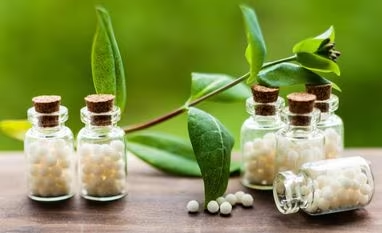 "Homeopathy, Ayush")
World Homeopathy Day is observed on April 10 every year to commemorate Dr Christian Friedrich Samuel Hahnemann, the founder of homeopathy. (Photo: Wikimedia Commons)
Listen to This Article
Only 24 per cent of people who used homeopathy reported experiencing side effects—the lowest among major medical systems—according to a recent pan-India survey conducted by LocalCircles, a community-based social media platform.
Conducted ahead of World Homeopathy Day, the survey revealed that 51 per cent of respondents using allopathic medicines experienced adverse effects, while 37 per cent encountered such issues with ayurvedic treatments.
The survey gathered over 17,000 responses from citizens across 303 districts and found that 49 per cent of users of AYUSH systems—including ayurveda, homeopathy, unani, and siddha—reported having experienced at least one major side effect over the past decade.
Among allopathic medicines, antibiotics were cited as the leading cause of side effects, with 42 per cent of users reporting adverse reactions. Another 32 per cent experienced issues with non-antibiotic medicines, while 10 per cent cited problems with oral syrups.
“In the last 10 years, 51 per cent of citizens who used allopathy medicines such as antibiotics, syrups, and others experienced major side effects,” the survey stated.
Also Read

 "medicine, Drugs")
 "fact check, liver")
 "office, employees, workers, service industry")
 "edible oil consumption, fried food, samosa, chole bhature")
 "Siddharth Nandyala")
“By contrast, only 24 per cent of homeopathy users reported side effects—the lowest among all systems examined. In comparison, 37 per cent of those who used ayurvedic medicines experienced adverse effects, followed by 11 per cent among siddha and unani users,” it added.
The findings indicate a growing need for greater caution in the prescription and use of all types of medicines.
According to the survey, experts note that interactions between active ingredients—or between medicines and substances such as alcohol—can result in complications. Even herbal preparations, often assumed to be safe, may cause side effects if not used properly.
The study also cited a 2015 Norwegian report published on ScienceDirect, which found that while 26 per cent of homeopathy patients reported a worsening of symptoms, only one-third of these instances were classified as adverse events, most of which were minor or moderate in severity.
“The risk connected to homeopathic treatment is minor. More studies are needed to confirm the existence of homeopathic aggravation and how to classify the concept in a clinically meaningful way,” the Norwegian study stated.
While the popularity of complementary and alternative medicine (CAM) continues to rise globally, the survey underscores the need for greater public awareness, medical supervision, and further research to ensure safe usage. “The study brings to fore the need for India to undertake more research on whether the side effects are due to mixing of drugs or other causes,” the report noted.
About World Homeopathy Day
World Homeopathy Day is observed on April 10 every year to commemorate Dr Christian Friedrich Samuel Hahnemann, the founder of homeopathy. The day also promotes reflection on current practices and strategies to advance the field.
The initiative to observe this day was first proposed in India in 1997 by Dr R K Manchanda, a renowned homeopathic physician. This led to the establishment of the World Homeopathic Day Organising Committee (WHDOC) in 2002, which has since coordinated global celebrations.
In India, the day is celebrated under the aegis of the Ministry of AYUSH, Government of India. According to Vikaspedia, the government’s digital information platform, there are 345,404 registered homoeopathic practitioners in the country.
The term ‘homeopathy’ originates from the Greek words homeo (similar) and pathos (suffering or disease). This alternative system of medicine operates on the principle that “like cures like”, meaning a substance that causes symptoms in a healthy person can help treat similar symptoms in a sick person. For instance, since red onions cause watery eyes, they are used in homeopathic remedies for allergies. For more health updates and wellness insights, follow #HealthWithBS
More From This Section
 "Diabetes")
 "Hospital beds")
 "Devi Shetty, Chairman, Narayana Health")
 "heat waves, heat wave, summer, hot, heat")
 "Hantavirus Virus")
Don't miss the most important news and views of the day. Get them on our Telegram channel
First Published: Apr 09 2025 | 6:00 PM IST