


Narayana launches 'Aarogyam' to offer quick health checks for youth
The wellness initiative offers a streamlined 90-minute health check-up powered by advanced diagnostic tools
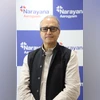 "Devi Shetty, Chairman, Narayana Health")
Devi Shetty, Chairman, Narayana Health


Listen to This Article
Narayana Health has launched a preventive screening programme named “Aarogyam” at Bengaluru’s information technology (IT) corridor to enable professionals to get quick health checkups.
Speaking at the launch, Devi Shetty, chairman of Narayana Health, acknowledged the hustle behind young and busy professionals going to a hospital for preventive screening. “If you ask any corporate entity, despite all the health benefits they provide, not many employees go for checkups. The number is usually below 30 per cent,” Shetty said.
“The hospital experience is frequently unpleasant, including at my hospital chain. What we are developing here is something no hospital currently offers. Most importantly, it doesn’t take the whole day. It’s a pilot for now, and over the next year, we’ll learn whether people are willing to come in for regular checkups,” he added.
The wellness initiative offers a streamlined 90-minute health checkup powered by advanced diagnostic tools, along with four customisable wellness packages: vital, prima, enhanced, and comprehensive.
“Aarogyam redefines preventive care by merging clinical excellence with accessibility. Healthy individuals with fast-paced lifestyles need to prioritise preventive health screenings. Our goal is to shift healthcare from reactive treatment to proactive wellness, ensuring that early intervention becomes a lifestyle norm,” Shetty said further.
Also Read

 "Narayana Hrudayalaya to acquire Bengaluru-based orthopedic, trauma hospital")
 "MI vs RCB")
 "RBI, Reserve Bank of India")
 "Ameera Shah, promoter and executive chairperson, Metropolis Healthcare")
 "Retailers")
An “Aarogyam” centre is equipped with advanced diagnostic technology, including an artificial intelligence-enabled cardiac computed tomography scanners for detailed heart assessments.
It also features Dexa scans for bone density analysis to help detect osteoporosis risk and advanced 3D mammography for high-resolution breast cancer screening.
Talking about the health challenges faced by young professionals, Shetty said, “The biggest issue today is the alarming rise in sudden cardiac events. There is much blame placed on lifestyle, lack of exercise, and even Covid-19. Frankly, that is all noise. The reality is that most of these deaths could have been prevented if they had undergone the kind of advanced screening, even 10 years ago. The underlying heart condition would have been identified.”
More From This Section

 "heat waves, heat wave, summer, hot, heat")
 "Hantavirus Virus")
 "World Health Day")
 "Modi, Narendra Modi")
Don't miss the most important news and views of the day. Get them on our Telegram channel
First Published: Apr 07 2025 | 8:30 PM IST