


Ajit Pawar dies at 66: How he shaped Maharashtra politics over the decades
Pawar's vision for development shaped Maharashtra's political and social landscape over the past three decades
 "Ajit Pawar, Ajit")
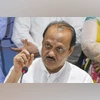
Maharashtra Deputy Chief Minister Ajit Pawar was killed after an aircraft carrying him crashed at Baramati in Pune district on Wednesday, Jan. 28, 2026. (Photo:PTI)
Listen to This Article
Maharashtra Deputy Chief Minister Ajit Pawar died in a plane crash on Wednesday at the age of 66. Pawar, affectionately known as “Dada” by the people of Maharashtra, had a significant influence on various sections of society.
He commanded strong support among farmers, cooperative leaders, and party workers, especially in western Maharashtra. Pawar was known for his disciplined routine, long working hours, and direct style of politics.
Pawar’s vision for development shaped Maharashtra’s political and social landscape over the past three decades. A prominent figure on the state’s political horizon, Pawar was known to dedicate 16–17 hours every day to serving the people of Maharashtra and addressing their problems through regular Janata Darbars even when not in power.
Here’s a look at Pawar’s political journey over the years.
Early life and entry into politics
Born on July 22, 1959, in Ahmednagar district of Maharashtra, Pawar comes from a strong political background and is the nephew of veteran leader Sharad Pawar and cousin of Supriya Sule.
Also Read

 "Indore, Indore Water Crisis, Water Crisis, contaminated water, Water")
 "Khaby Lame")
 "Ajit Pawar, Ajit")
 "artificial intelligence, AI applications, Indian startups, Silicon Valley, Gnani.ai")
 "eye health, ageing")
Before entering electoral politics, Pawar built his influence through cooperative institutions. He worked closely with milk unions, sugar factories, cooperative societies, and banks, which helped him gain support among farmers and rural communities.
In 1991, his career shifted towards active politics. Since then, he has held several key positions, including Member of Parliament (MP), Member of the Legislative Assembly (MLA), Minister of State for various important government departments, and Deputy Chief Minister of Maharashtra.
Political journey and key ministerial roles
First elected as MLA in 1991, Pawar quickly rose through the ranks and became one of the most powerful leaders in state politics. Over the years, he handled several key departments, especially those linked to water, finance, energy, and rural development.
Minister of State for Agriculture and Power (June 1991 – November 1992): Pawar began his ministerial career as Minister of State, taking charge of the agriculture and power sectors. This role marked his entry into the Maharashtra Cabinet.
Minister of State for Water Supply, Power and Planning (November 1992 – February 1993): He handled important areas like water supply, power, and state planning.
Minister of Irrigation (Krishna Valley and Konkan), and Horticulture (October 1999 – July 2004): In 1999, Pawar was given charge of major irrigation projects in the Krishna Valley and Konkan regions. He also looked after the horticulture department during this period.
Minister of Rural Development, Water Supply and Sanitation, and Irrigation (July 2004 – November 2004): His role later expanded to rural development, where he worked on water supply, sanitation, and continued oversight of irrigation projects.
Minister of Water Resources and Sanitation (November 2004 – November 2009): This phase became a key part of his career. Ajit Pawar led several initiatives to improve water management and sanitation across the state.
Minister of Water Resources and Energy (November 2009 – November 2010): He then took charge of both water resources and the energy sector, strengthening his influence in core infrastructure areas.
Pawar as Deputy Chief Minister of Maharashtra
Pawar was first appointed Deputy Chief Minister of Maharashtra in 2010. He went on to hold the post multiple times under different political combinations.
Deputy Chief Minister (November 2010 – September 2012): In this role, he handled some of the most important departments, including finance, planning, and energy, placing him at the centre of decision-making.
Deputy Chief Minister (December 2012 – September 2014): He continued in the same position during the next term, maintaining his focus on managing the state’s finances, development planning, and power sector.
In 2019, Pawar made headlines after briefly aligning with the BJP during government formation, though he later returned to his party. In 2023, he led a split within the Nationalist Congress Party (NCP) and joined the Maharashtra government again as Deputy Chief Minister, marking one of the most significant moments in his political life.
More From This Section
 "aircraft, wings india, wings india 2026, air india")
 "UGC, UGC guidelines, protest, students protest, equity regulations")
 "ai, artificial intelligence")
 "beating retreat, full dress rehearsal, new delhi")
 "Fire")
Don't miss the most important news and views of the day. Get them on our Telegram channel
First Published: Jan 28 2026 | 10:57 AM IST