


Meet Gyanesh Kumar, India's Chief Election Commissioner and his tasks ahead
Gyanesh Kumar is a retired Indian Administrative Service officer from the 1988 batch of the Kerala cadre
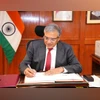 "Chief Election Commissioner Gyanesh Kumar")
Chief Election Commissioner Gyanesh Kumar | Photo: ECI
Listen to This Article
Election Commissioner Gyanesh Kumar has been appointed as India’s next Chief Election Commissioner (CEC). His term will run until January 26, 2029, and he will oversee major elections, including the 2029 Lok Sabha polls. He is the first CEC appointed under the new law governing the Election Commission’s selection process.
Who is Gyanesh Kumar?
Gyanesh Kumar is a retired Indian Administrative Service (IAS) officer from the 1988 batch of the Kerala cadre. Earlier, he held key roles in both state and central governments. He also played an important role in implementing decisions related to the abrogation of Article 370 in Jammu and Kashmir. At that time he was serving in the Union Home Ministry.
Kumar completed his BTech in Civil Engineering from IIT Kanpur, after that he studied Business Finance at ICFAI, India. Later he moved to the US to pursue Environmental Economics at Harvard University before joining the Indian Administrative Services.
During his tenure, Kumar will be responsible for conducting several critical elections:
Also Read

 "Supreme Court, SC")
 "Rahul Gandhi, Rahul, congress leader")
 "Rahul Gandhi, Rahul, congress leader")
 "Gyanesh Kumar")
>2025 Bihar Assembly Election (later this year)
>2026 State Elections in Kerala, Tamil Nadu, West Bengal, and Puducherry
>20 Assembly Elections in total during his tenure
>Presidential and Vice-Presidential Elections in 2027
>General Elections in 2029
How was he appointed?
The decision to appoint Gyanesh Kumar as the Chief Election Commissioner was taken during a meeting of a key three-member selection committee, comprising; Prime Minister Narendra Modi, Home Minister Amit Shah and Leader of the Opposition Rahul Gandhi, who dissented against the selection and process of the selection.
His appointment follows the new law passed in 2023, which changed the process of selecting the CEC. Previously, the President appointed the CEC based on the Prime Minister’s recommendation. Under the new law, a committee led by the Law Minister shortlist candidates, and the final selection is made by the Prime Minister, Leader of the Opposition, and a Cabinet Minister.
According to Rahul Gandhi, the committee is flawed itself as the government has a majority in it with two representatives. The Opposition criticised that with this pattern a fair decision in appointing the CEC is not possible. Earlier, the Supreme Court had given judgment to include the Chief Justice of India into the selection committee to ensure fairness in the selection process of CEC. However, the BJP government overruled the decision through the parliamentary process and replaced the Chief Justice with the minister.
Controversy and SC challenge
Kumar’s appointment comes at a time when the Supreme Court is set to hear a challenge to the new selection law. The opposition Congress party has criticised the law, arguing that it gives the government too much control over the Election Commission, which should remain an independent body. The government, however, maintains that it followed due process and sought legal advice before making the appointment.
Gyanesh Kumar will officially take charge as Chief Election Commissioner on February 19, 2025. Meanwhile, the Supreme Court’s ruling on the challenge to the selection process could have long-term implications for future appointments to the Election Commission.
More From This Section
 "Ranveer Allahbadia")
 "Mamata Banerjee, Mamata")
 "Maha Kumbh Mela, Maha Kumbh, MahaKumbh")
 "suicide, housewives suicide")
Topics : Election Commission of India Rahul Gandhi Amit Shah chief election commissioner BS Web Reports
Don't miss the most important news and views of the day. Get them on our Telegram channel
First Published: Feb 18 2025 | 11:35 AM IST