


SC set to hear pleas on CEC, EC appointments under 2023 law on Feb 19
The government appointed Gyanesh Kumar as CEC on Monday, making him the first under the new law, with his term lasting until Jan 26, 2029, ahead of the Lok Sabha poll schedule announcement
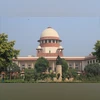 "Supreme Court, SC")
Photo: Shutterstock
Listen to This Article
The Supreme Court on Tuesday said that it will give “priority” to hearing petitions challenging the appointment of the Chief Election Commissioner (CEC) and Election Commissioners (EC) under the 2023 law on February 19.
A bench comprising Justices Surya Kant and N Kotiswar Singh was informed by advocate Prashant Bhushan, representing an NGO, that the government had ignored a 2023 Constitution Bench ruling while appointing the CEC and EC on Monday.
The verdict had mandated that the selection and appointment of the CEC and ECs be carried out by a panel that included the Chief Justice of India (CJI). However, Bhushan argued that the government excluded the CJI, calling it a “mockery of democracy”.
“The matter is listed on February 19 but it is listed as item number 41. The government has appointed the CEC and EC as per 2023 law disregarding the view taken by a constitution Bench. Kindly take up on top of the board as the matter requires urgent consideration,” Bhushan said.
Advocate Varun Thakur, appearing for petitioner Jaya Thakur, noted that three appointments had already been made under the disputed law.
Also Read

 "Chennai High court, Madras High Court, Madras HC")
 "Ranveer Allahbadia")
 "India's real estate sector, significantly buoyed by a robust economy, has emerged as a pivotal player in the country's development. With an 18 per cent share in national employment, real estate is the largest employment generator after agriculture. C")
 "Ranveer Allahbadia")
 "Supreme Court, SC")
The bench assured Bhushan and other parties that it would take up the petitions for hearing on February 19, after addressing some other urgent matters.
On Monday, the government appointed Election Commissioner Gyanesh Kumar as the next CEC. Kumar is the first to assume the role under the new law, with his term set to last until January 26, 2029 — just before the Election Commission is expected to announce the next Lok Sabha elections schedule.
Additionally, Vivek Joshi, a 1989-batch IAS officer from the Haryana cadre, was appointed as an election commissioner. Born on May 21, 1966, Joshi (58) is expected to serve in the poll panel until 2031.
As per the law, a CEC or EC can serve for six years or until they reach the age of 65, whichever comes first.
On February 12, the Supreme Court scheduled the February 19 hearing on petitions against the CEC and EC appointments under the 2023 law, stating that any developments in the interim would have consequences. The court emphasised that the issue would be decided based on its merits.
Bhushan had argued that the 2023 verdict had established an independent panel — comprising the Prime Minister, the Leader of Opposition, and the CJI — for selecting election commissioners.
“They have brought an Act by which they have removed the chief justice and brought in another minister, effectively making the commissioners appointment only at the pleasure of the government. You need to have an independent committee to appoint the election commissioners,” he said.
(With agency inputs)
More From This Section
 "AgustaWestland deal")
 "Rahul Gandhi, Rahul, congress leader")
 "Rahul Gandhi, Rahul, congress leader")
 "Rain, Chennai Rains")
 "Rahul Gandhi, Rahul, congress leader")
Don't miss the most important news and views of the day. Get them on our Telegram channel
First Published: Feb 18 2025 | 2:56 PM IST