


Home / India News / Judges must rise above personal faith in religious matters: SC Bench
Judges must rise above personal faith in religious matters: SC Bench
Top court says adjudication in religious matters must be guided by constitutional principles, not personal beliefs, during Sabarimala-related hearings
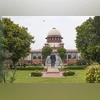 "Supreme Court, SC")
premium
Supreme Court says judges must rise above personal faith, rely on constitutional principles while hearing Sabarimala-related questions on religious freedom. (Photo: PTI)
4 min read Last Updated : Apr 17 2026 | 7:33 PM IST
Listen to This Article
The Supreme Court on Friday observed that adjudication involving religious questions requires judges to transcend personal faith and anchor their reasoning in constitutional principles, particularly freedom of conscience.
The statement came from a nine-judge Constitution Bench led by Chief Justice of India Justice Surya Kant, alongside Justices B V Nagarathna, M M Sundresh, Ahsanuddin Amanullah, Aravind Kumar, Augustine George Masih, Prasanna B Varale, R Mahadevan, and Joymalya Bagchi, during hearings in the reference arising from the Sabarimala temple entry dispute.
“You said the freedom of conscience has a very wide (application). Are you hinting that as judges, as a Constitutional Court, religion and conscience cannot be equated for the reason that religion may be very personal to me but then when I have to judge, I have to rise above that religious consciousness to a level where I balance it with the constitutional provision and then see the larger picture. Per se, everything has been focused that when it is religion, don't touch. Probably as constitutional authority and in the scheme of Constitution, we are called upon to get into the area of conscience also and that probably may not be restricted by term religion,” Justice Ahsanuddin Amanullah remarked.
The Bench is examining a set of questions on the contours of religious freedom, including the interplay between fundamental rights and the “essential religious practices” doctrine.
The reference traces back to the Court’s 2018 ruling, which, by a 4:1 majority, permitted entry of women of all ages into the Sabarimala shrine, setting aside a long-standing restriction on women of menstruating age. That verdict triggered widespread protests and multiple review petitions. In 2019, while considering those petitions, the Court left the core issues open and referred broader constitutional questions, such as the relationship between Articles 25 and 26 on religious freedom and Article 14 on equality, and conflicting precedents, including the Shirur Mutt and Durgah Committee cases, to a larger Bench.
During the hearing, Advocate M R Venkatesh, appearing for Aatmartham Trust, questioned the applicability of the term “denomination” in the Indian context, arguing that its foreign origins limit its utility in interpreting rights of temples.
He pressed for clarity on the constitutional position of non-denominational temples, cautioning that prevailing interpretations risk treating such institutions as public spaces akin to transport hubs.
He also submitted that certain practices, such as women voluntarily refraining from entering temples during menstruation, stem from belief systems rather than scientific reasoning.
“Women, when they undergo a monthly biological process, by their own discipline do not enter temples. This is an unwritten rule. Even in the house they do not enter the place of worship. This is a matter of belief. I cannot give a scientific explanation. When science ends, belief begins, and when belief ends, science begins,” he said.
Senior Advocate Rajeev Dhavan argued that the outcome of the case would have implications across religions, not just Hindu practices. “Your Lordships are not just protecting Hindu practices. The concern is to lay down the law for everybody, every belief and every matter of conscience,” he submitted.
Emphasising the evolving nature of faith, Dhavan said social change cannot be driven by legislation alone and raised concerns about how constitutional principles would apply to practices in tribal communities, including issues such as witch-branding.
He urged the Court to adopt an approach that fosters social harmony.
He also stressed that certain constitutional guarantees, such as the prohibition of untouchability under Article 17 and the equality mandate under Article 14, operate as overriding norms that cannot be diluted by claims of religious autonomy.
Responding to arguments that alternative places of worship are available, Dhavan maintained that the right at issue is not merely one of entry but of meaningful worship at a place of one’s choosing. He also cautioned against a narrow reading of “denomination,” advocating instead for a broader understanding that would extend protection to all religious institutions.
Justice B V Nagarathna observed that such an approach could leave non-denominational temples without protection. Dhavan, however, contended that expanding the scope of the term would, in fact, ensure wider safeguards, including the right to manage religious affairs.
He also criticised the essential religious practices test, suggesting that courts had been compelled to engage with it rather than having devised it independently. While acknowledging the role of belief systems, he argued that even superstitions form part of religious life unless they manifest in harmful external practices.
Senior Advocate V Giri, appearing in the matter, defended the continued relevance of the essential religious practices doctrine. He submitted that temples possess distinct identities shaped by the character of their deities, and that preserving these characteristics forms an integral part of worship.