


Mob burning police station doesn't justify UAPA: SC on Haldwani violence
Supreme Court questioned whether setting a police station on fire during the 2024 Haldwani violence was sufficient to invoke the anti-terror law, and refused to cancel the accused's bail
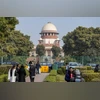 "Supreme Court, SC")
The court also observed that an appellate court should not cancel bail merely because the lower court's order lacks elaborate reasoning (Photo: PTI)
Listen to This Article
The Supreme Court (SC) on Friday refused to interfere with the Uttarakhand High Court's order granting bail to Abdul Malik, one of the main accused in the 2024 Haldwani violence case, while questioning whether the Unlawful Activities (Prevention) Act (UAPA) was rightly invoked.
A Bench led by Chief Justice Surya Kant observed that merely because a mob allegedly burnt down a police station did not automatically justify the application of anti-terror provisions. "How is UAPA attracted just because the mob burnt the police station?" the Bench asked the Uttarakhand government, expressing "serious doubt" over the invocation of the law in the case.
The state government’s lawyer argued that Malik was the main conspirator behind the violence and that the High Court had failed to adequately consider the restrictions on bail under Section 43D(5) of the UAPA. The Bench, however, noted that Malik had remained in custody for over two years and that the trial had made little progress, with only one of the 105 prosecution witnesses examined so far.
The court also observed that an appellate court should not cancel bail merely because the lower court's order lacks elaborate reasoning, especially when personal liberty is at stake. It remarked that if the allegations were as grave as claimed, the prosecution should have made greater progress in the trial. The Supreme Court accordingly declined to interfere with the bail order.
What is UAPA?
The Unlawful Activities (Prevention) Act, 1967, is India's principal anti-terror law. It is used to investigate and prosecute offences involving terrorist acts, terror funding, recruitment, conspiracy and activities that threaten the country's sovereignty, integrity or security.
When does it apply?
The UAPA is generally invoked when investigators allege that an act goes beyond ordinary criminal offences and is intended to threaten India's security or strike terror among people. The law also contains stringent bail provisions under Section 43D(5), making it difficult for an accused to obtain bail if the court finds a prima facie case.
Haldwani violence 2024: A brief
Violence erupted in Haldwani's Banbhoolpura area on February 8, 2024, during a demolition drive against alleged illegal encroachments. According to the police, protesters clashed with security personnel, torched vehicles and set a police station on fire. Six people were killed, hundreds were injured, and several accused, including Abdul Malik, were booked under various laws, including the UAPA.
More From This Section

 "Lok Sabha, LS")
 "Parliament Protest, Protest")
 "Calcutta High Court")
 "Bhiwandi building collapse")
 "Rajya Sabha")
Don't miss the most important news and views of the day. Get them on our Telegram channel
First Published: Jul 31 2026 | 2:21 PM IST