


Obituary: The legendary architect of Jharkhand Shibu Soren dies at 81
Even when his health was failing and he had largely retired from public life, he inspired loyalty and respect
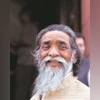 "Shibu Soren")
Shibu Soren served as Jharkhand CM three times and was elected to the Lok Sabha eight times. Photo:PTI
Listen to This Article
“I pray for his long and healthy life,” the Bharatiya Janata Party (BJP) president of the Jharkhand unit, Babulal Marandi, told Business Standard fervently a few weeks ago, learning that Shibu Soren was grievously ill.
“He has given a lot to public life and I pray he can contribute more”.
Marandi can be counted as one of Soren’s bitterest critics and the only one who ever defeated him in a Lok Sabha election. It was not to be. Shibu Soren (81) died on Monday and leaves a legacy of tribal assertion through democratic politics, in a long line of leaders that include Birsa Munda and Jaipal Singh Munda. If there had been no Shibu Soren, Jharkhand would probably never have been born.
Jharkhand has a strong sense of identity. Earlier, the great unifying factor was the “foreigner” (diku), the non-tribal. Initially, Jharkhand tribals resisted efforts by the Mughals and the British to overcome their rich land and luxuriant forests. But when the Hindu traders and Muslim farmers moved in and modern law and administration was established, tribals found themselves becoming marginalised. British authority and its accompanying array of devices facilitated the process of pauperising them. The administration was manned by dikus and the introduction of paper currency was alien to the tribals. Their villages went to — principally Muslim — landlords who wanted access to the forests and the communities that lived there as cheap labour.
Independent India offered little that was better. Missionaries stayed behind and the tribals continued to resist efforts to subvert their own variant of Hinduism and gods, which were modelled on living tribal leaders. This led to the realisation that their lot would not improve until their identity was recognised as unique: For this they needed self-governance and their own province.
Also Read

 "Shibu Soren")
 "Jayant Vishnu Narlikar, Jayant Vishnu")
 "asset management companies, AMC stocks outlook, HDFC AMC Q1 results, Nippon India AMC profits, mutual fund industry AUM, SIP inflows record high, AMC earnings growth, ABSL AMC performance, UTI AMC quarterly results, AMC sector stock rally")
 "(From left) Narinder Singh Kahlon, CFO; Parth Jindal, MD; and Nilesh Narwekar, CEO, JSW Cement Limited during an IPO Press Conference in Mumbai on Monday 04th Aug, 2025 Photo: Kamlesh Pednekar")
 "Donald Trump, Trump")
The Jharkhand Mukti Morcha (JMM) was started in 1973 by a group of Maoist leaders in Dhanbad. The general secretary was a young man just out of his teens — Shibu Soren, a Santhal. Soren was very much left of centre when he started out. He was just 13 when his father was murdered by loan sharks.
Activists recall the rousing speech he made against injustice to tribals: The massive displacement of tribals in the garb of development, and the oppressive economic conditions that forced Jharkhandis to migrate. In that speech “he said that the resources stolen from Jharkhand were used to create brightly lit colonies for outsiders as Jharkhand was pushed further into the darkness of poverty and starvation,” recalls a
journalist who reported on the event.
But Soren drifted away from Left politics as his popularity soared. In 1983, the JMM established itself as a political organisation instead of being a mere morcha (front). In its first programme, it committed itself to establishing an equitable society but later Soren explained that he drifted away from the communists because the Left did not support “indigenous” leadership. In 2000, after a long and bitter battle that he led along with (initial) admirers like Babulal Marandi, Jharkhand was born. Soren had to wait five years to become chief minister — getting the office for just nine days in 2005 and then his minority government fell. He got another chance in 2008 and 2009. But the BJP pulled the plug. In all, he was chief minister of the state he helped to birth for just over 300 days (spread over various terms).
Tribal Jharkhandis who had begun their career in the post-Jharkhand era and did not fully grasp the meaning of agitation were now emerging in politics. Some realised that it was more profitable to side with the diku than to oppose him. One fallout of this collaboration was Madhu Koda and the scandal around mining leases. More, including those involving his son Hemant, would follow.
Soren dedicated himself to national politics, leaving his sons and colleagues to man the Jharkhand front. He served as a Lok Sabha member eight times. He was also a Rajya Sabha member and a Union minister. But as Marandi observed, Soren’s strength lay in regional politics and the JMM continues, till today, to be just that — a regional party. Marandi also says that Soren was more than just a politician: He was a social reformer for the movements he helmed against loan sharks and for total and complete prohibition in Jharkhand.
Even when his health was failing and he had largely retired from public life, he inspired loyalty and respect. His lieutenant Champai Soren, who crossed over to the BJP before the last Assembly election, went to see him to explain his position before he made the move.
His followers elevated him to the status of demi-god. He didn’t protest too much, his communist friends noted. But his persona — simplicity, accessibility and emotional connect with his people — will ensure his legacy lives on.
More From This Section
 "Kalyan Banerjee, Kalyan")
 "Jairam Ramesh, Jairam")
 "Rahul Gandhi, Rahul, Congress leader")
 "Dr G Parameshwara, Karnataka home minister")
 "Parliament, New Parliament, Lok sabha, Rajya sabha")
Topics : Hemant Soren Obituary Jharkhand
Don't miss the most important news and views of the day. Get them on our Telegram channel
First Published: Aug 04 2025 | 10:56 PM IST