


Standing like a wall to protect interests of farmers: PM Narendra Modi
Modi stresses the need to produce fertilisers locally
 "PM Narendra Modi")
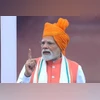
PM Modi also underlined the urgent need to produce fertilisers domestically to empower farmers and protect national food security | Image: Screen Grab
Listen to This Article
Prime Minister Narendra Modi on Friday reiterated his personal commitment to protect the interests of farmers, livestock rearers and fishermen while alluding to the US’ demand for greater access to India’s agriculture and dairy markets, even as he said that there was an “urgent need” to produce fertilisers domestically.
“Modi will stand like a wall against any policy that threatens their interests. India will never compromise when it comes to protecting the interests of our farmers,” he said while addressing the nation from the ramparts of the Red Fort to mark the 79th Independence Day on Friday.
This is the second time in the last 10 days that Prime Minister Modi has explicitly explained India’s stand on trade negotiations, saying that he won’t compromise on the interest of small farmers, dairy and livestock growers.
Also Read

 "PM Narendra Modi")
 "PM Modi, Narendra Modi, Independence Day, Red Fort")
 "Narendra Modi")
 "GST")
The last occasion was the centenary celebrations of agriculture scientist MS Swaminathan in Pusa. It had come just a day after US President Donald Trump announced a 50 per cent import tariff on Indian goods.
His comments were widely welcomed by some farmer groups, with the ministry of agriculture even organising a function to express its gratitude for the stand taken.
Sources said the high tariff and the little progress that the bilateral trade deal has made so far has been mainly due to India’s steadfast reluctance to open up its farm sector to cheap imports from the US.
The US is seeking reduced tariffs on products like corn, soybeans, apples, almonds and ethanol, as well as increased import of its dairy products.
New Delhi is, however, opposing these demands as these will have a direct bearing on farmers.
India has never given any duty concessions to any of its trading partners on this, including Australia and Switzerland, with whom it has signed trade agreements.
Later in the day, agriculture minister Shivraj Singh Chouhan said that farmers in the US have lands which are in excess of 5,000 or 10,000 hectares, while in India land holdings are less than 1 hectare.
In such a situation, it is absolutely irrational to think that Indian farmers will be able to compete with their American counterparts. If any agreement on agriculture would have happened, Indian markets would have been flooded with cheap American goods, killing our growers, he said in an address to farmers.
Meanwhile, the Prime Minister, in his address, also called for the urgent need to produce fertilisers domestically to empower farmers and protect national food security.
Reducing import dependence ensures that the country’s agricultural sector thrives independently, safeguarding farmers’ welfare and strengthening India’s economic sovereignty, he said.
Modi’s appeal comes at a time when India has been importing record quantities of Urea, Di-Ammonia Phosphate (DAP) and some other raw materials to provide critical input to farmers.
The appeal also comes amid a severe shortage of fertilisers across India in the critical kharif sowing season.
The shortage has happened due to low imports of DAP and also erratic supplies of Urea. On Thursday, several state ministers demanded additional Urea supplies in a meeting with Chouhan.
The minister asked states to take strict action against hoarders and black marketers, adding that the Centre was already sending enough supplies.
“The government has reaffirmed its commitment to work in close coordination with industry stakeholders, research institutions, and state governments to bolster domestic capacity, promote sustainable farming practices, and reduce import dependency,” the Fertiliser Ministry said in a statement to Business Standard.
DAP and Urea are two of the most consumed fertilisers in India, accounting for more than 75 per cent of the total consumption, per government data.
Of this, around 18 million tonnes is imported while the rest is domestically produced.
A call for self-sufficiency in fertiliser production could shed some of the dependency on imports which has become highly volatile since the last few years due to geo-political reasons.
More From This Section
 "BJP Congress, political party, congress")
 "PM Modi, Narendra Modi, Independence Day, Red Fort, Indian flag")
 "MK Stalin, Stalin")
 "Devendra Fadnavis, Devendra, Fadnavis")
 "Mallikarjun Kharge, Mallikarjun, Rahul Gandhi, Rahul, congress leader")
Don't miss the most important news and views of the day. Get them on our Telegram channel
First Published: Aug 15 2025 | 12:26 PM IST