


PM Narendra Modi thanks top West Asian leaders for safety of Indians
MHA asks states to keep eye on pro-Iran preachers delivering inflammatory sermons
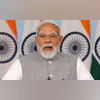 "Modi")
Earlier in the day, the PM spoke to his Israeli counterpart Benjamin Netanyahu
Listen to This Article
Amid reports of several Indian nationals being injured and at least one getting killed in the conflict in West Asia, Prime Minister (PM) Narendra Modi on Monday spoke to the top leaders of Israel, Saudi Arabia, Bahrain, and the United Arab Emirates (UAE).
The PM thanked the leaders for ensuring the welfare of the Indian community in their countries and called for a cessation of hostilities. There are at least 9 million Indian nationals living in the region.
Amid demands by Opposition parties and religious groups that India issue a statement on the killing of Iranian Supreme Leader Ayatollah Ali Khamenei in the joint US-Israel military strike, sources said the government believes the wellbeing of its citizens in the region is paramount at the current juncture. The airspace closure in the region due to the conflict has made all efforts to evacuate Indians by air impossible. Some Indian nationals have explored the land route via Oman and Jordan to exit the region.
Of the 9 million non-resident Indians (NRIs) living in the region, most live in Saudi Arabia (2.46 million), the UAE (3.54 million), Bahrain (323,908), Kuwait (993,284), Oman (684,771), Qatar (835,175), and Jordan (16,897). None of these have issued any statement on Khamenei’s death. Also, most countries of the 57-member Organisation of Islamic Cooperation (OIC) have refrained from doing so. Iran has 10,320, Iraq 17,100, and Israel has 20,000 NRIs.
In his telephonic conversation with the King of Bahrain, Hamad Bin Isa Al Khalifa, and the Crown Prince and Prime Minister of Saudi Arabia, Mohammed Bin Salman, Modi condemned the recent attacks on the two countries in violation of their sovereignty and territorial integrity. The PM said restoring regional peace and stability was of utmost importance, and thanked them for looking after the wellbeing of the Indian community living there in these difficult times.
Also Read

 "India's largest listed hotel company, Indian Hotels Company,")
 "IPOs, global travel industry, Markets News, travel industry, travel")
 "Car sales")
 "stock market, market")
 "Flights")
“India condemns the recent attacks on Saudi Arabia in violation of its sovereignty and territorial integrity,” the PM posted on X about his conversation with the Saudi PM. “We agreed that the earliest restoration of regional peace and stability is of the utmost importance. I thanked him for looking after the wellbeing of the Indian community in these difficult times,” Modi said.
In another post, Modi said he had a productive telephonic conversation with the King of Bahrain, during which he told the latter that India condemned the attacks and thanked him for the steadfast support extended to the Indian community in Bahrain.
Earlier in the day, the PM spoke to his Israeli counterpart Benjamin Netanyahu. Modi said he conveyed India's concerns over recent developments and emphasised the safety of civilians as a priority. “India reiterates the need for an early cessation of hostilities,” Modi said in his social media post.
On Sunday night, the PM spoke to the President of the UAE, Sheikh Mohamed bin Zayed Al Nahyan, and strongly condemned the attacks on the Gulf nation, saying India stands in solidarity with the UAE in these difficult times.
At their delegation-level talks at Hyderabad House in the national capital, Modi and visiting Canadian PM Mark Carney discussed the security situation in West Asia. "The current situation in West Asia is a matter of deep concern for us. India supports the resolution of all disputes through dialogue and diplomacy. We will continue to work with all countries to ensure the safety of all Indian citizens in the region," Modi said in his media statement.
The PM also spoke to the King of Jordan, Abdullah II.
MHA advisory
The Ministry of Home Affairs (MHA) has asked states to keep an eye on pro-Iran radical preachers giving inflammatory statements that may result in violence in the wake of the killing of Iran’s Supreme Leader Ayatollah Ali Khamenei.
In a letter circulated to all states and Union Territories (UTs) on February 28, the MHA also them to keep vigil on social media activities of extremists and global terror group handles.
Calling upon the states and UTs to ensure that no law-and-order issues arise, the ministry asked them to heighten vigilance as global events might have a domestic ripple effect through rhetorical statements.
The circular asked the states to increase security at consulates, embassies, and other diplomatic offices of the US and Israel in their jurisdictions, and at other entities of the two countries, to prevent any untoward incident and maintain peace and tranquillity.
On Sunday evening, the PM chaired a meeting of the Cabinet Committee on Security (CCS), which reviewed the evolving situation in West Asia and expressed concern over the safety and security of the large Indian expatriate community in the region.
The CCS also directed all departments concerned to take necessary and feasible measures to assist Indian nationals affected by the developments. The missions of India’s Ministry of External Affairs (MEA) in West Asia, including in Iran, have set up control rooms to offer humanitarian assistance to Indian nationals, officials said.
More From This Section
 "Arvind Kejriwal, Arvind, Kejriwal")
 "Rekha Gupta, Delhi CM")
 "SC, Supreme Court")
 "smoke, chimney, gas")
 "apparel")
Topics : Narendra Modi West Asia Ayatollah Ali Khamenei
Don't miss the most important news and views of the day. Get them on our Telegram channel
First Published: Mar 02 2026 | 8:10 PM IST