


Put India-US trade deal on hold, renegotiate terms: Congress
Ramesh questioned the silence of PM Modi on the entire deal and said he should clarify on whether he agrees with Trump's statement that nothing changes in the trade deal with India
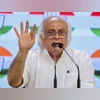 "Jairam Ramesh, Jairam")
Congress leader Jairam Ramesh. (File Photo: PTI)
Listen to This Article
The Congress on Saturday demanded that the government put the interim trade agreement on hold and renegotiate the terms of the deal after the US Supreme Court invalidated the reciprocal tariffs imposed by President Donald Trump.
Congress general secretary Jairam Ramesh said the government must also ensure that the interests of Indian farmers are fully protected during the renegotiations and asked the government to categorically state that it will not allow any import liberalisation to the American side.
Speaking with reporters here, Ramesh questioned the silence of Prime Minister Narendra Modi on the entire deal and said he should clarify on whether he agrees with Trump's statement that nothing changes in the trade deal with India.
"Does Modi agree with Trump that the trade agreement with India still holds," the Congress leader asked, while pointing out there was no response from the government so far.
Claiming that the India-US interim agreement will adversely affect the Indian farmers and put their livelihood in jeopardy, he said the government should put this deal on hold till clarifications are made and called for renegotiating the deal afresh.
Also Read

 "Arvind Kejriwal, Arvind, Kejriwal")
 "Securities and Exchange Board of India, Sebi")
 "Indian Embassy in Azerbaijan has launched 'Baku Evenings'")
 "Donald Trump, Trump")
 "BAFTA")
"The US Supreme Court decision is very significant and our government must keep this trade agreement on hold.
"We demand that the PM should categorically state that India's policy after the US Supreme Court decision will be reviewed and we will not carry out import liberalisation till clarifications come," Ramesh said, adding that this is to protect and safeguard the livelihood of lakhs of farmers in the country.
He referred to the special concessions provided to the US agricultural products that threaten the livelihood of our farmers. He said the trade agreement mentions that the tariffs will be reduced or completely eliminated on farm products including cotton, soybean and fruits.
The Congress leader also questioned the tearing hurry shown by Modi in getting the trade deal announced by Trump on February 2.
He attributed this to "Modi's panic" and to divert attention from Rahul Gandhi's speech in Parliament the same day quoting the sensational revelations made by former Army Chief Gen MM Naravane that Prime Minister had abdicated his responsibility while telling him 'jo uchit samjho who Karo' (do whatever you think is right), on Chinese aggression at the border.
The first question arises is why did the prime minister was in a hurry to announce this, he said.
The US Supreme Court on Saturday struck down Trump's global tariffs, saying it is against the American Constitution, Ramesh said.
"Our second question is that when the PM, the commerce minister (Piyush Goyal), knew from December that any time (now) the Supreme Court verdict could come, many believed that it could be struck down. Why did you hurriedly strike a deal when you knew the verdict could go against Trump," he asked.
The 10 per cent tariff would be imposed on imports and as per law this will be for 150 days, he said.
He observed that there was nothing to celebrate about the ten percent tariff from the 18 percent as these had actually gone from 3.5 percent to ten percent.
Referring to Trump's statement after the Supreme Court decision that the Indo-US Trade Agreement still holds, Ramesh asserted that Modi must say in clear and unambiguous terms that the 'Framework of Interim Agreement' cannot be implemented under current circumstances in view of the US Supreme Court's decision.
After the US Supreme Court struck down Trump's global tariffs, Gandhi accused Modi of being "compromised", saying his "betrayal" in the India-US interim trade deal stood exposed.
Congress general secretary Randeep Surjewala said after the US Supreme Court quashed presidential powers to impose tariffs under the IEEPA (International Emergency Economic Powers Act, 1977), Trump has announced the imposition of 10 per cent additional tariffs under Section 122 of the Trade Act, 1974.
"The simple questions are - are these tariffs sustainable viz-a-viz India? Can these tariff provisions be justifiably applied to India? "Will these new tariffs still hold the US-India Trade Deal (Framework Agreement), which is being widely opposed by farmers, small and medium businesses, energy and data experts, and economists alike," he posted on X.
"Will the Modi government now show the courage to walk out of a one-sided US-India Trade Deal," Surjewala asked.
He also asked if the Modi government will now declare in "national interest" that it will buy cheaper Russian and Iranian crude oil with a view to ensure "energy security" of the country.
"Will the Modi government declare that it will no longer withdraw 'non-tariff barriers', i.e., withdraw the meagre subsidy on agriculture or permit import of genetically modified crops into India, thereby protecting our seed integrity, purity, and biodiversity? Will the Modi Government now declare that it is no longer under an obligation to import USD 500 billion worth of American goods (Rs 45 lakh crore) over the next 5 years on zero tariff," he asked.
In a major setback to what was Trump's pivotal economic agenda in his second term, the US Supreme Court, in a 6-3 verdict, ruled that tariffs imposed by Trump on nations around the world were illegal and that the president had exceeded his authority.
Shortly after the court verdict, Trump asserted that there is "no change" in the trade deal with India.
(Only the headline and picture of this report may have been reworked by the Business Standard staff; the rest of the content is auto-generated from a syndicated feed.)
More From This Section
 "Election commission, voting, SIR")
 "road safety")
 "Rahul Gandhi, Rahul, Congress leader")
 "ECI, election commission of india, election commission")
 "Shivraj Singh Chouhan, Shivraj Singh, Shivraj")
Don't miss the most important news and views of the day. Get them on our Telegram channel
First Published: Feb 21 2026 | 8:29 PM IST