


SC nixes Justice Varma's plea, says conduct does not inspire confidence
Bench says in-house panel followed due process and affirms CJI's right to recommend action to Parliament; Varma can seek future remedies if needed
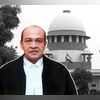 "Justice Yashwant Varma, Supreme Court, Cash discovery row")
The Court has, however, left open the option for Justice Varma to approach it for appropriate remedies if required.


Listen to This Article
The Supreme Court on Thursday rejected Justice Yashwant Varma's petition challenging the validity of an in-house inquiry committee that had found him guilty of misconduct after the recovery of unaccounted cash from his official residence in Delhi in March this year.
A Bench of Justice Dipankar Datta and Justice A G Masih held that the in-house committee had scrupulously followed the process, except for uploading photographs and video.
The Bench also clarified that a writ petition challenging the conduct of a sitting judge under the in-house mechanism was not maintainable. It stated that the in-house procedure enjoys legal sanctity and is not a parallel mechanism outside the constitutional framework.
"We have held that the CJI and the in-house committee had scrupulously followed the process, except uploading photos and video, and we have said it was not required. But nothing turned on it because you did not challenge it then. We have held that the CJI sending the letter to the Prime Minister and President was not unconstitutional. We have made certain observations where we have kept it open for you to raise proceedings if needed in the future. With this, we have dismissed the writ petition," the Court said.
In the previous hearing, the Court had asked why Justice Varma — a former Delhi High Court judge — was questioning the panel and its formation after participating in its proceedings throughout. Justice Varma, now serving at his parent court, the Allahabad High Court, was transferred from Delhi after the alleged recovery of unaccounted cash from his official residence.
Also Read

 "Supreme Court, SC")
 "Supreme Court, SC")
 "Enforcement Directorate, ED")
 "Justice Yashwant Varma, Supreme Court, Cash discovery row")
The Court has, however, left open the option for Justice Varma to approach it for appropriate remedies if required.
Justice Varma had also challenged the May 8 recommendation by then Chief Justice of India (CJI) Sanjiv Khanna, urging Parliament to initiate impeachment proceedings against him. His plea alleged that the panel’s findings were based on a “preconceived narrative” and that the adverse conclusions were drawn without affording him a full and fair hearing.
“Whether to proceed or not to proceed is a political decision. But the judiciary has to send a message to society that the process has been followed,” the Bench observed. It also clarified that the post of the Chief Justice of India is not merely ceremonial.
“He (the CJI) has certain duties to the nation as the leader of the judiciary. If materials come before him (regarding misconduct), the CJI has the duty to forward them to the President and the Prime Minister. If on the basis of the material it is found that the misdemeanour is so serious as to warrant action, he would be affirming earlier decisions of this Court which state that the CJI has the authority to do so,” Justice Datta said.
The “in-house procedure” was the law laid down by the Supreme Court under Article 141 of the Constitution, Justice Datta said. However, the Bench agreed with Varma’s contention that the videos showing the burning of cash should not have been leaked during the proceedings.
The in-house inquiry committee examined 55 witnesses and visited the site of the accidental fire, which broke out around 11:35 PM on March 14, 2025, at Justice Varma’s official residence, then serving at the Delhi High Court. He now serves as a judge at the Allahabad High Court.
Based on the panel’s findings, then CJI Sanjiv Khanna wrote to President Droupadi Murmu and Prime Minister Narendra Modi, recommending impeachment proceedings against Justice Varma.
More From This Section
 "Indian villages")
 "Uttarakhand Flood, Flood")
 "electronics")
 "Modi, Narendra Modi")
 "Picture courtesy: www.delhimetro.net")
Don't miss the most important news and views of the day. Get them on our Telegram channel
First Published: Aug 07 2025 | 6:55 PM IST