


Supreme Court says govt must assess how IBC has worked in ten years
Hearing the Aircel-RCom spectrum dispute, SC said it is time for the Centre to evaluate whether the IBC is meeting its objectives, as arguments on spectrum ownership and insolvency reached a close
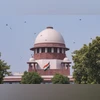 "Supreme Court, SC")
“How IBC has worked — that assessment. One is that we didn’t call it an impact assessment. You have said statute audit. So you audit the performance of a statute and take a call to what extent it serves the purpose and object of its making,” the Supreme Court said. (Photo: PTI)
Listen to This Article
The Supreme Court on Thursday observed that it is high time that the government should have an assessment of how the Insolvency and Bankruptcy Code has actually worked in ten years.
“How IBC has worked — that assessment. One is that we didn’t call it an impact assessment. You have said statute audit. So you audit the performance of a statute and take a call to what extent it serves the purpose and object of its making,” the Supreme Court said.
The court was hearing the dispute over how the spectrum held by Aircel and Reliance Communications (RCom) should be dealt with during their insolvency proceedings, and reserved its judgment.
What triggered the Supreme Court’s intervention in the spectrum dispute?
The matter arises from separate petitions filed by State Bank of India (SBI) and the two bankrupt telecom firms challenging a 2021 ruling of the National Company Law Appellate Tribunal (NCLAT). The appellate tribunal had held that spectrum could be transferred or sold under a resolution plan only after clearance of all dues owed to the government. The government has objected to the inclusion of spectrum in the insolvency process even as it pressed claims under the same law.
Also Read

 "A glass treehouse in New Delhi, inspired by German-American architect Mies van der Rohe's Edith Farnsworth House in Illinois")
 "Smog, Delhi Pollution, Delhi Air Quality, Pollution")
 "Supreme Court, SC")
 "Supreme Court")
 "air india plane crash")
The Bench heard submissions from lawyers representing Aircel, the resolution professional (RP) of Reliance Telecom Limited, State Bank of India (SBI), and the Union government before closing the hearing.
Should spectrum be treated as an asset in insolvency?
The case deals with whether spectrum remains the property of the state or can be considered an asset in the hands of a telecom operator, and whether the right to use spectrum under a licence can be treated as an interest capable of being monetised in an insolvency process.
Senior advocate Gopal Jain, appearing for the RP of Reliance Telecom, contended that the Insolvency and Bankruptcy Code fully applies to the government. He argued that the Department of Telecommunications (DoT) had accepted the IBC framework by participating as an operational creditor and filing its claim in the prescribed Form B under IBBI regulations.
Removing spectrum or cancelling licences, he submitted, would render any resolution exercise futile.
“Without the licence and spectrum, there is nothing left to resolve,” he told the court.
How did the court respond to the government’s stance?
The court remarked that the government ought to have cancelled licences of insolvent operators if it believed spectrum could not be part of the insolvency estate, rather than lodging claims as an operational creditor.
A day earlier, SBI reiterated before the court that spectrum must be treated as an asset of the telecom companies for the purposes of the IBC, and that monetising it is essential for lenders to recover their exposure. The government maintained the opposite position, arguing that spectrum is owned by the state and operators merely have a right to use it under licence.
Attorney General R Venkataramani told the Bench that an insolvency professional “cannot access spectrum” during proceedings, as it is not part of the corporate debtor’s estate.
More From This Section
 "Delhi air pollution")
 "44th India International Trade Fair (IITF) 2025")
 "Donald Trump, Trump")
 "Supreme Court, SC")
 "Red fort blast, Delhi blast")
Topics : IBC Company News Supreme Court aircel
Don't miss the most important news and views of the day. Get them on our Telegram channel
First Published: Nov 13 2025 | 8:12 PM IST