


The kingmaker from Maharashtra: Ajit Pawar dies in Baramati plane crash
Ajit Pawar's death will likely cause a tectonic shift in the state's politics
 "Ajit Pawar, Ajit")
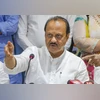
Maharashtra Deputy CM Ajit Pawar died in a plane crash while campaigning, leaving behind a complex political legacy and triggering major uncertainty in state politics. (Photo: PTI)
Listen to This Article
Maharashtra Deputy Chief Minister Ajit Pawar (66), Ajit dada to his supporters, died in a plane crash, along with four others, while on his way to campaign for the zilla parishad elections in Maharashtra. He lost his life in what he considered to be the line of duty – engaged in campaigning at the lowest rung of electoral politics. This, and his understanding of politics and its mechanisms, was his biggest strength and his primary vocation.
Ajit Pawar was the nephew of political titan and four-time Maharashtra chief minister, Sharad Pawar. His father was Sharad Pawar’s brother. In the Indian context, this was a close family relationship – something that defined the strategies and politics of Sharad Pawar and the Nationalist Congress Party (NCP), which was always “family foremost”. Ajit Pawar’s first major electoral success came in 1991, when he was elected to the Lok Sabha from Baramati. He was 32. He vacated the seat within six months after Sharad Pawar joined the PV Narasimha Rao government in the Centre as defence minister, enabling his uncle to contest the seat in a byelection.
Ajit Pawar himself moved to state politics, winning the Baramati Assembly seat. When in 1999, Sharad Pawar launched the NCP against the Congress and the “foreign origins” of Sonia Gandhi, it was Ajit Pawar who set up the scaffolding for the new party, especially in western Maharashtra. He did this by leveraging his hold on cooperatives and local institutions, a byzantine empire of politics in the region.
At 40, Ajit Pawar became the youngest cabinet minister in the Vilasrao Deshmukh government (1999-2003), handling the irrigation portfolio. This was to become both his arena of activity and the source of his power – his department handled contracts for hydel power projects, canals, and irrigation sources. His work attracted attention. He soon got the reputation of being a do-er, but also for a degree of ruthlessness and impatience with which he addressed problems and grievances, unlike his uncle who was always seen as being tolerant and cordial, even to rivals. Sharad Pawar himself highlighted the difference some years ago at a public meeting, where he observed: “Ajit, by nature, is different. He is someone who loves to work on the ground and is result-oriented. He is not media friendly and not bothered about publicity. He is working for the party and the state. But there are misconceptions about him.”
Ajit Pawar’s ambitions and Sharad Pawar’s personality were bound to clash. In Baramati, Ajit Pawar’s rising influence had already led to the sensational defeat of the Pawar panel in the Malegaon Cooperative Sugar Factory in the 1990s. Chandrarao Taware, a contemporary of Sharad Pawar, and a respected figure in sugar cooperative politics, put down the defeat to Ajit Pawar’s interference, saying he was “rude and egoistical”. Ajit Pawar’s supporters, however, swore by him. A political rival once described him as the only minister in the Eknath Shinde government “who delivers when he promises he will”.
Also Read

 "Ajit Pawar, Ajit")
 "Prime Minister Narendra Modi")
 "Mamata Banerjee, Mamata")
 "Plane Crash, Aircraft Crash, Crash, Ajit Pawar crash, Ajit Pawar, Ajit")
By October 2009, strains in the uncle-nephew relationship were evident in the NCP. Ajit Pawar staked his claim to become deputy chief minister of Maharashtra after the Assembly polls, but lost out to incumbent Chhagan Bhujbal. By then, Sharad Pawar had already begun promoting his daughter, Supriya Sule, as a parallel pole of power in the NCP. In the meantime, because of the kinks in the Congress-NCP politics, Ajit Pawar’s work style had begun attracting criticism.
In 2012, as deputy chief minister in the Congress-led government, Ajit Pawar offered his resignation following allegations of his involvement in a multi-crore irrigation scam after Chief Minister Prithviraj Chavan unveiled a white paper on irrigation problems in Maharashtra. Through all this, uncle Sharad stood by him.
A dramatic twist in Maharashtra politics came after the 2019 Assembly elections. In a closely guarded early morning ceremony, the then governor, Bhagat Singh Koshyari, swore in Bharatiya Janata Party (BJP) leader Devendra Fadnavis as chief minister and NCP’s Ajit Pawar as his deputy.
The BJP had won 105 seats in the October elections. Its ally, the Shiv Sena, had won 56. Despite having enough seats to form a government together, the two allies bickered over power-sharing – the bone of contention being who will get the chief minister’s post. Ajit Pawar quickly stepped in. He took a large number of MLAs over to BJP to make up the numbers. The question was whether Sharad Pawar knew his nephew was going to cross the floor and gave his blessings for it. Sharad Pawar says he had no idea about his nephew’s moves. Fadnavis says Sharad Pawar knew all along. The uncle later formed the Maha Vikas Aghadi with Uddhav Thackeray (Shiv Sena) and the Congress. After a brief dalliance, Ajit Pawar returned to the family fold.
In 2023, however, came the final parting of ways. Ajit Pawar, Praful Patel, and others walked out of the NCP, taking the party assets and also its symbol with them to join the “Mahayuti alliance” in Mumbai and the Narendra Modi-led National Democratic Alliance government in Delhi. Ajit Pawar contested the last Assembly election in Maharashtra, in November 2024, as the ‘real’ NCP. He contested only 59 of 288 seats and won 41, a high strike rate by any standard.
With Ajit Pawar’s passing, the 40 MLAs who remain will now have to decide whether they want to continue in Mahayuti in the company of BJP and Shiv Sena – or return to the Sharad Pawar fold. An even bigger question is the future of the NCP itself, with Sharad Pawar battling multiple health issues and no evidence that his daughter will step into his leadership shoes. Ajit Pawar’s death will likely cause a tectonic shift in Maharashtra politics.
More From This Section
 "Dogs, Stray dogs, Street Dogs, Dog")
 "beating retreat, full dress rehearsal, new delhi")
 "Kedarnath, snowfall, extreme winters")
 "President, Droupadi Murmu, Budget session")
 "President, Droupadi Murmu Budget session")
Topics : ajit pawar Obituary Maharashtra plane crash
Don't miss the most important news and views of the day. Get them on our Telegram channel
First Published: Jan 28 2026 | 6:53 PM IST