


Vice President polls on September 9: How Parliament numbers stack up
The election for the Vice Presidential was called after Jagdeep Dhankhar's resignation; NDA's CP Radhakrishnan and INDIA bloc's Sudershan Reddy are in the fray
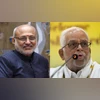 "CP Radhakrishnan, Sudershan Reddy")
CP Radhakrishnan and Sudershan Reddy


Listen to This Article
India will elect its new Vice President on Tuesday (September 9), marking nearly two months since Jagdeep Dhankar stepped down citing health concerns. The election will see Maharashtra Governor CP Radhakrishnan, representing the National Democratic Alliance (NDA), face off against former Supreme Court judge Sudershan Reddy, the INDIA bloc’s candidate.
VP polls: Election schedule and voting process
Voting will take place between 10 am and 5 pm on Tuesday, with members of both Houses of Parliament forming the electoral college. The counting of votes will begin at 6 pm the same day.
The Election Commission of India conducts the vice presidential election. To manage the process, it appoints a Returning Officer, usually a senior official of Parliament.
For a nomination to be valid, a candidate must have the backing of at least 20 proposers and 20 seconders from among Members of Parliament. They also need to deposit ₹15,000 as security.
In the voting process, every MP marks the candidates in order of preference. To win, a candidate must secure a simple majority — more than half of the valid votes polled. If no one gets the required majority on the basis of first-preference votes, the candidate with the lowest tally is eliminated. Their votes are then transferred according to the next preference marked by MPs. This elimination and transfer process continues until one candidate emerges victorious.
Also Read

 "Congress BJP flags")
 "EVM, Election, Maharashtra Election")
 "B Sudershan Reddy. B Sudershan")
 "Jagdeep Dhankhar, Jagdeep, Dhankhar, VP")
 "Amit Shah, Home Minister")
Numbers favour the NDA
The electoral college is made up of:
• 233 elected members of the Rajya Sabha (five seats are vacant)
• 12 nominated members of the Rajya Sabha
• 543 elected members of the Lok Sabha (one seat is vacant)
The Electoral College for the vice presidential election has 788 members in total, though the current strength stands at 782. Since every elector comes from either House of Parliament, the value of each MP’s vote is equal — counted as one.
The NDA holds a clear advantage in this contest. In the Lok Sabha, the BJP-led alliance commands the support of 293 members, while in the Rajya Sabha it has 129 members on its side. Altogether, the NDA is backed by around 422 MPs, ensuring it crosses the majority mark with ease, the Hindustan Times reported.
The Bharat Rashtra Samithi (BRS) and Biju Janata Dal (BJD) have chosen to remain neutral and will not participate in the voting.
Why the election was called
The election was necessitated after Jagdeep Dhankhar resigned from the post of Vice President on July 21, citing health reasons and medical advice. His resignation was submitted under Article 67(a) of the Constitution and took effect immediately.
Dhankhar had been serving as Vice President since 2022 and was earlier the governor of West Bengal between 2019 and 2022.
NDA’s candidate: CP Radhakrishnan
The ruling alliance has nominated CP Radhakrishnan, currently the governor of Maharashtra. Aged 68, he belongs to the Gounder-Kongu Vellalar OBC community in Tamil Nadu.
Radhakrishnan has twice been elected to the Lok Sabha, in 1998 and 1999, making him the only BJP leader from Tamil Nadu to achieve that. He assumed charge as Maharashtra’s governor on July 31, 2024.
Opposition’s choice: Sudershan Reddy
The opposition INDIA bloc has fielded B Sudershan Reddy, a retired Supreme Court judge, as its nominee. Reddy, aged 79, retired in July 2011 and is remembered for his sharp criticism of the Union government in several landmark rulings.
He played a key role in judgments that demanded stronger action in black-money investigations and in declaring Salwa Judum, an anti-Naxal militia backed by the Chhattisgarh government, unconstitutional.
More From This Section
 "Manoj Jarange-Patil")
 "Modi, Narendra Modi")
 "Supreme Court, SC")
 "Pinarayi Vijayan, Pinarayi, Vijayan, Kerala CM")
 "Droupadi Murmu, Murmu, President")
Topics : Jagdeep Dhankar Vice President NDA BJP Congress Lok Sabha Rajya Sabha Parliament voting BS Web Reports
Don't miss the most important news and views of the day. Get them on our Telegram channel
First Published: Sep 08 2025 | 5:15 PM IST