


Waqf (Amendment) Bill 2025 passed in Lok Sabha: Here's all you need to know
The Waqf (Amendment) Bill 2025 was passed after amendments proposed by opposition members were rejected through voice votes. It was cleared by a division of votes, with 288 in favour and 232 against
 "Amit Shah")
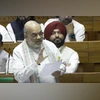
Amit Shah (Photo: PTI)
Listen to This Article
The Lok Sabha gave a clear pass to the Waqf (Amendment) Bill 2025 during the early hours of Thursday after a marathon debate of over 12-hour on it. Many opposition leaders accused the government of interfering in religious affairs of Muslims, while the government defended it fiercely denying all the allegations.
The contentious Bill seeks to bring reforms to the management of Waqf properties in India.
The Bill was passed after all amendments proposed by opposition members were rejected through voice votes. It was subsequently cleared by a division of votes, with 288 in favour and 232 against. The Bill has now been moved to the Rajya Sabha.
Key provisions of the Bill
Removal of ‘Waqf by User’: Land can no longer be considered Waqf property simply because it has been used as such over time. Only land officially declared or endowed as Waqf will be recognised.
Donor requirements for Waqf: Donors dedicating land for Waqf must have been practicing Muslims for at least five years. The Bill also ensures that women’s inheritance rights within Waqf property cannot be denied.
Also Read

 "Sonia Gandhi, Sonia")

 "Kiren Rijiju")
 "Parliament, Budget session, Lok Sabha")
 "waqf bill, waqf property")
Government land and Waqf status: Under the 1995 Act, there were no clear rules regarding government land being declared as Waqf. The new Bill clarifies that government-owned land, if mistakenly recorded as Waqf, will no longer be considered Waqf. In case of disputes, the District Collector, not the Waqf Board, will have the final authority, and the matter will be handled under state revenue laws.
Shift in authority to state officials: The Waqf Board’s authority to determine Waqf status has been removed. Now, state-appointed officials will be responsible for declaring and managing Waqf lands.
Waqf land surveys: Previously, surveys of Waqf lands were conducted by Survey Commissioners and Additional Commissioners. Now, the District Collector will oversee these surveys to align Waqf land records with state revenue records.
Changes to Central Waqf Council composition: The 1995 Act required all Central Waqf Council members to be Muslim, including two women. The new Bill introduces two non-Muslim members. It also allows MPs, former judges, and eminent persons to be non-Muslim, while Muslim representatives and scholars, as well as Waqf Board chairpersons, must remain Muslim. At least two Muslim women must be included.
Modifications to State Waqf Boards: The new Bill changes the composition of State Waqf Boards, which previously included elected Muslim MPs, MLAs, or Bar Council members. Now, members will be nominated by the state government, and the board will include two non-Muslims along with representatives from Shia, Sunni, Backward-class Muslims, Bohra, and Agakhani communities. It will still require at least two Muslim women members.
Changes to Waqf Tribunal structure: The new Bill alters the structure of Waqf Tribunals, removing the requirement for a Muslim law expert. The tribunal will now be led by a District Court judge, with a joint secretary from the state government as a member.
Opposition’s concerns
The Bill faced strong opposition from a range of parties, including the Congress, the Samajwadi Party, and several regional Muslim organisations. Criticising the Bill, Congress leader Gaurav Gogoi said, “This Bill aims to dilute the Constitution, defame minority communities, divide Indian society, and disenfranchise minorities.”
He pointed to an amendment requiring a person to have practiced Islam for at least five years before declaring a property as Waqf. He questioned, “Why seek proof of Islam for Waqf? Will they ask for a certificate from other religions whether you have completed five years or not? Why is this being asked in this bill? Why is the government interfering in this matter of religion?”
Meanwhile, Congress leader Rahul Gandhi also described the bill as an attack on the Constitution by the RSS, BJP. “This attack on the Constitution by the RSS, BJP and their allies is aimed at Muslims today but sets a precedent to target other communities in the future,” he posted on X.
The All India Muslim Personal Law Board (AIMPLB) also termed the Bill as ‘black law’ announcing that they will challenge it in the court.
The government’s stand
The BJP-led defended the Bill, emphasising that the Bill doesn’t interfere with “any religious system, any religious institution, or any religious practice in any way.”
“The government is not going to interfere in any religious institution. The changes made in the Waqf law by the UPA government gave it overriding effect over other statutes. Hence, the new amendments were required. If today you again try to mislead, spread falsehoods, then you will have to face the truth. Then we will bring another Bill, and I will once again unveil the reality... If a Muslim individual creates a Waqf, the first requirement is to ensure the rights of the women in the family...
This Bill has nothing to do with religion, but deals only with properties,” Union Minister for Parliamentary Affairs Kiren Rijiju said.
The government also emphasised that the Bill would bring in greater transparency, making it easier for people to access information about the Waqf assets in their region.
Home Minister Amit Shah also alleged that the Opposition is trying to create their vote bank and by scaring minorities. “This Bill will provide protection to the lands… No one’s land will become Waqf by a mere declaration… We will give protection to ASI land, land of tribals under Schedule 5 and Schedule 6 will be secured… private property of common citizens will also be protected… you will need ownership to donate to Waqf… you can only donate your property, not the property of the village,” Shah said, talking about the Bill.
More From This Section
 "Supreme Court, SC")
 "Hyderabad protests")
 "forest cover, forest, India's green cover")
 "Rekha Gupta, Delhi CM")
 "Modi Trump")
Don't miss the most important news and views of the day. Get them on our Telegram channel
First Published: Apr 03 2025 | 12:32 PM IST