


E2W companies seek PM E-Drive subsidy extension beyond March 2026
Industry executives say incentives continue to play a role in easing upfront cost concerns for price-sensitive buyers
 "Electric vehicle")
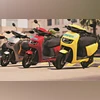
(Representative image)
Listen to This Article
India’s electric two-wheeler (e2W) manufacturers have urged the government to extend subsidies under the PM E-Drive (Electric Drive Revolution in Innovative Vehicle Enhancement) scheme beyond March 2026, cautioning that a withdrawal could slow near-term demand even as confidence in long-term electric mobility adoption remains intact.
Industry executives say incentives continue to play a role in easing upfront cost concerns for price-sensitive buyers while policy visibility beyond 2025-26 (FY26) is critical for sustaining investments in manufacturing, dealer expansion, and localisation.
Electric two- and three-wheeler manufacturer Zuperia Auto’s Chief Executive Officer (CEO) Ayush Lohia said subsidies have been instrumental in widening electric vehicle (EV) adoption, particularly among first-time buyers. “If incentives are withdrawn, demand is likely to moderate in the short term as customers continue to compare upfront prices with internal combustion engine (ICE) alternatives,” he said.
According to Lohia, subsidy removal could result in an effective on-road price increase of ₹6,000-12,000 for e2Ws, with limited room for manufacturers to absorb the impact due to battery costs and compliance-related expenses. He added that while a short extension would help production planning, the industry needs medium-term clarity beyond FY26 to confidently commit capital and scale operations.
Another EV manufacturer, EVeium Smart Mobility, however, said the impact of subsidy withdrawal would be uneven across customer segments. Founder and CEO Sameer Moidin said incentives primarily influence impulse-driven retail purchases while fleet operators, institutional buyers, and high-usage commuters base decisions on uptime, service reach, and lifecycle economics.
Also Read

 "KAY CEE ENERGY")
 "Office")
 "HFCL logo")
 "Yogi Adityanath, yogi, UP CM")
 "strike, workers strike")
“Without incentives, sales don’t disappear, they become more evaluation-led,” Moidin said, adding that for brands embedded in dealer networks and fleet programmes, demand tends to stabilise rather than turn volatile, signalling a maturing market.
Zelio E-Mobility highlighted that parts of the e2W market already operate without central demand-side incentives. Cofounder and Managing Director (MD) Kunal Arya noted that slow-speed EVs fall outside most eligibility criteria under schemes such as FAME and compete purely on affordability and operating economics. FAME stands for Faster Adoption and Manufacturing of (Hybrid &) Electric Vehicles in India.
Arya further said Budget 2026 should focus on supply-side support, particularly for electric components and manufacturing ecosystems, to strengthen localisation and improve affordability in Tier-2, Tier-3, and rural markets without creating long-term subsidy dependence.
Industry voices also flagged broader structural issues within the system. Oben Electric founder and CEO Madhumita Agrawal called for addressing the inverted goods and services tax (GST) structure, where finished EVs attract 5 per cent tax while raw materials are taxed at 18 per cent, straining working capital and raising production costs. She also said targeted incentives for electric motorcycles are critical for India to achieve its 2030 EV penetration targets, as this segment remains severely underpenetrated despite motorcycles accounting for 70 per cent of the country’s two-wheeler market.
The PM E-Drive scheme was launched by the government in September 2024 with an initial outlay of ₹1,772 crore in order to support the purchase of 2.48 million e2Ws. Under this scheme, two-wheeler manufacturers can claim incentives of up to ₹10,000 per electric scooter sold, which is equivalent to over 10 per cent of the average price of an e-scooter priced below ₹1 lakh.
The scheme covers e2Ws, e3Ws, trucks, buses, and charging infrastructure with a much higher outlay of ₹10,900 crore. While incentives for e2Ws are scheduled to run until March 2026, the scheme has been extended until March 2028 for electric trucks and buses.
More From This Section
 "Arnab Banerjee, MD & CEO, CEAT Limited")
 "Shenu Agarwal, managing director and chief executive officer, Ashok Leyland")
 "fossil fuel, gas, lpg, pipes")
 "India-EU FTA, Free trade, European Union, India trade policy")
 "electric vehicle")
Don't miss the most important news and views of the day. Get them on our Telegram channel
First Published: Jan 26 2026 | 5:46 PM IST