


India-EU FTA: European auto lobby flags risks of 'restricted' access
ACEA urges full tariff removal on auto parts, cautions against licences and residual duties as India and EU eye announcing deal at January 27 summit
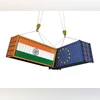 "India-EU FTA, Free trade, European Union, India trade policy")
The automobile sector has long been considered a sensitive area in India’s trade negotiations due to concerns over employment and domestic industry impact
Listen to This Article
As the India-European Union (EU) trade pact nears conclusion, a European automotive lobby group has warned that the current trajectory of negotiations risks producing a heavily constrained agreement dominated by quotas and licences, which could make the committed benefits “hard to access”.
Instead, the deal could deliver “significant benefits” through the full removal of tariffs on auto components, boosting manufacturing interests across both India and Europe, the European Automobile Manufacturers’ Association (ACEA) said in a statement on Thursday.
“But the EU should not seek to conclude a deal at any price. With the current state of negotiations, there is a real risk that the agreement will be restricted by quotas, market segmentation rules, residual tariffs, licensing systems, and various other mechanisms that will make the benefits of any deal hard to access,” the association said.
“The parties need to cut the restrictions and be ambitious in granting meaningful quotas – particularly with long-term market size in mind – and in completely removing tariffs,” it added.
The statement assumes significance as both sides aim to announce the completion of the trade deal on January 27 at the India-EU summit in New Delhi. The automobile sector has long been considered a sensitive area in India’s trade negotiations due to concerns over employment and domestic industry impact, making it one of the most contentious chapters in the proposed agreement.
Also Read

 "India-EU FTA, Free trade, European Union, India trade policy")
 "Piyush Goyal")
 "Piyush Goyal")
 "German Chancellor Friedrich Merz conveyed ‘strong support' to PM Narendra Modi for the India-EU FTA, likely to be signed later this month")
 "Misri said, as the Prime Minister also noted during his statement, that the EU is a very large trading partner for India, but there is much more potential and scope to increase that trade")
In a first, India agreed to lower tariffs and grant market access for automobiles in its free trade agreement with the United Kingdom, albeit in a phased manner that protected small cars while opening up the large-car segment. New Delhi is expected to follow a similar quota-based and graded duty-reduction approach in the EU pact as well. However, the scale of access is likely to be larger, given that automobile exports from the UK to India are limited, while the EU represents a far bigger auto-exporting bloc.
“The deal is also not just about vehicle exports. European automotive manufacturers are already heavily invested in making vehicles in India and this will not change with the FTA,” ACEA said. “Indeed, the agreement can bring significant benefits in the form of full removal of tariffs on auto parts, which will boost manufacturing interests in India as well as Europe.”
ACEA represents 17 major Europe-based car, van, truck and bus makers, including BMW Group, Daimler Truck, Ferrari, Ford of Europe, Honda Motor Europe, Hyundai Motor Europe, Jaguar Land Rover, Mercedes-Benz, Nissan, Renault Group and Toyota Motor Europe.
While supporting the conclusion of the negotiations, the association said the final agreement must provide deep and meaningful access to automotive markets on both sides.
“There seems to be a real political imperative to do a deal in the next days. We welcome the sense of urgency and commitment to intense negotiations, but are concerned that really important details might be overlooked in a rush to conclude,” said Jonathan O’Riordan, international trade director at ACEA.
“We need to keep in mind that the terms agreed now will be those that govern the agreement long into the future,” he added, expressing hope that the final outcome delivers tangible benefits to industry in both Europe and India.
More From This Section
 "small cars, auto sector")
 "Lamborghini")
 "Lamborghini")
 "ev, electronic vehicle, car, charge")
 "Davos will see deployment of more than 5,000 armed forces personnel, snipers at vantage points, and AI-powered drones, as global elites start arriving at the snow-clad ski resort town for the five day WEF Annual Meeting, which begins Monday")
Don't miss the most important news and views of the day. Get them on our Telegram channel
First Published: Jan 22 2026 | 11:17 AM IST