


Toyota Motor founding family is biggest winner in unit takeover battle
The privatisation of Toyota Industries is meant to reinvigorate the sleepy affiliate, remaking it as the vanguard of the group's evolution into next-generation mobility
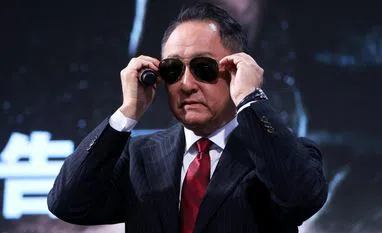 "Akio Toyoda")
Akio Toyoda | Image: Bloomberg
Listen to This Article
By Reed Stevenson and Tsuyoshi Inajima
For Akio Toyoda, the all-but-certain mega buyout of Toyota Industries Corp. is the ultimate legacy play. It will reshape Japan’s biggest business group, tighten his family’s grip over the Toyota group and end a protracted standoff with an American shareholder activist that tested Japan Inc.’s embrace of corporate governance reform.
In what may be the largest-ever Japanese buyout deal, the century-old maker of textile looms that spawned the world’s largest carmaker is poised to become part of a new power centre after an unprecedented battle with Elliott Investment Management, one of the world’s most aggressive activist funds.
After forcing Toyota to up the ante twice with higher bids, Elliott agreed Monday to tender its shares for ¥20,600 apiece, valuing the company at ¥6.7 trillion ($43 billion), and settling for an amount less than its previous demands.
The privatisation of Toyota Industries is meant to reinvigorate the sleepy affiliate, remaking it as the vanguard of the group’s evolution into next-generation mobility and improving collaboration while streamlining its equity holdings, according to the board’s explanation in June when it accepted the initial offer. Critics see it as a power grab by the chairman on behalf of himself and other Toyoda family members.
Also Read

 "electric vehicle")
 "Cars and SUVs are beginning to form a larger proportion of the consumption basket")
 "Ola Electric, OLA")
 "Tata motors")
 "Partho Banerjee, Senior Executive Officer (Marketing and Sales), Maruti Suzuki India")
“It looks more like a consolidation of influence and an attempt to keep Akio Toyoda and his family in control of certain assets,” said Nicholas Benes, founder of the Board Director Training Institute of Japan, who helped usher in Japan’s governance code.
A representative for Toyota pushed back against the notion that Akio Toyoda was exerting more control over the group.
“Mr. Toyoda’s reason for investing is to support this framework as a capitalist,” the spokesperson said. “It is not intended to lead to control over the Toyota group.”
Ever since news of the buyout became public almost a year ago, Akio Toyoda has made few public comments on it. The most extensive remarks he made were in June 2025, when he denied the deal was an attempt by his clan to cement its control over Toyota Industries. But it’s clear he sees himself as a torchbearer for core principles such as the Toyota Production System and long-term investments in next-generation transportation.
The drama has played out against a backdrop of the unmooring of longstanding ties among industrial groups as Japan’s government has pushed companies to undo decades-old cross-shareholdings. Toyota Motor Corp. stock held by suppliers, other group companies and financial partners has declined to roughly half the levels of five years ago, when it made up about a quarter of total ownership in the carmaker, according to data compiled by Bloomberg.
The steady unwinding of those equity ties — designed to free up capital and boost corporate transparency — has unnerved Japan’s captains of industry, who worry activists and short-term investors will pressure them to reduce long-term capital investments and shortchange employees and other stakeholders.
For the Toyoda family, which owns a tiny fraction of Toyota Motor with no special voting rights, the loosening of bonds threatens their role as senior managers and safekeepers of the founding philosophy. Akio Toyoda, 69, the founder’s grandson and Toyota Motor’s current chairman, saw shareholder backing for his board appointment steadily erode for several years leading up to 2024, though support ticked up last year.
Fickle backing by stakeholders signaled board seats for founding family heirs could no longer be taken for granted. That prompted buzz early last year about internal discussions to shake-up the conglomerate’s structure for the first time in more than half a century.
Behind the scenes, exploratory discussions had kicked off among senior managers about adopting a holding company structure for the entire Toyota group, according to people with knowledge of their thinking. The idea was to create an unlisted entity to act as a lodestar with stakes in Toyota Motor, Toyota Industries, Denso Corp., Aisin Corp. and other members in a vast constellation of affiliates, they said.
A new holding company could, in theory, exert influence over Toyota Motor and its partners with little need for public disclosure or approval. But bringing about such a radical structural change to an industrial conglomerate would be a difficult endeavor that’s likely to draw scrutiny from investors and possibly even regulators. Instead, the group settled on a simplified tactic of privatizing the group’s loom-making progenitor, Toyota Industries, people familiar with the plans said.
The little-known supplier of car parts, which also manufactures textile machinery and forklifts and assembles some vehicles, owns small stakes in many other Toyota companies, including Toyota Motor. Those were worth almost as much as its own market capitalization, making it an ideal target for takeover.
For that, Toyota turned to an even more obscure subsidiary known as Toyota Fudosan Co., an unlisted property manager with an opaque ownership structure, to handle the transaction through a special-purpose company. The real estate firm’s chairman is the same man at the top of Toyota Motor: Akio Toyoda. As part of the bid, Toyoda himself pledged ¥1 billion of his own money, further aligning his family’s economic interests with those of the Toyota group.
Toyota group companies had no qualms about those circular relationships, but the buyout set off alarm bells among advocates for greater transparency and shareholder rights. It also attracted the attention of activists like Elliott.
“There’s something going on here where Akio is going to create value for the Toyoda family,” said Travis Lundy, an independent Japan equity analyst based in Hong Kong. Akio Toyoda’s stake in the special-purpose company, as well as the deal structure, would give him immense control and, depending on how things play out, make the family “immensely wealthy,” he said.
While Toyota Industries’ profit and revenue are a fraction of Toyota Motor’s, it has special status as the group’s founding company. Sakichi Toyoda started the business in 1926 to make looms to meet booming demand from the textile industry as industrialization took hold in Japan. Kiichiro, his son, went on to create Toyota Motor.
Efforts by leading keiretsu industrial groups to shape their own destinies date back to the end of World War II and the breakup of wartime conglomerates. Toyota’s attempts to shield its affiliates, who collectively identify as the Kyohokai, drew scrutiny in the late 1980s when American corporate raider T. Boone Pickens launched a drawn out but ultimately unsuccessful takeover bid of group auto lighting firm Koito Manufacturing Co.
Although many of the Japanese companies that rose to become global names during the postwar economic boom revere their founders — Sony Group Corp.’s Akio Morita or Panasonic Holdings Corp.’s Konosuke Matsushita — very few still have their descendants closely involved in the businesses through to the present day.
Akio Toyoda and his father, Shoichiro — who died in Feb. 2023 — both ran Toyota Motor for a decade each. But Akio Toyoda’s direct ownership of Toyota Motor is less than 0.2%. Still, the founding family has long held sway over it and the larger group. Several other members of the Toyoda clan still hold positions within the Toyota group’s businesses and network of suppliers.
The family’s role in management hasn’t been continuous — or gone unchallenged. A series of non-family executives ran Toyota Motor in the 1990s and early 2000s. One of them, Hiroshi Okuda, a former Toyota president who expanded its global manufacturing footprint and pushed for the development of the Prius and gasoline-electric hybrid technology, famously told the Wall Street Journal in a 2000 interview that “nepotism just doesn’t belong in our future.”
Yet Akio Toyoda has been the driving force behind the company’s transformation into the global powerhouse it is today. Under his watch, Toyota clinched the title of the world’s largest carmaker, a position it has held for the past six years. While Nissan Motor Co., Honda Motor Co. and other Japanese carmakers have struggled in recent years, Toyota can’t build cars fast enough to meet global demand, with waiting lists for some models stretching out for six months or longer.
An avid race-car driver who likes to say he “loves the smell of gasoline,” Akio Toyoda erupts in tears during the annual meeting when he talks about his love for Toyota and its people. He also continues to serve as kingmaker, orchestrating the appointment of Koji Sato as his successor as CEO in 2023 and then pushing him out three years later, naming ally Kenta Kon, Toyota Motor’s chief financial officer and Toyoda’s former secretary, to take over from April. Toyota has said that Toyoda wasn’t closely involved in that decision.
“Akio is really just an extension of a long family legacy,” according to the Toyota Times, the company’s official media portal, expanding on an interview with trade publication Automotive News last year. He spoke about living up to the family name and his struggles to earn the respect of employees and stakeholders. “Generations of Toyodas made the Toyota of today that is an irreplaceable pillar of the Japanese economy and an exemplary corporate citizen,” the article concluded.
Ever since he stepped aside from day-to-day operations and became chairman, it’s clear that posterity has been on Toyoda’s mind. The chairman’s son, Daisuke Toyoda, 37, is a senior vice president at Woven by Toyota, the subsidiary tasked with developing self-driving software and other technologies for future cars.
The younger Toyoda is seen by many Toyota watchers a contender to take over as CEO one day. But even if that doesn’t happen, his family still wants a voice in Toyota Motor’s future.
The push to take Toyota Industries private has been an important test case. Other blue chip Japanese company managers have followed it closely as they mull a similar future without a friendly shareholder buffer in the form of equity held by affiliated companies.
“This transaction is reminiscent of deals in Korean chaebol corporate groups, which often serve to strengthen the grip of a key member of the founding family,” said Curtis Milhaupt, a Stanford Law School professor who researches corporate governance.
What happens next isn’t clear; by the end of the takeover process, Toyota Industries has pledged to relinquish its holdings in Toyota Motor.
One scenario that could emerge is for Toyota Industries to conduct share swaps or raise cash for stock purchases by carving up its operational businesses. After selling off textile machines, forklifts and other units, what would be left is something akin to a holding company — a business entity that mainly owns stakes in other companies. That would bring its structure closer to the original plan.
“There are no plans to transition to a holding company structure,” a Toyota spokesperson said.
As if to pre-empt such questions, Akio discussed this possibility in an online video in June of last year. When asked whether the deal would eventually lead to turning Toyota into a holding company, Toyoda said he didn’t think that would happen. However this plays out, the chairman of Toyota Motor and the company that owns Toyota Industries will be at the centre of any changes.
“If you don’t take action, you can’t create the future,” Toyoda said in the video clip.
More From This Section
 "Car sales")
 "cars")
 "Manohar Lal Khattar, Manohar Lal, Khattar, Manohar")
 "carmakers, electric vehicle")
 "two wheeler, bikes")
Topics : Toyota Motor Toyota Motor Corp Auto industry
Don't miss the most important news and views of the day. Get them on our Telegram channel
First Published: Mar 03 2026 | 9:44 AM IST