


German investment in China rises to four-year high amid US trade war
German companies invested over $8 billion in China in 2025, a 55% jump from recent years
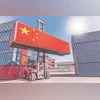 "China, Trade exports, Trade growth")
German investments in China climbed to over 7 billion euros ($8 billion) between January and November 2025
Listen to This Article
German companies' investments in China hit a four-year high in 2025, according to data compiled for Reuters, underscoring how US President Donald Trump's trade war is pushing industries and governments to boost business ties elsewhere.
The data, from the IW German Economic Institute and previously unreported, showed investments in China climbed to over 7 billion euros ($8 billion) between January and November last year, up 55.5 per cent from the 4.5 billion euros in 2024 and 2023.
The investment figures show how Trump's aggressive trade policies in his first year in office, including far-reaching US tariffs on EU imports, have pushed firms in Europe's top economy to shift their focus to China as an alternative.
It comes as Britain's government heads to China with a delegation hoping to seal more business deals from cars to pharmaceuticals, the EU nearing a deal with South America, and Canada seeking to expand trade deals with China and India.
Berlin, meanwhile, has sought to balance toughening its stance towards Beijing over trade and security while trying to avoid damaging the fundamental relationship with its top trade partner.
Also Read

 "Keir Starmer, Keir, Starmer, UK")
 "thermal power plant, power")

 "Taiwan, Taiwan Flag")
 "Republic Day rehearsal, Republic Day")
"German companies are continuing to expand their activities in China and at an accelerated pace," Juergen Matthes, head of international economic policy at the IW institute, told Reuters, citing a trend to strengthen local supply chains.
Reuters reported last week that German companies nearly halved their investments in the United States in the first year of President Donald Trump's second term.
Fear of 'Geopolitical Conflicts'
The shift was also driven by concerns "about geopolitical conflicts" that were prompting companies to bulk up their China business so it could operate more independently in case of any major trade disruptions, Matthes said.
"Many companies say: 'if I'm only producing in China for China, I'm reducing my risk of being affected by possible tariffs and export restrictions'."
German companies ranging from BASF and Volkswagen to Infineon and Mercedes-Benz remain heavily dependent on the Chinese market, where most of the world's cars and chemicals are sold.
German fan and motor maker ebm-papst said that last year it invested 30 million euros in the expansion of its Chinese operations, accounting for more than a fifth of total investments, in order to produce more where its customers are.
"This model has proven to be an important anchor of stability, especially in times of tariffs and geopolitical tensions," the company said in a statement, adding it was also planning to expand its US business this year.
The overall investment figure for 2025 also beats the 6 billion euro average for the period from 2010 to 2024, the IW report, which draws on data from Germany's Bundesbank, showed.
China last year reclaimed its spot as Germany's top trading partner after being overtaken by the United States in 2024, driven by rising imports from the world's second-largest economy. (Only the headline and picture of this report may have been reworked by the Business Standard staff; the rest of the content is auto-generated from a syndicated feed.)
More From This Section
 "Modi, Narendra Modi")
 "clean energy")
 "Housing market, real estate")
 "capital expenditure, capex")
 "KAY CEE ENERGY")
Don't miss the most important news and views of the day. Get them on our Telegram channel
First Published: Jan 27 2026 | 12:52 PM IST