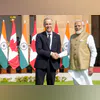
What is important, however, is that both sides have seen the wisdom of moving beyond the deep disagreements that surrounded the previous Ottawa administration’s accusations of Indian involvement in the killing of a Sikh extremist on Canadian soil. New Delhi firmly denied any official involvement. Nationalist sentiments in both countries then took over the discussion and undermined any possibility of progress. These tensions lingered as long as then Canadian Prime Minister Justin Trudeau was in office. Mr Carney’s ascent, however, has ushered in a period of pragmatism; slowly, normal diplomatic exchanges were restored.
New Delhi’s new commitment to trade deals means that it shares an interest with Ottawa in increasing economic integration. For the Canadians, worried that their free-trade agreement with the United States and Mexico might not be renewed this year, new destinations are a must. Other shifts in New Delhi have heightened Canada’s importance as a partner. For instance, the second iteration of the national asset monetisation pipeline, which includes assets such as highways, is an area where Canada’s pension funds are envisaged to play a major role. They can also play an important part in India’s quest to attract stable long-term capital. Liberalisation of the laws surrounding investment in and building nuclear facilities in India means that it will increase its demand for uranium, which too is a major Canadian export.
Energy security was a key focus of this visit, and its importance has been underscored by the surge in the price of natural gas following Iran’s attack on Qatari infrastructure, which has led to a shutdown in production in the gas-rich emirate. Diversification of supply and sources is ever more vital. In this context, it is welcome that the government signed an agreement worth $1.9 billion with Cameco, which is expected to make available over 11,000 tonnes of uranium for nuclear-energy generation from 2027 to 2035. Equally important from the point of view of the next decades of growth and of economic security is that this summit included a memorandum of understanding on the supply of critical minerals, of which Canada has extensive reserves. Given the extensive complementarities between the Indian and Canadian economies, this reset in relations was badly needed. It is to the credit of both Prime Ministers that they have succeeded in clearing the air. New Delhi must now ensure that the continuing investigative and legal process in Canada does not throw up further roadblocks. Meanwhile, the Canadians hopefully will maintain their focus on an economic relationship that has a lot to offer both countries.


 "Modi, Narendra Modi, Mark Carney")