


Best of BS Opinion: Trump tariffs, euthanasia, rupee and farms
Today's Opinion page covers Trump's tariff strategy, the Supreme Court's passive euthanasia ruling, rupee depreciation amid West Asia tensions, farm diversification and a Syria war book review
 "Trump Tariffs, Tariffs, Indian export, trade")
Illustration: Ajaya Mohanty
Listen to This Article
Hello, and welcome to Best of BS Opinion, our round-up of the day's Opinion Page!
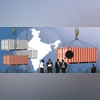
It is by now clear that tariffs are central to President Donald Trump's economic agenda, notes our first editorial. After the US Supreme Court struck down his first round of tariffs as unconstitutional, Trump has now turned to other means of imposing tariffs - the United States Trade Representative (USTR) has initiated investigations under Section 301 of the Trade Act of 1974 with an intent to reimpose tariffs as close to the reciprocal rate as possible. However, this law requires the USTR to seek consultation with targeted nations, including India, which could lead to more negotiations. How the Indian side presents its case and how quickly trade uncertainties are addressed through a trade agreement will be critical.
The Supreme Court’s judgement allowing passive euthanasia - a first - for 31-year-old Harish Rana who has been in a vegetative state for the past 12 years is a big move in the right direction, says our second editorial, putting India on a par with Europe, Canada, Australia and New Zealand and Japan. However, the lack of state capacity to smoothly enable passive euthanasia or execute living wills remains a significant deterrent for those seeking the right to death with dignity. In Rana’s case, the Supreme Court made an important change to the law, recognising clinically administered nutrition as medical treatment, which qualified it as being eligible for withdrawal. But to have any real impact, states must set up robust systems to deal with passive euthanasia in a timely and appropriate manner.
The conflict in West Asia has delivered India an adverse macroeconomic shock that has been transmitted through four channels - a physical gas shortage, elevated oil prices, a reduction in inward remittances, and a contraction in export demand from that region. The question now, asks Ajay Shah, is what forces will help stabilise the economy. The most important of these is currency depreciation: capital flows into cheaper asset valuations and push the exchange rate down, which in turn, makes imports pricier and force us to look for domestic alternatives, helping jobs and companies at home. But for these benefits to accrue, and to see inflation targeting reform through, it is key that the government steps out of activities on the exchange rate, and out of interference on the capital account.
Indian agriculture has been steadily moving towards high-value segments from just crop farming, points out Surinder Sud. Allied segments such as horticulture, poultry, fisheries, and horticulture, among others, have grown at twice the rate of crops. Within crops, too, horticulture has outperformed cereals and other food and non-food crops. Gross value added (GVA) for livestock has seen a compound annual growth rate of 12.77 per cent between 2014-15 and 2023-24, at current prices. Animal husbandry has virtually replaced crop farming as the income mainstay of the vast majority of farm households, especially small and marginal farmers, given its round-the-year feasibility. However, some major challenges face the livestock and fisheries segments, primarily feed and fodder, and post-harvest handling, preservation, and transportation. The lack of infrastructure for the latter must be addressed in order for the segment to realise its full potential, he writes.
Charles Glass, himself a former Middle-East correspondent for ABC News, describes Anand Gopal's In Days of Love and Rage as the definitive account of the Syrian Civil War, almost at par with George Orwell’s Homage to Catalonia, which dealt with the Spanish struggle to save the republic from Franco's dictatorship. Focusing on the town of Manbij, the book traces the transition from a sleepy pro-Bashar al-Assad enclave to a revolutionary stronghold. Gopal documents the rise of secular democracy, the brutal ISIS occupation that followed, and the repressive Kurdish SDF rule. Glass also notes Gopal’s and exhaustive research, concluding that despite recurring tyranny, the book captures an indelible awakening of the Syrian spirit that refuses to be extinguished.
More From This Section

 "Sovereign, Donald Trump, Israel Iran Conflict")
 "Illustration: Binay Sinha")
 "Illustration: Binay Sinha")
 "Job sector, jobs, hiring")
 "Illustration: Ajaya Kumar Mohanty")
Topics : Trump tariffs USTR Rupee Exchange rates euthanasia living will passive euthanasia Indian agriculture fisheries sector Horticulture Livestock farming Syria Israel Iran Conflict West Asia
Don't miss the most important news and views of the day. Get them on our Telegram channel
First Published: Mar 16 2026 | 6:15 AM IST