


US millionaire hunter gored to death: Social media hails buffalo as hero
A millionaire trophy hunter is killed by the very animal he was pursuing. What followed was an outpouring of global support not for the man, but the buffalo
 "Cape buffalo")
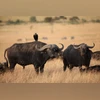
The Cape buffalo, known as the “Black Death,” is one of Africa’s most dangerous and unpredictable animals. (Photo: Freepik)
Listen to This Article
In a dramatic twist of fate that has reignited fierce debate on the ethics of big-game hunting, American trophy hunter Asher Watkins, 52, was fatally gored by a Cape buffalo—often dubbed the “Black Death”—during a licensed safari in Limpopo, South Africa, on August 3, 2025.
Watkins, a Texas-based millionaire and self-proclaimed “adventure conservationist,” had built a prominent online presence showcasing his trophy kills from across the globe. But this time, nature struck back. The buffalo, one of Africa’s most formidable and unpredictable animals, charged while being tracked and instantly killed him—a rare reversal that quickly turned into a viral morality tale.
Public voices split, but the internet takes the buffalo's side
Within hours, news of Watkins’ death exploded across social media platforms, where reactions ranged from sympathy to savage criticism. While some viewed his death as a tragic accident, many celebrated it as karmic justice.
“He deserved his fate. He travelled the planet killing for fun. Hope the buffalo wasn’t harmed,” one user commented.
“Karma at its finest. The hunted finally fought back,” another quipped.
Also Read

 "Coldplay concert, Astronomer ceo")
 "deepfakes, ai")
 "Bhopal bridge")
 "Jasper Reid")
 "Rachel Gupta")
The phrase “when the hunter becomes the hunted” trended widely, with users across platforms framing the incident as a reckoning moment for those who glorify killing animals for sport.
The wall at the buffaloes house pic.twitter.com/H4PsJEE11k
— Chloe Of Now (@ChloeOfNow) August 6, 2025
Online sentiment: The buffalo as a symbol of justice
A clear shift in public sentiment emerged—sympathy poured not for the fallen millionaire, but for the buffalo. On Reddit and Facebook, users dubbed the animal a symbol of wild justice and resistance. One Redditor wrote:
“Sounds like perfectly justifiable self-defence on the buffalo’s part.”
“To kill for sport is despicable. Love this buffalo for taking out the trash.”
“He came to my territory uninvited” https://t.co/tqCEN29BLz pic.twitter.com/YcxB9aM96F
— Pfarelo (@PfareloMulondo) August 7, 2025
Viral memes, commentary threads, and wildlife advocacy pages echoed the same sentiment: it was nature’s turn to win.
From blood sport to backlash: the ethics of hunting under fire
While defenders of trophy hunting pointed to the economic benefits such safaris bring to local communities and conservation efforts, critics were quick to dismiss those arguments, calling them smokescreens for cruelty.
The tragic end of a man who once boasted about taking down lions and elephants became a catalyst for reflection on the legitimacy of these “hunts” in the modern age. Posts questioned why such practices still receive legal sanction and tourist support.
One wildlife conservation page remarked: “It’s telling that the world mourns the buffalo, not the man. That says everything about where we are in 2025.”
Digital-age morality tale
The social media narrative following the incident has evolved into more than just a viral news cycle—it’s a morality play for the digital age. It reveals changing global attitudes toward wildlife, colonial legacies in safari culture, and the growing consensus that the right to life doesn't end at the species line.
In the end, this was not just a story about a man’s tragic death—it became a symbol of resistance. And on that front, the internet has spoken loudly and clearly: it stands with the buffalo.
More From This Section
 "US firefighters disrupt ‘havan' at Indian family's Texas home")

 "Anam Mirza")
 "woman drives car on railway track")
 "Kolhapuri chappals at Prada show")
Don't miss the most important news and views of the day. Get them on our Telegram channel
First Published: Aug 08 2025 | 4:37 PM IST