


Apple N1 in iPhone 17 series beats most Android flagships in Wi-Fi: Ookla
iPhone 17 series debuted Apple's in-house networking chip, Apple N1. Now, Ookla has reported jumps in Wi-Fi speed and stability, beating the iPhone 16 and matching top Android rivals
 "Apple N1 chip on iPhone 17 series")
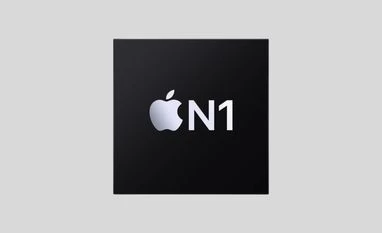
Apple N1 chip on iPhone 17 series
Listen to This Article
Apple’s in-house N1 networking chip is powering a major jump in Wi-Fi performance on the iPhone 17 series, reported networking and connectivity insights platform Ookla. For everyday users, this simply means faster, more stable Wi-Fi, especially in crowded homes, offices, cafes and airports.
Unlike earlier models, which depended on Broadcom chip for connectivity, the iPhone 17 lineup uses Apple’s own custom Wi-Fi and Bluetooth chip for the first time. This tighter hardware–software control appears to be paying off: the iPhone 17 series sees a clear boost in both download and upload speeds compared to the iPhone 16 series across every region studied, reported Ookla.
A clear upgrade over iPhone 16 series
Even though both the iPhone 16 series and iPhone 17 series support similar Wi-Fi standards on paper, the N1 chip enables a big step up in everyday performance. Ookla’s data shows higher download and upload speeds across nearly all regions, with the biggest gains appearing in tougher Wi-Fi conditions such as crowded networks or rooms with weaker signals.
Also Read

 "Apple")
 "Apple iOS 26")
 "apple air")
 "Apple")
 "Apple CEO Tim Cook said he believes Apple will return to growth in China during the current quarter")
For users, this translates into smoother streaming, faster downloads and more reliable video calls, especially in Indian homes where multiple devices share the same Wi-Fi network.
iPhone 17 vs Android flagships
When compared with other Android flagships, the iPhone 17 series consistently stays at the top or near the top across most Wi-Fi metrics.
Download speeds
Google’s latest flagship, which likely uses Broadcom’s Wi-Fi chip, leads in global Wi-Fi download speeds with 335.33 Mbps median speed. It just edges past the iPhone 17 series, which shows a median download speed of 329.56 Mbps. The iPhone 17 series is followed by the Xiaomi 15T Pro, Samsung Galaxy S25 series, OPPO Find X8 Pro, iPhone 16 and Vivo X200 Pro.
Server latency
Samsung’s Galaxy S25 family, based on Qualcomm’s FastConnect 7900 Wi-Fi chip, had an edge in latency, delivering the lowest best-case response times in North America (6 ms), Europe (7 ms) and the Gulf (9 ms). While results varied across regions, the iPhone 17 series stayed near the top, alongside Xiaomi’s 15T Pro, Vivo X200 Pro and others.
Upload speeds
Xiaomi dominates upload speeds with its MediaTek Wi-Fi hardware. Its flagship managed a median upload speed of 129.22 Mbps, followed by the iPhone 17 series at 103.26 Mbps and OPPO Find X8 Pro at 97.51 Mbps.
Why N1 makes the difference
Apple’s N1 chip doesn’t rely on wider 320 MHz Wi-Fi 7 channels like some Android flagships do, but Ookla’s data suggests these higher-bandwidth features aren’t widely used yet, particularly in markets like India, where 6GHz spectrum adoption is still emerging.
Instead, Apple’s strength comes from deeper hardware–software optimisation. The N1 lifts performance not just at the top end, but especially in poor Wi-Fi environments, where the iPhone 17 series shows over 60 per cent improvements compared to the iPhone 16, the report from Ookla noted.
More From This Section
 "Microsoft 365")
 "OPPO Find X9 series")
 "Plan trip with AI Mode")
 "OnePlus 15R")
 "Tech Wrap November 17")
Topics : Apple iPhone Google Pixel Samsung Galaxy
Don't miss the most important news and views of the day. Get them on our Telegram channel
First Published: Nov 18 2025 | 2:38 PM IST