


What is birthright citizenship? Why US Supreme Court overturned Trump order
In a 6-3 ruling, the court upheld the constitutional guarantee of birthright citizenship, while dissenting justices warned of far-reaching implications for US immigration policy
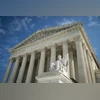 "US Supreme Court")
Photo: Bloomberg
Listen to This Article
In a significant legal blow to President Donald Trump's hardline immigration agenda, the US Supreme Court on Tuesday struck down his executive order to end birthright citizenship for children born on US soil.
The court affirmed that the 14th Amendment guarantees birthright citizenship to anyone born in the US, including those whose parents are in the country unlawfully or only temporarily.
"Citizenship, then and now, was the right to have rights—to freely participate in our political community. The Framers of the Fourteenth Amendment extended that promise to 'every free-born person in this land,'" Chief Justice John Roberts wrote the court's majority opinion, stating: "We keep that promise today.”
Trump’s order, issued on the first day of his second term, had sought to deny automatic citizenship to the children born to undocumented immigrants and temporary foreign residents.
How the justices voted
In a 6-3 ruling, the court overturned the order of the Trump administration. Writing for a five-justice majority, Chief Justice John Roberts said the 14th Amendment, adopted after the Civil War, guarantees citizenship to anyone born in the United States, subject to only limited exceptions.
Also Read

 "HDFC Bank, HDFC Bank chairman, HDFC Bank CEO, Sashidhar Jagdishan, Atanu Chakraborty, Keki Mistry, HDFC Bank board, HDFC Bank leadership, HDFC Bank chairman appointment, HDFC Bank CEO reappointment, HDFC Bank governance, HDFC Bank legal review, HDFC")
 "Small savings, rate cuts")
 "Japan's Fugu, China's GLM-5.2 and Anthropic's Claude Mythos showcase how different AI architectures excel in different benchmark tests.")
 "Indigo")
 "dubai tourists")
Chief Justice John Roberts was joined by Sonia Sotomayor, Elena Kagan, Ketanji Brown Jackson and Amy Coney Barrett. Brett Kavanaugh concurred with the judgment but said the executive order violated federal law, rather than the Constitution.
Three other justices dissented with the judgment.
What is birthright citizenship?
The legal practice of birthright citizenship grants automatic citizenship to an individual born in the country. Globally, this is primarily determined by two legal frameworks: a person's place of birth or their parents' nationality.
In some countries, the principle of jus soli, or “right of the soil”, allows nearly everyone born on their soil to become a citizen. This is common in countries such as Canada, Mexico, Brazil and Argentina.
On the other hand, the legal concept of “jus sanguinis” (right of blood) involves citizenship acquired through parental lineage. In many countries, a child qualifies for citizenship only if one or both parents are citizens of that country, regardless of where the child born.
The US Constitution adopted unrestricted birthright citizenship, including not just Americans, but people of colour too, by ratifying the 14th Amendment in 1868.
Unlike the US, which follows the principle of jus soli, India has gradually moved away from pure birthright citizenship. Since December 2004, citizenship by birth depends not only on being born in India but also on the citizenship and immigration status of one's parents.
What did the dissenting judges say?
The ruling witnessed dissension from justices Clarence Thomas, Samuel Alito and Neil Gorsuch. The judgment spans 194 pages, including a nearly 90-page dissent by Thomas–the lengthiest opinion of his Supreme Court tenure.
Thomas, who wrote the lead dissent, agreed with President Trump's assertion that the 14th Amendment only applied to former slaves and their descendants. Black people, according to him, were entitled to citizenship because they were Americans with “no other homeland” or allegiance to other nations.
“The same could not be said for the children of foreign temporary visitors. Foreign temporary visitors were attached to their home country, lacked similar bonds to this country, and would not be called upon in time of war,” he wrote, according to The Guardian.
Alito argued that the decision would confer US citizenship even on children born to parents with only a brief presence in the country, regardless of whether they later left the US permanently. In a hypothetical scenario, Alito said such individuals would remain entitled to US citizenship and a US passport even if they later became hostile to the United States.
He stated in his opinion, “the Court has made a serious mistake”.
While concurring with the judgment in part, Kavanaugh argued that Trump's order violated federal law but not the Constitution. He said Congress remained free to amend existing legislation or pass a new law limiting birthright citizenship for children born to parents without permanent legal status.
Birthright citizenship: US reactions
The US Supreme Court ruling was hailed by civil rights groups and constitutional experts as a landmark defence of the 14th Amendment, while Trump and his allies condemned it as a setback for immigration enforcement and vowed to pursue legislative alternatives.
Trump, who has for years pushed to curb birthright citizenship, criticised the ruling as "too bad for our Country". Writing on Truth Social, he said Congress could "easily make it up" by passing legislation with presidential backing.
Senior White House adviser Stephen Miller called it "one of the most destructive and outrageous decisions" in Supreme Court history, arguing that "American citizenship is not the birthright of the world". Mike Johnson said he was "disappointed", arguing that birthright citizenship had been "grossly abused" in recent years.
The American Civil Liberties Union (ACLU), which challenged Trump's order, called it a "major victory", saying the ruling protected a constitutional right that has existed for more than 150 years. The ruling was described by legal experts as reaffirming the 14th Amendment and the 1898 precedent in United States v. Wong Kim Ark.
According to Immigration advocates, the ruling spared around 250,000 children born annually in the US from uncertainty over their citizenship status, Reuters reported.
More From This Section
 "Nikesh Arora")
 "SAVE America Act")
 "Strait of Hormuz closure, Global oil supply shock, US crude exports, China oil demand slowdown, Energy market resilience")
 "Venezuela earthquake")
 "Nasa, moon mission")
Don't miss the most important news and views of the day. Get them on our Telegram channel
First Published: Jul 01 2026 | 1:42 PM IST