


Kerala's nurses: Taking care of the world
The author explores Kerala's nursing economy, the compulsions - and the social networks - that take them to faraway places, even war-torn Tikrit
)
"Initially, the sounds were in the distance and we didn't feel anything. Then, they started getting closer. One bomb exploded just behind the mortuary, and another in the emergency section, killing a person. When the bombs were going off, even the chairs we were sitting on would shake," says Sunitha Gopi, one of the 46 nurses rescued recently from Tikrit in Iraq. Your survival instincts would tell you this is when you need to run for your life. Yet, Gopi did not want to leave. Ironically, that decision too arose from the instinct to survive. "We felt the strife would last only a month or so. We had not been paid since we were on probation; if we left, we would soon be forgotten by everyone and we would have to return to the same poverty we had hoped to escape by going to Iraq," she reasons.
Of the 46 nurses, 45 were from Kerala (one was from Tamil Nadu). Their harrowing experience notwithstanding, nurses from the southern state continued to accept recruitment in other Iraqi cities till the government put a stop to it. Some of the rescued want to return to the strife-torn country as soon as normalcy is restored. While a casual observer might shake his head incredulously at this tenacity, there are many more layers to the story of the Kerala nurse who has become a symbol of ubiquity. Gopi's is one.
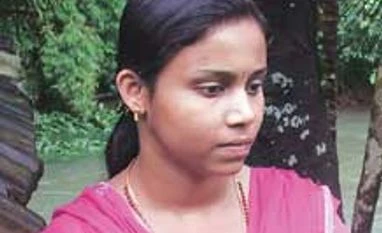
Dressed in a pink salwar kameez, the same colour as the walls of her small house by the side of the road at Pala in Kottayam, the heart of rubber country, Gopi, 27, appears composed while she recounts her recent experiences, including her reluctance to leave. But you can sense the quiet desperation all around. It is reflected in the dimly-lit house that has just one main room and a kitchen, and in the turbulent Meenachil in spate at the rear; after a few more heavy showers, it will flow through her home.
Nursing, Gopi and her family had thought, was their route to greener pastures, including a proper house which would not be flooded every monsoon. There are thousands of young girls - and boys - who share the view, especially those who come from poor families. "The fathers of most of our students are often porters, painters or carpenters," says Vinod Viswanathan, managing director of Bharath Hospital in Kottayam, which runs a nursing school offering a three-year diploma in general nursing and midwifery, or GNM.
Ask any nursing student or professional why she opted to study nursing, and the answer rarely varies. "You can always get a job once you have studied nursing, unlike other courses. It is more or less guaranteed," says Sruthi S Kumar, 25, another of the 45 nurses who had accepted a job at Tikrit Teaching Hospital and is now home in Puthupally, also in Kottayam. (The desire to care for people or look after the sick is not heard about too often, though it might exist in the popular imagination.)
Due to a shortage of trained healthcare workers in the Gulf Cooperation Council countries and Europe, women from Kerala, mostly Christians, have been training to emigrate there since the 1970s, M Walton-Roberts and S Irudaya Rajan point out in their study, Nurse Emigration From Kerala: Brain Circulation or Trap. Various factors, including the active aid of the church, helped Kerala nurses find jobs in countries like Italy, Germany and Austria in the early years. Later, when the United States reframed immigration policies to bridge the shortage of nurses, Kerala nurses made the most of it. In India, too, the Kerala nurse is everywhere: from Delhi and Mumbai to small towns in Punjab and Uttarakhand.

Don't miss the most important news and views of the day. Get them on our Telegram channel
First Published: Jul 26 2014 | 12:30 AM IST