


More talk, less work on Smart City project today: Azim Premji
In a chat with students, Wipro chairman shares his views on a host of issues affecting India today
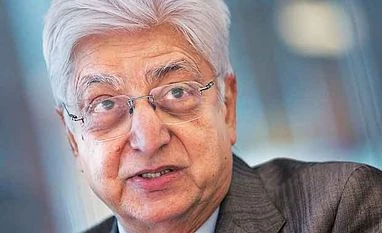 "Azim Premji")
premium
Last Updated : Feb 04 2017 | 7:13 PM IST
Over the last few years, Azim Premji, chairman of Wipro has increased focus on education and environment. The Wipro Earthian award, which was launched in 2011 and engages with nearly 50000 institutes today, recognises sustainability education across various schools and colleges in India. Premji interacted with students on Saturday to share his views. Edited excerpts:
We see very rapid changes in today’s time. Do you expect the momentum to continue?
There are changes in society, businesses, global politics. Change is just everywhere. Unless you learn to cope up with the change, you will fall behind. It requires a lot of effort and re-learning.
There was a time eagles used to visit our village. They've stopped coming now. What can bring them back?
You must grow trees for eagles to come back. They don’t normally sit on the ground, they sit on trees.
What is the story behind the Earthian Awards?
This is the sixth year of Wipro Earthian Awards, but we have not seen any redundancy in all these years. We saw the company's ability to engage with the society ... we are getting even more. So the roles you people have to play are absolutely critical. You have set an example to other people in the society
What are the changes that Wipro can bring to Arunachal Pradesh?
Premji/Anurag Behar, Chief Sustainability Officer: A company like Wipro can try and hope to contribute a lot more in the places where it actually has operations. For example, we are trying to work Sarjapur Road area to try and figure out how this area can be more sustainable in terms of water conservation. I think for a company like Wipro it is not so natural to be able to expand such work across the country, but at the same time, we deeply recognise the importance of being able to contribute whether it is Arunachal Pradesh, Andaman or Jammu & Kashmir.
What were main sacrifices you made to reach this position in life?
I worked very hard and I neglected my family
What are your views on rural development?
Rural development has to be at the grassroots. It has to involve the local population. It cannot be thrust from the top. If you are in a hilly area, it depends upon what fruits you can get from that hilly area. If you are on dry farmland, then we have a lot of good NGOs that we are financing. These NGOs work with farmers to extend the cropping pattern and enable them to sell their produce at a better price. So, it varies from one rural area to another. The most fundamental thing it requires is local community participation in the development.
Who and what inspired you to start Wipro?
Wipro was started by my father Hasham Premji. My contribution was to expand the existing product range and diversification. Mission to do better and grow much faster than the past was my inspiration.
How do you strike a balance between high-power consumption in manufacturing or processing and sustainability?
There is technology to enable much less power consumption. You can do a lot of innovation in a manufacturing line that helps in reducing power consumption. That eventually generates more profit. I don't agree that respecting sustainability objectives raises costs on certain parameters of production.
Though sustainability is not part of the curriculum, children from villages are much more aware of it than their urban counterparts, who read about it on textbooks. Why so?
Sustainability is a practice, not curriculum. People who are active within the environment get to know the system; whereas students who only learn theories in urban areas are disconnected from life. The best of schools are encouraging students to get involved in activities of saving energy, conserving water, power etc.
How are students of Azim Premji University different from others? How do they cope with the competition?
The university has a social purpose. The students we recruit are typically from smaller towns and villages. Many of the students for Masters courses are experienced and the majority of them are on scholarships. During the breaks, We encourage them to work in villages on social projects. Such exposure for 6-7 weeks a year will give them a good feel of grassroots. We are very proud that more than 70 per cent of the students join NGOs to work on social initiatives. The quality of the professors is among the best and less driven by greed or remuneration.
What is the mantra to your success?
Hard work and a lot of luck.
You left college in the middle. Did that affect your life or ambition?
I left the college in between primarily because I had to take responsibility from my father who died early. Eventually, many years later I did get a bachelor’s degree from a University.
The US and Europe are developed nations. India and China are developing. This already has caused a lot of damage to the tag of developing...
You know development is a concept of relativity — a nation is more developed than other primarily based on its per capita income. There are also many qualitative aspects. Some country is less developed but has a very high quality of education. Some country is developed but the quality of education is not great. So education plays an important role in development. Development also depends on the satisfaction index.
What is Wipro’s contribution in Smart cities project?
Smart city project is today more talked about than action taken. It has got a lot of attention from the Prime Minister. But the implementation is very shallow. Wherever the implementation has been there, we have actively participated in terms of IT (Information Technology) solutions and lighting solutions for smart city projects. I think the key priority of the government today is to get it moving and need a proper understanding of what smart city really should look like. The government has initially started with 25 cities and now they added another 25 cities. But, there is very little action on the ground.
We are a developing country and our lights consume more energy. How are we expected to improve sustainability?
The answer is to use green energy instead of using coal-based energy. Use hydro energy. Though this is not perfectly green energy, but it is still important environment-friendly source of energy. To India's credit, we are moving rapidly on green energy whether it is wind power or solar power. That can account for a substantial portion of our total energy consumption. There are lots of initiatives towards energy conservation and efficiency. Also, we do a lot of work on that because our company significantly reduces the cost of operations.
What do you think will be the future of children in India, especially girls?
I have travelled enough to village schools, colleges across the country and visited colleges for convocations. Girls are always coming up smarter. The questions girls come up with are, in my opinion, far more intelligent than the ones from boys. I have seen the first 20 people come for awards, even if the percentage of girls in the class are 20 per cent, 50 per cent of the awards goes to the girls. Girls take their careers much more seriously, particularly in villages, once the parents give them the latitude to do that. Unfortunately, too many parents pull in girls to take care of their younger child, because the mother has to go out for additional income?
Were you naughty as a kid?
Yes, I was very naughty when I was a kid. In those days, if you got rapped on the knuckles and got hit on the head, you had to kneel outside the class for a long time. Some of the practices are no longer there, but I spent a lot of time outside the class kneeling.