


A meet to fix states' Plans
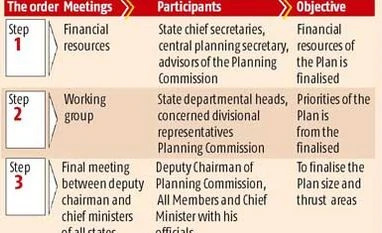)
Currently, the commission follows a painstaking three-stage exercise to arrive at the Plan size of states and UTs. This involve some 35 meetings between the sectoral advisors of the commission and representatives of the 28 states and seven UTs. In the new format, the commission will hold just one joint meeting with the states and Union territories.
The new structure will save a lot of time for both the commission and the states and do away with the lengthy exercise that goes into formalising a Plan, said a senior commission official. The joint meeting with states will be a national-level one. Therefore, representatives from UTs will participate. According to the official, having a common meeting for all states will foster cross-learning and help share thoughts and ideas.
Currently, the commission undertakes individual meetings with each state to finalise the latter’s financial resources. This is followed by the state concerned giving a draft Plan to the commission, then discussed by working groups.
The working group meetings, attended by state secretaries and sectoral advisers of the commission, are held with all the states after the financial Plan allocation for each is determined. In all, 35 such meetings are held.
The gist of the meetings are then discussed at the political level between the deputy chairman of the commission and the respective state chief ministers, after which a public announcement is made.
The commission wants to cut this lengthy process. Initially, the first two stages — individual meetings with states, and meetings between sectoral advisors and state governments — will be clubbed into one.
Instead of individual meetings with each state, the proposal is to have a two-day meeting with all states and UTs in each identified sector such as agriculture, health and education.
In this meeting, secretaries and senior officials from Union ministries, sectoral advisors of the commission and secretaries handling the sectors from each state and UTs will participate. They will determine the rough financial resource of each state for Plan expenditure and the priorities needed for focus.
Later, the process of a final meeting between state chief ministers (CMs) and the Planning Commission deputy chairman will also be changed, said officials.
The plan is to have a common meeting between state CMs and representatives of the UTs with the deputy chairman.

Don't miss the most important news and views of the day. Get them on our Telegram channel
First Published: Feb 25 2013 | 12:49 AM IST