


First road project on hybrid model to start by month-end
The foundation stone for the project is likely to be laid by Prime Minister Narendra Modi on December 31
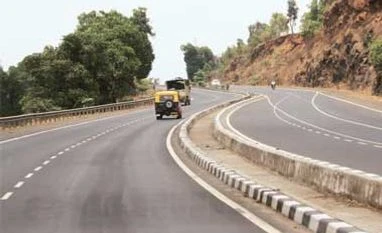 "Chennai-Bengaluru Corridor aims at 15% growth per year")
The three projects to be awarded this month are: Meerut-Bulandshahr (61.19 km) stretch and Package-I of the Delhi-Meerut Expressway (49.40 km) i.e Nizamuddin-UP border (8.7 km) stretch and Package-III — Dasna-Hapur section (22.27 km).
According to sources, four developers namely, Apco Infratech, Ashoka Concessions, Sabhav Infrastructure Projects and PNC Infratech has bid for the four-laning of a 61-km stretch, connecting Meerut with Bulandshahr in western Uttar Pradesh. The total estimated project cost is Rs 683.24 crore.
For Package-I of a six-laned Delhi-Meerut Expressway, Ashoka Buildcon and Welspun Group have submitted bids. The total civil cost is Rs 610 crore. For Package-III of the same section, Dasna-Hapur (22.27 km), Sadbhav Engineering, Apco, PNC Infratech and Ashoka Buildcon has put bids. The civil cost is Rs 940.5 crore. Bids for the second package is open and will close on December 30. Senior officials in the National Highways Authority of India said the bids were being evaluated and hopefully by December-end, it would be awarded.
Overall, the government is looking at awarding 1,300 km of national highway projects under the new model in FY16 for which detailed project reports have been prepared.
For 2015-16, the NHAI has identified 19 road projects, entailing an investment of Rs 14,300 crore and spanning Delhi, Uttar Pradesh, Himachal Pradesh, Jharkhand and Maharashtra.
HAM is a mix of engineering, procurement and construction (EPC) and build-operate-transfer (BOT) formats, with the government and the private companies sharing the total project cost in the ratio of 40:60, respectively. Under the model, the necessary land acquisition and environment clearances would be handed over to the private contractor prior to the commencement of the project. Also, the toll on the infrastructure project would be collected by the government and a fixed annuity with a profit margin would be given to the private partner.
Experts are of the view that this model is likely to ease financial burden on the exchequer too, as it lowers their upfront contribution for the project compared to EPC. Presently, In India, road projects are awarded via one of the three models: BOT-annuity, BOT-toll, and EPC.

Don't miss the most important news and views of the day. Get them on our Telegram channel
First Published: Dec 22 2015 | 12:08 AM IST