


Tax collections avert cash crunch blues
Direct tax collection up 15.12%, indirect tax up 26.2% in April-November
 "money cash")
premium
money cash
Last Updated : Jan 03 2017 | 6:23 PM IST
The absence of an adverse impact because of demonetisation on total tax receipts till November-end surprised economists. While collections under the income disclosure scheme (IDS) explain it partly, indirect tax numbers, which include excise duty, not showing any effect of the withdrawal of high-denomination currency notes was puzzling.
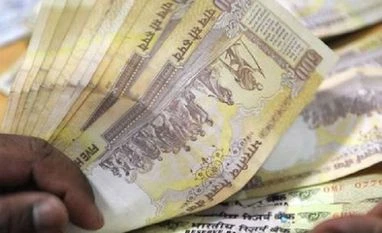
Prime Minister Narendra Modi had on November 8 announced the withdrawal on Rs 500 and RS 1,000 currency notes.
In the period between April and November, excise duty collections rose 43.5% to Rs 2.43 lakh crore, showed the figures released by the finance ministry on Friday. Budget Estimates for 2016-17 predict 12.15% rise in 2016-17 over the previous financial year.
Read our full coverage on Union Budget 2016
Till October, excise duty collections were up 45.4%. So, the growth in collections decreased only slightly. Part of the robustness could be explained by a hike in excise duties on petroleum, but those were assumed in the Budget as well.
“Excise duty collections are surprising, given the fact that we expect IIP to fall five% each in November and December due to demonetisation,” said Madan Sabnavis, chief economist, CARE Ratings.
However, ICRA principal economist Aditi Nayar said a sharp pick-up in the growth of electricity generation, Coal India Limited’s output as well as the automobile production in November, would counteract the impact of the disruption following the note-ban on production in the unorganised sectors as well as broader consumption sentiment, muddying the initial analysis of demonetisation.
Within direct tax collections, income tax mop up rose 23.89% in this period against BE of 18.09%. Gross income tax collections (before refunds) increased by 22.41%. A part of it could be explained by expected Rs 7,500 crore that was to come from the black money window as a first installment by November 30.
The growth is more or less the same as till October of 2016-17. Income tax showed a rise of 18.4% till October.
Corporate tax receipts were up 8.75% till November against BE growth of 9.04% for the entire 2016-17. Gross tax collections were up 11.22%. Though the growth was still lower than BE, it was not disturbed by the government move to demonetise. It could be gauged from the fact that these revenues rose 5% till October. Before refunds, these were up 11.6%.
Refunds amounting to Rs 1.05 lakh crore have been issued during April-November, 2016, which is 17.35% higher than those issued during the corresponding period in the previous financial year.
In other indirect taxes, service tax collections made the government kitty richer by 25.7% against at Rs 1.6 lakh crore during the first eight months of the current financial year against ten% projected in BE. Service tax kitty had grown by 26.9% till October. Customs duty collections remained subdued, but these have been so in earlier months of the current financial year as well. These rose by just 5.6% at Rs 1.48 lakh crore in the first eight months of the current financial year. BE had projected these tax collections to grow 9.78% in FY17. The collections had grown 4.1% till October.
The customs duty remained depressed despite merchandise imports reversing the earlier trend and rising by eight% in October this year.
In total, indirect tax collections were up 26.2% in the first eight months to Rs 5.52 lakh crore over that in the corresponding period of the previous financial year. BE had projected these to grow by 10.80%.
If one takes out additional revenue measures, such as hike in excise duty on fuel, increase in service tax rate, increase in indirect tax collections was 8% in April-November, 2016. One can say that this explains the whole puzzle in indirect tax receipts, but if one looks at tax numbers till October, the rise in indirect tax kitty was also eight%.
Direct tax collections rose 15.12% at Rs 4.12 lakh crore against BE of 12.65% rise for FY17. Total tax receipts were up 21.26% in the first eight months against BE of 11.73% rise.