


A fine balancing act
Bank of Baroda grew rapidly while maintaining asset quality under M D Mallya, Business Standard Banker of the Year
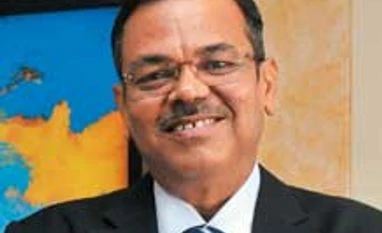)
When M D Mallya took over as chairman and managing director of Bank of Baroda in May 2008, the Mumbai-based lender was ranked fourth among Indias nationalised banks, after Punjab National Bank, Canara Bank and Bank of India. By the time he retired in November 2012, Bank of Baroda had become the countrys largest nationalised bank and the second largest bank overall, surpassing the likes of Punjab National Bank and ICICI Bank.
During Mallyas four-and-a-half-year term, the banks business expanded 2.6 times from Rs 2.58 lakh crore to Rs 6.72 lakh crore, as on March 31. Also, in 2011-12, when credit growth was sluggish, with large banks like PNB and Canara Bank recording 21 per cent and 11 per cent growth, respectively, Bank of Baroda clocked 26 per cent growth in advances.
What is important is that the growth was achieved despite growing economic stresses on the back of global financial and economic crises. And despite growing better than the industry, its asset quality remained the best among its peers, although gross and net non-performing asset ratios worsened during the last three years.

In 2011-12, when the biggest challenge for banks was loan growth, Mallya saw the opportunity to push retail loans. The bank had started repositioning itself for the retail thrust a few years ago, but Mallya expedited the process. Between March 2008 and September 2012, the number of specialised retail loan outlets increased from 15 to 40.
The retail story became successful also due to the re-orientation of the banks branches, as a majority of its branch staff are now exclusively focusing on customers (the entire back office work has been transferred to centralised processing units). The branch staff has also been sensitised for cross-selling insurance and mutual fund products, which also earns a fee income for the bank.
All these initiatives yielded rich dividends. Between FY08 and FY12, BoBs operating profit almost tripled (from Rs 2,929 crore to Rs 8,630 crore), while net profit grew three-and-a-half times (Rs 1,436 crore to Rs 5,007 crore).
This was achieved primarily on the back of an enhanced current and savings account base, a systematic reduction in bulk business, efficient pricing of deposit and loan products, and focused management of liquidity.
Mallya is credited with turning around not just Bank of Baroda, but also Pune-based Bank of Maharashtra, which was experiencing a rough time. Prior to his BoB stint, Mallya was the chairman and managing director of Bank of Maharashtra. During his tenure the bank made rapid strides in all its spheres of activity, such as business growth, technology, human resource development and organisational restructuring, among other things.
Born on November 9, 1952, Mallya studied engineering from Karnataka Regional Engineering College, Suratkal (now known as National Institute of Technology, Karnataka) and then completed a post-graduate Diploma in Management from the Indian Institute of Science, Bangalore. He joined the banking sector in 1976 by taking up a job with Corporation Bank. Mallya was also an executive director of Oriental Bank of Commerce (OBC) for nine months, before moving to Bank of Maharashtra. The merger of the erstwhile Global Trust Bank (GTB) with OBC was streamlined under his leadership.
HIGHLIGHTS OF FY12
- Business expanded 25.86% to Rs 6.72 lakh crore
- Advances grew by 25.67% to Rs 2.87 lakh crore
- Deposits increased by 26.01 % to Rs 3.84 lakh crore
- Net profit grew by 18.03% to Rs 5,007 crore
- Gross NPA ratio increased to 1.53% from 1.36% in previous year, but still the lowest among peers
- Capital adequacy ratio maintained at 14.67%
- Return on assets at 1.24% in FY12 vs. 1.33% in FY11 higher than all its peers
- Cost to income ratio declined from 39.87% to 37.55%
- Business per employee increased from Rs 12.29 crore to Rs 14.66 crore in FY12
- Profit per employee increased from Rs 11 lakh in FY11 to Rs 12 lakh in FY12
Don't miss the most important news and views of the day. Get them on our Telegram channel
First Published: Jan 31 2013 | 12:17 AM IST