


Donald Trump's 'fire and fury' threat is a gift for North Korea's propaganda setup
Washington has rarely used such infuriating language and colourful enough to match Pyongyang's style
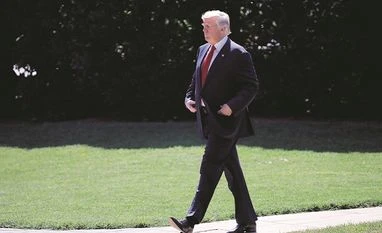 "Donald Trump")
US President Donald Trump said recently that dealing with steel was no longer a top priority. (Photo: Reuters)
Though the relationship between the US and North Korea can hardly be called stable, this so-far-rhetorical escalation is something new. Washington has rarely, if ever, used language infuriating and colourful enough to match Pyongyang’s style, but times have changed. One news outlet has even set up a game called Who said it: Donald Trump or Kim Jong-un?
While this would all be amusing if it wasn’t for real, the world is facing the real possibility of instability, military escalation, and a potential nuclear conflict that could cause millions of casualties. In an ironic role reversal, many are now pondering whether Trump’s US is in fact any more rational than Kim’s North Korea.
Still, it’s easy to forget that the north has been developing nuclear weapons for the better part of the last two decades. While the current situation has been precipitated by a volley of tit-for-tat missile tests, UN sanctions and tweets, Pyongyang’s overall nuclear strategy and propaganda style has hardly changed.
So what should we make of Pyongyang’s current nuclear rhetoric? What does it say about the government – and where it might lead?
Loud and clear
As do most totalitarian governments, North Korea speaks through various spokespeople – but with one voice. Over the years, its messages have been communicated clearly and without divergence to the rest of the world by foreign ministers, officials from the Korean People’s Army, or the three Kims themselves. To this effect, North Korea’s goals have been articulated clearly and publicly.
At the Seventh Workers’ Party Congress in 2016, Kim Jong-Un put it very bluntly: We will consistently take hold on the strategic line of simultaneously pushing forward the economic construction and the building of nuclear force and boost self-defensive nuclear force both in quality and quantity as long as the imperialists persist in their nuclear threat and arbitrary practice.
These messages are disseminated within the north by official press outlets, such as Rodong Sinmun, the official newspaper of the Central Committee of the Workers’ Party, and abroad via the English-language Korean Central News Agency. Since these channels are all tightly controlled, the Kim government usually communicates quite consistently, its stock-in-trade being a high daily dose of anti-US and anti-Japan rhetoric laced with acerbic takes on South Korea and self-aggrandising reports on its own policies and accomplishments.
Pyongyang’s claims about its nuclear programme have followed a similar pattern. Take this piece, from July 1, 2017: