


Three advertising myths busted
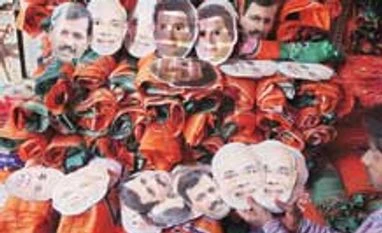)
Political campaigning in India has traditionally been stereotypical, dominated by candidate speeches, posters and slogans. The year 2014 was different. Campaigns for the 16th Lok Sabha elections saw politicians turn into brands, and marketing efforts picking up cues from the FMCG category. We take a look back at the most trending topic of the year so far to identify the top three advertising myths that were busted in the run up to the 2014 elections
Myth # 1: Social media cannot build brands: Zafar Rais
Fact: Social media can effect a massive mind-shift by engaging the masses, educating them about their options and helping them take an informed decision
In the run up to the 16th Lok Sabha elections, a lot of attention was paid to conversations on social media, measuring which politicians were trending in search volume and counting re-tweets and followers. The General Elections in India was almost a test case: just as advertising can create a preference among consumers for a particular aerated drink or a box of cornflakes, can an aggressive media campaign make people choose a particular leader? It absolutely seems so. The first-time voters, many of whom form part of the 'connected' generation, numbered around 150 million this year, and most parties took steps to reach out to voters digitally.
According to Facebook, between the day the elections were announced and May 16, the counting day, 29 million people made 227 million poll-related interactions (posts, comments, shares and likes), with 13 million people on Facebook posting 75 million updates related to Prime Minister Narendra Modi. Data released by Twitter from January 1 till May 12 shows the graph for the political parties and the rise and fall in the number of tweets. Keeping in sync with real time developments, the popularity of the BJP soared slowly with the last months leading to the elections, while the AAP and the Congress were far behind. With video marketing, trending hashtags, selfies, memes and election trackers, digital was the medium that impacted the Indian audiences.
The Modi punch-line became a mass sing-along rhyme: "Desh hua vikas ke rath pe savaar… ab ki baar, Modi Sarkaar". Thousands of such rhymes became popular. This is not the work of an ad agency; this is mass purchase of a message through word-of-mouth. The Congress party released the first of its ads in its march towards the 2014 Lok Sabha polls with a marked change in strategy from its campaigns for the 2004 and 2009 elections. Forced to abandon the 'aam aadmi' motif, it coined a new line: 'Har haath shakti, har haath tarakki'. Perceptions play a big role in the market place. Modi's message was largely 'vikas' (progress) and other parties had messages which focused on secularism that didn't prove to be much of success.
One of the key aspects of a marketing battle is 'out of mind equates out of business'. The BJP led the way right from the start with a video that went viral on NaMo and sustained recall through memes and TVCs. The ability to use digital through intelligent conversations created preference and high leveragability among the youth. This contradicted many opinionated folks who said 'social media cannot impact the elections'- social media helped create a massive mind-shift by engaging the masses, educating them about their options and helping them take an informed decision.
Zafar Rais
CEO, MindShift Interactive
CEO, MindShift Interactive
Fact: In an arena like politics, instead of fine-targeting, it becomes imperative to try to influence the majority, because of the winner-takes-all nature of the game
Segmentation is key to marketing. It is based on the logical assumption that it is not possible to satisfy everyone equally effectively. Therefore, marketing is normally directed to a well-defined cluster, even if it is sometimes fairly broad, for example, the middle-class, women, youth, the common man etc. On the other hand, in attempting to appeal to all segments, or at least a vast majority, marketing messages tend to get diluted to the level of the lowest common denominator.
In the arena of politics, however, it becomes imperative to try to influence the majority, because of the winner-takes-all nature of the game. Perhaps for this reason political messaging tended to be populist in nature. While thinly veiled-potshots at rivals are not uncommon, political advertising is often patronising and paternalistic. The tone tends to be self-important and humour is notable by its absence. This makes marketing harder since the quest to achieve both width and depth of influence seems paradoxical. Narendra Modi's election campaign and its outcome suggests otherwise. Without rigorous statistical scrutiny, it could be conjecture, but the overall picture does indicate that Modi's campaign resonated across segments, picking votes from across the spectrum. Was it the universally relevant promise of better economic prospects rather than around some lofty abstraction that struck a chord with the majority of voters? If so, this reflects a new paradigm in Indian society.
Hitherto in India, it was parties that were brands, which were visually represented by a symbol. While there have always been key faces associated with the party and its election symbol - a brand ambassador, if you will - the party and its ideology were projected as bigger than its leader. Perhaps it was believed that overtly focusing on an individual would display a level of immodesty that may not go down well in the Indian society. Not so, anymore. Taking a leaf out of the American presidential style of campaigning, the BJP's campaign was exclusively about one man, who was single-mindedly projected as the party, its ideology, its leader, its symbol and its face, all rolled into one.
And the fact that it succeeded is surely a radical departure from the past and a self-perpetuated myth about Indian politics and how to appeal to voters.
Samit Sinha
managing partner, Alchemist Brand Consulting
managing partner, Alchemist Brand Consulting
Fact: Offers - handouts or subsidies - do not match up to the power of a strategically thought through positioning
The test of real marketing acumen is in its ability to challenge 'truisms' and accepted beliefs. Looking at the Indian General Elections 2014 through the lens of a marketer actually gives several wake-up calls and questions the wisdom behind 'truisms' or myths that have crept into our lexicon over time.
The conventional wisdom is that if you need immediate jump in sales and market share, an offer is the only option and brand communication cannot deliver immediate results effectively. This election questioned and demolished this myth. The easy approach to garnering numbers through offers - whether through handouts, subsidies and promise of freebies - could not match up to the power of a strategically thought through positioning, which resonated at a deeper level with the electorate: a positioning which promised a sustained improvement in quality of life over the long-term rather than short-term improvements through doles. This message is important given the marketers increasing preoccupation with looking at business from a quarter-on-quarter perspective without understanding the long-term impact.
Increasingly, we believe that rational arguments are not as effective at bonding with consumers as an emotion-laden communication approach. This election actually showed that a well-reasoned rational argument which has delivered results can be used to build effective campaigns. The crux of the winning campaign was about highlighting the effectiveness of its promise in one state as the proof - a rational argument that has been seen as effective in delivering results across the length and breadth of the country.
This election was perhaps the first time that India saw an e-election. Every aspect of social media was managed in concert to multiply the impact whether it was the seeding of memes, the effective use of Twitter to exhort followers to vote and display the 'Fingie', or the use of Google Hangouts to connect with the online generation. In fact, one analysis suggests that over 56 million election-related tweets were posted in 2014.
In 2009, the most Twitter followers that any single active politician had were 6,000 versus 4.3 million today.
Nitin Karkare
chief operating officer, FCBUlka Advertising
chief operating officer, FCBUlka Advertising

Don't miss the most important news and views of the day. Get them on our Telegram channel
First Published: Jun 02 2014 | 12:13 AM IST