


The choices you make, Mr Modi
To say a lynching is "sad" is to say not very much at all. In election season in Bihar, Mr Modi has shown political finesse in his comments on Dadri, but as prime minister he should have condemned the murder.
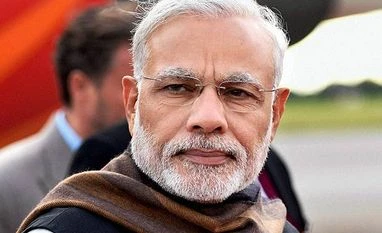 "Narendra Modi")
Narendra Modi
This morning, the Bengali newspaper Ananda Bazar Patrika carried Prime Minister Narendra Modi’s statements on the lynching of Mohammed Akhlaque in Dadri and the cancellation of Pakistani ghazal singer, Ghulam Ali’s concert in Bombay after protests by BJP ally Shiv Sena. "Incidents like Dadri and Ghulam Ali are dukkhojonok and anabhipreto (sad and undesirable) but what is the role of the Centre in these incidents?" Mr. Modi said.
"The BJP has always opposed pseudo-secularism. Opposition regularly alleges BJP of igniting communal flare but isn’t the opposition doing polarisation now?" he asked.
Spoken as a leader of the BJP, in the middle of an important election in Bihar, these words may not have seemed out of place. But for the other position of prime minister, a far more important one, that Mr Modi holds these days.
For the last nearly 17 months, Mr Modi has held charge of the office of the Prime Minister of the Republic of India. As the Prime Minister of the entire country -- which includes but is not restricted to BJP members or supporters -- it was expected of him that he unequivocally condemn the lynching of a man. But for Modi, the BJP leader, it was not politically profitable to condemn the heinous crime where the needle of suspicion allegedly points to some members of his party. It was a choice between being the Prime Minister or a partisan political leader.
Mr Modi made his choice, first by maintaining the silence for many days and then by choosing the words that he chose when asked by Ananda Bazar Patrika.

Mr Modi, the Prime Minister, could have asked his staff to collate the various statements issued by his partymen, including a union minister, on the Dadri lynching. It would have shown him that the minister, who also looks after the Prime Minister’s Lok Sabha constituency and is elected to the Lok Sabha from the constituency which includes Dadri, actually said that the lynch mobat least did not "lay a finger" on the dead man’s daughter.
As the Prime Minister, Mr Modi could have seen how quickly and unequivocally his friend ‘Barack’ reacts to any incident of racism or public killing. President Obama has little federal jurisdiction in such matters but he choosses to use the moral authority and public visibility of his position to make a difference. Mr Modi could have easily chosen the path shown by President Obama. The whole world saw it when Obama invited a 14 year old Mohamed Ahmed, victim of a police atrocity, to the White House in a gesture that assured the young kid that he needn’t be afraid.
But Mr Modi appears to have calculated instead the number of MPs his party has from the state of Uttar Pradesh, where the lynching took place. He himself is one of the 71 BJP MPs who won in the elections held last year. He chose to look ahead at the assembly elections due in Uttar Pradesh a couple of years from now. He chose to look at neighbouring state of Bihar, where the otherwise genteel Sushil Modi has been holding forth on the vote as a referendum between beef eaters and those who want to ban cow slaughter.
Many would argue that Mr Modi acted in a manner beneficial for the party. There is nothing wrong with it, but should he not stop when his party benefits at the cost of the country? Does he not realise that if there is a choice between being the partisan party leader and nation’s prime minister, the answer is simple -- and obvious?
Which opposition party is to blame for what is going on in Mumbai, first with Ghulam Ali and then with Sudheendra Kulkarni? Shiv Sena happens to be part of the ruling alliance both at the centre and the state.
But what could have Mr Modi done? He could have paid a visit to the home of a man who was killed by villagers high on rumours and baying for his blood. He could have given comfort and solace to the dead man’s daughter and 75 year old mother who was also injured by a mob. He could have unequivocally condemned this murder. He could have used the words the dead man’s son, an Air Force technician, poignantly used on television to appeal for harmony.
It is not just about what Mr Modi chose to do. It is equally about what he chose not to do.
In making his choices, Mr Modi forgets that he is the Prime Minister of India -- of all Indians, of also those who did not vote for him. Instead of speaking for all Indians, he uses all opportunities and events to target the political opposition. We now know what we already knew: that just like a puppy coming under the tyre of a car, lynchings are sad. But surely they merit outright condemnation, Mr Prime Minister?
@bhayankurDon't miss the most important news and views of the day. Get them on our Telegram channel
First Published: Oct 14 2015 | 2:14 PM IST