


Can you make peace with your smartphone? Two books explore the idea
With this book, the author calcifies some of the deposits heavy phone use has left on her soul
 "books, book review")
Anyone on social media knows that there are plenty of dingbats.
Listen to This Article
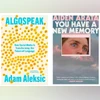
ALGOSPEAK: How Social Media Is Transforming the Future of Language
by Adam Aleksic
Published by Knopf
256 pages $29
Also Read

 "A World in Flux: India's Economic Priorities. Essays in Honour of Shankar Acharya")
 "A Billion Butterflies: A Life in Climate and Chaos Theory")
 "Book")
 "The Johnson & Johnson Files: The Indian Secrets of a Global Giant")
 "Pannonhalma Archabbey")
YOU HAVE A NEW MEMORY
by Aiden Arata
Published byGrand Central Publishing
227 pages $28
By Alexandre Jacobs
This much we know: Smartphones are making us dumber. Compelling essays suggest we memorise hand-scratched poetry in the morning before opening Pandora’s inbox, and warn that the declining literacy of the digitally oversaturated is threatening democracy.
This summer, as an experiment, I decided to go the other way and submit utterly to the pleasures and terrors of the phone when alone, without self-recrimination or judgement. Jerry Lewis had his telethon. This would be a cyberbender. Benefiting nothing.
I followed dozens of cats on TikTok, among my middle-aged cohort the most socially scorned of apps. I soothed myself to sleep scrolling Reddit posts or listening to podcasts — in full blast of that hot, bad, blue melatonin-sucking light.
I clicked on every awful news alert. I clocked more screen time than my 17-year-old son, who at least has the decency to silence his notifications.
And I read, partly on the phone, two books (gadzooks) published last month by internet personalities. Both offer glimmers of hope that this little gizmo is not completely destroying society.
Algospeak is by Adam Aleksic, an energetic young linguist with millions of online followers.
“‘Ulysses’ would never have succeeded on TikTok,” Aleksic acknowledges of the 800-odd-page James Joyce day-in-the-life novel (now, incidentally, a popular short-form video conceit) published in 1922. “It’s too disjointed, too nonlinear, requires too much conscious attention. People would scroll away.”
But social media denizens continue to dust off history and literature, like modern chimney sweeps — starting a successful campaign on TikTok, for example, after the account of the Charles Dickens Museum in London got shadow-banned, idiotically, because the author’s surname contains a synonym for “penis.”
It was a small but significant moment of resistance against the blunt instrument of content moderation.
Anyone on social media knows that there are plenty of dingbats. But Aleksic also sees an army of language soldiers whose workarounds he puts in the tradition of Thomas Bowdler doing
PG edits of Shakespeare (“bowdlerizing”), or comic-book writers getting around the profanity rules of syndication with creative punctuation known as “grawlixes.”
Norman Mailer circumvented his censorious publisher by using “fug” in The Naked and the Dead (1948), Aleksic reminds us. While Mailer’s work may be somewhat out of fashion, his spirit lives online where writers now use “seggs” or “kermit seweslide” to evade the algorithm.
If you think today’s internet slang seems nonsensical, revisit the language of long ago, Aleksic suggests, quoting Chaucer writing in the 14th century: 3e know ek that in fourme of speche is change/With-inne a thousand 3eer and wordes tho/That hadden pris now wonder nyce and straunge (You know that the form of speech will change/Within a thousand years, and words/That were once apt, we now regard as quaint and strange) Consider Chaucer, in other words (literally) and certainly Lewis Carroll’s “Jabberwocky,” before you dismiss the 2023 TikTok gem that begins “Sticking out your gyat for the rizzler/You’re so skibidi/You’re so fanum tax/I just wanna be your sigma.”
If Aleksic is a peppy ambassador of the extremely online’s resourcefulness, Aiden Arata is a bard of their brain rot (Oxford University Press’s word of 2024). Her collection of essays about the internet’s effects on identity and mental health is titled You Have a New Memory, after that distressing habit our photo stream has developed of abruptly resurfacing former friends and bad hair days.
“In the face of anxiety, therapists will tell you to check the facts,” she writes during her own attempted detox at a Benedictine abbey, after too much floating in the online ether made her feel like Ophelia. “The problem is the facts are in my phone.”
On Instagram, Arata has a comparatively modest 100,000-plus following, making her a niche internet micro celebrity, or “nimcel,” a phrase she has had printed on a pink thong selling for $20. The
website Mashable once called her “the meme queen of depression Instagram.”
With this book, she calcifies some of the deposits heavy phone use has left on her soul — some pollutive, perhaps; others beautiful, like stalactites. In “My Year of Earning and Spending,” she depicts with commendable chill the weird, alienated world of cheap online shopping and affiliate marketing, dressing a $1,000 mattress she gets for free in pink satin sheets that conjure “cocaine décor”: the princess and
the page views.
Indeed Arata is ruthless in trying to describe the vibe, a term that’s become so ubiquitous in the past few years, in politics and aesthetics, that Aleksic uses it without comment.
“In your phone, you feel yourself dissolving like a pill in water,” she writes, echoing John Lennon intoning “Tomorrow Never Knows.” “To give yourself over to the collective, to drown in the stream: a beguiling way to join the revolution.”
The reviewer is a Times book critic and occasional features writer.
©2025 The New York Times News Service
More From This Section
 "Book")
 "Superbloom: How Technologies of Connection Tear Us Apart")
 "Former New Zealand Prime Minister Jacinda Ardern's")
 "book review")
 "Dalit Kitchens of Marathwada")
Topics : Book Reviews books Instagram TikTok
Don't miss the most important news and views of the day. Get them on our Telegram channel
First Published: Aug 10 2025 | 9:41 PM IST