


The War Within a War: How Vietnam shaped the civil rights movement
A new history shows how the Vietnam War became a frontline of America's civil rights struggle, exposing deep racial injustice within the US military
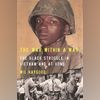 "THE WAR WITHIN A WAR: The Black Struggle in Vietnam and at Home")
THE WAR WITHIN A WAR: The Black Struggle in Vietnam and at Home
Listen to This Article
THE WAR WITHIN A WAR: The Black Struggle in Vietnam and at Home
By Wil Haygood
Published by Knopf
360 pages $35
Also Read

 "magicpin")
 "Odd-even Phase-II starts")
 "Upendra Dwivedi, Upendra, Dwivedi")
 "Brandman Retail")
 "NDMC")
Brent Staples
The New York Times war correspondent David Halberstam caught the pulse of his era when he observed, in 1964, that there were parallels between America’s misbegotten adventure in Vietnam and the struggle for civil rights in the murderous, Klan-infested state of Mississippi.
In the first years of the war, it was more than coincidental that the frontline fighters were disproportionately Black. Defence Secretary Robert McNamara — and the other federal officials whom Halberstam derisively called “the best and the brightest” — had contrived to capture thousands of souls for the ill-fated war on Communism by lowering testing standards and allowing the courts to drop criminal charges against young men who agreed to enlist.
The scheme, known as Project 100,000, protected the white middle class by preserving college deferments. Nearly half of those brought in by the project were Black, though African Americans made up little more than 10 per cent of the population, and nearly all were poor.
The journalist Wil Haygood leverages this scenario to excellent effect in his clarifying and richly insightful Vietnam-era history, The War Within a War. As Haygood notes, Project 100,000 was cynically billed as part of Lyndon Johnson’s Great Society. But behind closed doors, the famously salty president slipped into his neo-Confederate drawl, praising the project as a means of cleaning up “all these Nigra boys that are now rejects.”
Still, the Pentagon was willing to tolerate Black soldiers only inasmuch as they forswore cultural expressions of Blackness. They could be arrested and even court-martialed for performing a ritual greeting known as the dap — short for “dignity and pride” — which ranged from a simple fist bump and handshake to an elaborate display of grips, finger snaps and chest thumps that often varied from squad to squad, platoon to platoon.
By criminalising the dap, the Pentagon hardened it into a signifier of resistance that crossed the ocean from Vietnam to the riot-torn streets of the United States just in time to become a signature salutation of the Black Power movement.
Civil rights histories typically treat Vietnam as an external matter that came to the fore domestically when the Reverend Martin Luther King Jr condemned it on moral grounds in 1967. But The War Within a War conceives of Vietnam as a foreign theatre of the rights struggle, in which concerns about inequality were magnified by the fact that Black soldiers were being asked to die for a country that discriminated against them in housing, employment and education.
The view of the war as racially unfair spread swiftly through almost every aspect of African American life. By 1967, Haygood points out, Black Mississippians had started linking their battles for voting rights to the unfair burden borne by their sons in Vietnam. That same year, the global celebrity Muhammad Ali surrendered the heavyweight boxing title rather than serve, declaring the war a racist act of aggression against the brown people of Southeast Asia.
The Motown singer Marvin Gaye responded to the Vietnam nightmare witnessed by his veteran brother Frankie with the epic 1971 album “What’s Going On.” As Haygood writes, the album’s moving portrayal of a soldier returning home landed like “slow and rolling thunder,” ushering politicians, activists and bereaved mothers into “the church of Marvin.”
Haygood’s is a temperate and perceptive social historian. He maintains his characteristic low-key tone as he explains why the full picture of Black Vietnam went unseen by most Americans as he retells the war through the lives of nine African Americans, most of them soldiers. Among his subjects are Joe Anderson, the infantry commander whose exploits in battle were captured by an Academy Award-winning documentary; Philippa Schuyler, the fascinatingly eccentric concert pianist who died in a helicopter crash while rescuing Vietnamese orphans, many of whom had been fathered by Black troops; and Wallace Terry, a reporter
for Time who struggled to convey what he had found in the war into the pages of the magazine.
Complaints about racial discrimination reached a crescendo just as the Pentagon was congratulating itself for integrating the fighting force. In 1968, an African American major named Lavell Merritt made an unexpected appearance at a daily press briefing. He used the occasion to denounce the American military services as the “strongest citadels of racism on the face of the earth” and proclaimed that Black officers like him were Uncle Toms who had been “clinging to the mistaken belief that patience, diligence and professional competence would yield the benefits enjoyed by the majority ethnic groups.” He further startled listeners by declaring that only by being “a good nigger” had he been able to get a satisfactory rating from a racist superior.
Merritt’s words resounded through the military and around the civilian world. After 18 years in the Army, he was forced into retirement. Just before he left the armed forces, he wrote a letter to President Johnson. “I understood the magnitude of the bitterness and animosity that would be heaped upon me,” he said, but he was surprised by the fear that prevented the military from acknowledging its race problem and moving toward just treatment for all who served.
The reviewer was the recipient of the Pulitzer Prize for editorial writing in 2019. ©2026 The New York Times News Service
More From This Section
 "Rebellion in Verse: Resistance and Devotion in the Tamil Bhakti Movement")
 "book review")
 "Tatyasaheb: The Story of a Bombay Entrepreneur")
 "Busy Women: Building Commerce and Culture in Middle India")
 "Whither Human Rights in India")
Don't miss the most important news and views of the day. Get them on our Telegram channel
First Published: Feb 15 2026 | 11:06 PM IST