


Ola Electric's ferrite motor gets nod, cuts rare-earth dependence
India's largest EV maker secures certification for a ferrite motor that removes rare-earth magnets, tackling cost and supply-chain challenges in electric mobility
 "Ola Electric Motor with Ferrite Magnets")
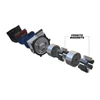
Ola Electric Motor with Ferrite Magnets. | File Image


Listen to This Article
Ola Electric has received government certification for a motor that eliminates rare-earth magnets in electric scooters, potentially reducing costs and supply-chain dependence for India's largest electric two-wheeler (e2W) manufacturer.
The ferrite motor, developed in-house and certified by a Tamil Nadu testing facility, matched the performance of conventional rare-earth permanent magnet motors in government-mandated tests.
The company plans to integrate the technology across its product lineup, addressing cost and sourcing challenges that have constrained electric vehicle (EV) adoption in price-sensitive Indian markets.
“This certification has been granted by Global Automotive Research Centre, Tamil Nadu, after Ola Electric’s ferrite motor underwent rigorous performance verification and mandatory motor power tests as per AIS 041 that is notified by the Ministry of Road Transport, Government of India,” said the company in a statement.
The tests showed that Ola Electric’s in-house developed ferrite motor’s performance matched that of the motors with rare-earth permanent magnet motors in terms of net power for 7 kilowatt (kW) and 11 kW variants.
Also Read

 "OLA")
 "Roadster X series, Ola Electric")
 "Ola Electric, OLA")
 "share market, stock market")
 "Ola Electric, OLA")
Ola said the ferrite motor delivers efficiency, performance, and durability on a par with rare-earth permanent magnet motors while dramatically lowering costs and derisking supply-chain fluctuations. The company first introduced its ferrite motor at its annual “Sankalp 2025” event in August this year.
With this certification, Ola Electric said it will begin integrating the ferrite motor across its product lineup, further enhancing performance, affordability, and sustainability for millions of Indian consumers.
The development comes as rising trade tensions between the US and China threaten to disrupt the global EV supply chain, particularly the production of EV battery cells.
EV manufacturing is heavily reliant on rare-earth minerals, which are used in a range of critical components. Among them is the electric motor, a core element that converts electrical energy into mechanical power. Most EV motors rely on permanent magnets made from rare-earth elements such as neodymium — materials for which China remains a dominant global supplier.
As geopolitical risks mount, automakers and suppliers are racing to secure alternative sources, and develop technologies that reduce dependence on these strategically sensitive materials, according to experts.
More From This Section
 "Coal India, coal industry, women empowerment")
 "ITC Hotels")
 "Abbott, Abbott logo")
 "Jindal Steel and Power Logo (Photo: Jindal Stel and Power)")
 "Marico")
Topics : Ola Electric Mobility mineral sector
Don't miss the most important news and views of the day. Get them on our Telegram channel
First Published: Oct 06 2025 | 4:35 PM IST