


Thali cost dips in October as falling food prices ease inflation
Prices of vegetables, onions, potatoes, and broilers fell in October, bringing down the average cost of a home-cooked thali and extending deflation in essential commodities
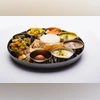 "Lunch, Thali, Dinner, Platter")
The ECI fell by 3.6 per cent in October, marking the “deepest decline in the index since it was constructed.” The index further declined by 3.8 per cent in the first six days of November, Bank of Baroda noted. (Photo: Shutterstock)
Listen to This Article
The cost of a home-cooked thali (platter or set meal) slid in October as the prices of key ingredients such as vegetable, onion, potato and broiler declined during the month, the latest edition of Roti Rice Rate report released by credit rating agency Crisil on Friday noted. Separately, the essential commodities index (ECI) prepared by Bank of Baroda (BoB) remained in the deflation zone for the sixth consecutive month.
Crisil data showed that the cost of vegetarian thali fell to a four-month low in October to ₹27.8 from ₹28.1 in September, while the cost of a non-vegetarian thali eased to ₹54.4 in October from a seven-month high of ₹56 in the preceding month.
“Onion prices slipped 51 per cent, tomato slid 40 per cent, and potato fell by 31 per cent, thus helping lower the overall cost of thalis. The decline in the non-veg thali cost was on account of an estimated 6 per cent drop in broiler prices amid oversupply,” the report noted.
The rating agency calculates the average cost of preparing a thali at home based on the input prices prevailing across the country. The monthly change reflects the impact on the common man’s expenditure.
Pushan Sharma, director-research at Crisil Intelligence, said that onion prices may rise moderately while potato prices are likely to stay firm till November. However, potato prices could ease once cold storage stocks are released by mid-December, Sharma added.
Also Read

 "skipping meals, intermittent fasting")
 "stray dog sterilisation")
 "veg thali food plate chef restaurant")
 "Thali, Food, Lunch")
 "Food and grocery delivery firm Swiggy has marginally narrowed its consolidated net loss in the second quarter of financial year 2025 (Q2FY25) to Rs 625.5 crore from Rs 657 crore a year ago. But sequentially, the loss was up as the firm had reported a")
“Pulses prices may rise in the near term, reflecting the impact of excess rainfall on kharif yields and the recent imposition of a 30 per cent import duty on yellow peas. Should the government extend the import duties to other pulses, prices could witness a steeper rise,” he said.
The ECI, on the other hand, fell by 3.6 per cent in October, marking the “deepest decline in the index since it was constructed”. The index has further fallen by 3.8 per cent in the first six days of November, BoB noted.
“Out of 20 commodities, prices of 10 declined. Within this, the most noticeable decline was visible in the case of vegetables. In fact, prices of TOP vegetables (tomato, onion and potato) have seen a sustained fall this year. Major pulses have also continued to witness a deflationary trend. Within this group, the price of tur dal has dropped most significantly by 29.4 per cent — the largest decline since January 2018,” the bank said.
The public sector bank further projected that the consumer price index (CPI)-based retail inflation is likely to remain between 0.4 per cent and 0.6 per cent in October.
“Food inflation has been trending lower largely due to the continued deflation seen in the vegetable category, specifically TOP vegetables. This, in turn, is supported by a significant pickup in mandi arrivals. A similar trend is expected to persist in the coming months too, as the harvesting season sets in,” the bank added.
More From This Section
 "india eu trade negotiations")
 "Reserve Bank of India (RBI) Deputy Governor T Rabi Sankar | photo: KAMLESH PEDNEKAR")
 "E-way bill")
 "Swaminathan J, Deputy Governor, Reserve Bank of India")
 "HC nullifies acquisition of 50 acres land in Baruipur in WB")
Topics : meals food prices food inflation
Don't miss the most important news and views of the day. Get them on our Telegram channel
First Published: Nov 07 2025 | 9:19 PM IST