


Parliamentary Panel seeks relief for shippers hit by West Asia disruption
Parliamentary panel recommends insurance support, working capital relief and a long-term maritime resilience framework amid rising costs and supply disruptions
 "shipping")
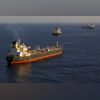
The West Asia disruption has resulted in vessel rerouting via the Cape of Good Hope, adding 10 to 14 days to transit times, elevating freight and insurance costs, and placing pressure on export competitiveness. | Image: Bloomberg
Listen to This Article
Amid the worsening West Asia crisis, a parliamentary committee has asked the government to extend relief measures to exporters hit by the complete halt of maritime trade from India to West Asia, including enhanced working capital limits and relief on insurance costs on shipments.
In its report, the Department-related Parliamentary Standing Committee on Transport, Tourism and Culture recommended that the shipping ministry, in coordination with the Ministry of Commerce and Industry, the Ministry of Petroleum and Natural Gas, the Ministry of External Affairs, and the Directorate General of Shipping, develop and institutionalise a Maritime Resilience and Trade Diversification Framework as a permanent component of India’s maritime policy architecture.
“The Committee recommends calibrated and time-bound support measures to shield exporters from transient cost escalation. These may include partial underwriting of war-risk premiums for Indian-flagged vessels through a dedicated Maritime Risk Pool operated by SMFCL,” the committee said in its report.
It also recommended extension of export obligation compliance timelines for Export Promotion Capital Goods (EPCG) and Advance Authorisation holders affected by rerouting delays; facilitation of enhanced working capital limits through coordination with trade finance institutions; and a structured relief framework for port-related charges on delayed cargo, including demurrage waivers and container detention fee adjustments at major ports.
The West Asia disruption has resulted in vessel rerouting via the Cape of Good Hope, adding 10 to 14 days to transit times, elevating freight and insurance costs, and placing pressure on export competitiveness, particularly for low-margin merchandise.
Also Read

 "Aviation IndiGo, Airports in India, Airline IndiGo")
 "External Affairs Minister S Jaishankar during his virtual address at a conference titled “India and Russia: Towards a new bilateral agenda”")
 "Donald Trump, Trump")
 "Strait of Hormuz, crude oil (Photo: PTI)")
 "Jindal Steel's Angul Integrated Steel Complex in Odisha")
The panel also recommended that the ministry facilitate a structured alternate routing preparedness protocol for Indian shipping operators and port authorities.
“This may include pre-negotiated berthing and bunkering arrangements at key transshipment hubs, including Colombo, Singapore, and Cape Town; bilateral maritime logistics agreements with strategic partner nations to ensure priority access during disruptions; and capacity assessment of India’s own transshipment-capable ports, particularly Vizhinjam (under commissioning), Vadhvan, and ICTP Great Nicobar, to reduce dependence on foreign transshipment hubs in the medium term,” it said.
Moreover, the committee further recommended that the ministry examine the feasibility of a dedicated marine war-risk insurance pool for Indian-flagged vessels.
Given that only 5 per cent of India’s EXIM cargo is currently carried on Indian-flagged ships, the committee observed that expanding the Indian-flag fleet through the ₹70,000 crore maritime support package acquires additional strategic significance in the context of chokepoint vulnerability, as dependence on foreign-flag tonnage during maritime disruptions exposes Indian trade to the routing decisions and insurance constraints of foreign operators, it said.
More From This Section
 "WTO, World Trade Organization")
 "CASTE CENSUS, CASTE, PUBLIC")
 "New Delhi: Union Finance Minister Nirmala Sitharaman speaks in the Lok Sabha during the second part of the Budget session of Parliament, in New Delhi, Wednesday, March 25, 2026. (Sansad TV via PTI Photo)")
 "Russian oil bound for China shifts to India")
 "gross domestic product, GDP Growth")
Don't miss the most important news and views of the day. Get them on our Telegram channel
First Published: Mar 25 2026 | 9:14 PM IST