


Are export sectors in the firing line? Markets brace for tariff fallout
From textiles and gems to auto parts and seafood, Indian exporters brace for shrinking US orders, job losses, and weaker earnings as Trump's tariff surge takes effect on August 27
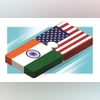 "India US trade deal, interim trade agreement, tariff concessions, US reciprocal tariff, India US bilateral trade, Modi Trump trade pact, Vietnam US trade deal, India trade negotiations, India US tariff deadline, bilateral trade agreement")
Indian markets slumped on Tuesday, wiping out August gains, as investors anticipated fallout from the tariff surge.
Listen to This Article
With US President Donald Trump’s additional 25 per cent tariffs on Indian exports kicking in from August 27, key sectors such as textiles, gems and jewellery, auto parts and pharmaceuticals face heightened risks of shrinking market share.
Earlier today, the Department of Homeland Security released a draft notice, signalling the White House’s intent to move forward with its plan of levying additional tariffs on India.
Last month, Trump imposed a 25 per cent tariff on Indian goods, along with an additional 25 per cent levy on India’s purchases of Russian oil and weapons. The first tranche took effect on August 7. Once the second set of tariffs is implemented, the overall rate will rise to 50 per cent, posing a significant challenge for sectors heavily dependent on the US market.
Sectors already hit by Trump tariffs
Textiles and apparel: Textiles are one of the major exports to the US, with Washington accounting for a third of all exports. Up to three million jobs are at immediate risk in Tamil Nadu alone. The sector employs 7.5 million people in the state.
Gems and jewellery: India exported jewellery worth $9.2 billion to the US in FY24. After the tariffs were imposed, shipments halted, thereby hitting jobs. Gujarat’s diamond industry is facing one of its worst crises in years.
Also Read

 "stock brokers, BSE, NSE, Sensex, Nifty")
 "Stock broker, broker, trader, marker, markets, stock markets, stock, market crash, market fall, loss")
 "U.S. President Donald Trump speaks in the Oval Office accompanied by U.S. Attorney General Pam Bondi, U.S. Vice President JD Vance, U.S. Defense Secretary Pete Hegseth and U.S. Homeland Security Secretary Kristi Noem, during an event to sign an execu")
 "money, financial, cash, rupee")
 "US President Donald Trump")
Seafood: Shrimp exporters were hit hardest, with many fearing losses and order cancellations. According to Marine Products Export Development Authority (MPEDA) data, the US and China remain India's largest seafood markets.
Auto parts: Already under pressure from previous tariffs, but future increases could hurt companies like Tata Motors’ JLR, BM Value like Bharat Forge, and Samvardhana Motherson.
MSMEs: Contribute 45 per cent of India’s exports; most exposed in textiles, diamonds, and chemicals
As reported earlier by Business Standard, India exported $86.5 bn worth of goods to the US in FY24, accounting for 20 per cent of total merchandise exports.
What do the industry experts say?
Textiles: Textile exporters warn that across all product categories, India’s contribution is barely in the single digits. US brands can shift volumes if the tariff issue is not resolved quickly. Industry players believe tariffs will hurt exports, reduce margins, and lead to job cuts and uncertainty in the sector. The industry is demanding an exemption from import duty on cotton, extended collateral-free loans and easier pre- & post-shipment credit.
Gems and jewellery: Industry experts are already asking for relief measures to deal with the tariff blow, including financial support for market diversification, deferment of six months’ interest on working capital, and allowing SEZ units to take domestic processing work.
Auto parts: Auto analysts indicate that the tariff hike could sharply dent India’s price competitiveness, compared to Asian peers like Vietnam and Indonesia, which enjoy lower or preferential trade duties. The US accounts for 27 per cent of India’s auto component exports and 17 per cent of tyre exports.
Seafood: The seafood industry is exploring alternative markets to cushion the impact of higher US tariffs.
Pharma: Indian pharmaceutical companies are brainstorming to weather the tariff storm, even though medicines remain exempt from the US levy for now. Several companies are evaluating mid- and long-term strategies, such as setting up offshore manufacturing, securing raw material from multiple sources, and exploring contract manufacturing options within the US.
According to a report by Global Trade Research Initiative (GTRI), the tariffs are expected to make Indian goods much more costlier in the US, with the potential to cut America-bound exports by 40-50 per cent.
How will listed exporters be affected?
Indian markets slumped on Tuesday, wiping out August gains, as investors anticipated fallout from the tariff surge. Fitch Ratings said that it sees limited direct impact on Indian firms, but warns that if tariffs expand, pharma and other sectors could be exposed. The tariffs will have a sector-specific impact, with chemicals, textiles and gems being at high risk.
How India’s peers are positioned
Trump’s 50 per cent tariff places India among the most heavily taxed US trading partners, far above rivals such as China, Vietnam, and Bangladesh, GTRI noted. Here’s a look at how India’s peers are likely to benefit from a diversion of sales from the US.
Bangladesh: US goods and services trade with Bangladesh totalled an estimated $12.4 billion in 2024, up 3.0 per cent ($360.8 million) from 2023. Bangladesh’s key export to the US is ready-made garments, which account for over 80 per cent of its total exports to Washington. Bangladesh has negotiated a 20 per cent tariff on exports to the US, down from the initial 37 per cent. Dhaka has already overtaken India's second spot in global apparel exports, which it held until 2010.
Vietnam: US trade with Vietnam totalled $155.1 billion in 2024, up 20.5 per cent ($26.4 billion) from 2023. According to Trading Economics, Vietnam is a key partner for exports of electronic equipment, machinery, nuclear reactors, boilers, plastic, and apparel. Vietnam exported electronic equipment worth $42.57 billion and machinery worth $29.21 billion in 2024. Vietnam has agreed to pay a 20 per cent tariff on all goods, and a 40 per cent tariff on any transhipment.
Mexico: Mexico is another potential competitor of India, having an estimated $935.1 billion worth of trade relations with the US in 2024, up 5.5 per cent ($49.0 billion) from 2023.
How is the govt preparing?
Prime Minister Narendra Modi has made it clear that India would not compromise on the interests of its farmers, fishermen or dairy farmers, even if it meant “paying a heavy price”. To soften the impact of the tariffs, the government has been speeding up policy changes to boost consumer confidence and promote economic growth.
One of such changes includes the Goods and Services Tax (GST) overhaul proposed by the PM during his Independence Day address. The government plans to revamp the current GST setup, with rates of nil or zero on essential food items, 5 per cent on daily use products, 12 per cent on standard goods, 18 per cent on electronics and services, and 28 per cent on luxury and sin goods, to have just two main slabs of 5 per cent and 18 per cent.
More From This Section
 "PM Modi, Shigeru Ishiba")
 "India UK TARDE, India, UK, INDIA UK")
 "Sunil Barthwal, commerce secretary")
 "Steel industry, Iron and steel industry")
 "Modi, Narendra Modi, Sitiveni Ligamamada Rabuka, Sitiveni Rabuka, Sitiveni Ligamamada, Sitiveni")
Topics : Trump tariffs US tariffs Trade exports Trade talks India exports trade policy BS Web Reports
Don't miss the most important news and views of the day. Get them on our Telegram channel
First Published: Aug 26 2025 | 2:51 PM IST