


IITs shift to flexible, future-ready curricula amid rapid tech changes
Leading IITs are moving away from decade-long syllabus reviews, introducing interdisciplinary tracks, flexible entry-exit options and hands-on learning to meet NEP 2020 goals
 "IIT Delhi")
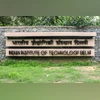
IIT Delhi rolled out a new curriculum across all its branches six months ago, following a review process that began in 2022 | Image: Wikimedia Commons
Listen to This Article
The Indian Institutes of Technology (IITs) are undertaking a major overhaul of their curricula to keep pace with rapidly evolving technology and business needs, according to an Economic Times report. The move also aims to align academic frameworks with the National Education Policy 2020 (NEP 2020), marking a shift towards flexible, future-ready and hands-on learning models across campuses.
Traditionally, IITs reviewed their academic programmes once every decade. However, leading institutes such as IIT Kharagpur and IIT Kanpur are now updating courses far more frequently. “We treat academics like a dynamic software system—continuously updated, continuously tested, continuously improved,” Suman Chakraborty, director of IIT Kharagpur, told Economic Times. He said academic reviews now take place annually, with updates introduced every two to three semesters, compared with the earlier eight-to-ten-year cycle.
AI, sustainability embedded across programmes
The revamped curricula are designed to offer students multiple entry and exit options during a programme, along with the integration of artificial intelligence, sustainability and ethics across disciplines. Attendance norms are being relaxed, while credits are increasingly being awarded for project-based learning, innovation and hands-on work.
Students are being given greater freedom to customise degrees across engineering, sciences, humanities, management and law. New interdisciplinary tracks include combinations such as AI with other disciplines, health technology, energy transition, defence and space, and bio-innovation. IITs are also offering micro-credentials and stackable certifications in emerging fields.
Also Read

 "Smog, Delhi Pollution, Delhi Air Quality, Pollution")
 "H-1B Visa")
 "Wipro")
 "indigo airlines, indigo")
 "Nuclear energy")
“Technology cycles now run faster than academic cycles, and IITs must lead, not follow,” Chakraborty said.
Leading IITs abandon decade-long review cycles
At IIT Kanpur, the pace of curriculum revision has similarly accelerated. Ashoke De, dean of academic affairs, said departments are being encouraged to introduce “special topics” courses that can change every semester, covering areas such as generative AI and quantum computing, without waiting for long review cycles.
IIT Kanpur has also widened access through the Olympiad route, which has emerged as an alternative pathway to JEE Advanced. New academic offerings include applied health economics, climate finance and sustainability, digital governance, business leadership in the digital age, renewable energy and e-mobility, De said.
Meanwhile, IIT Delhi rolled out a new curriculum across all its branches six months ago, following a review process that began in 2022. Dhanya CT, dean of academics, said the revised programmes are more outcome-based, with greater emphasis on team-driven capstone projects, laboratory work, tutorials and project credits. A full overhaul at IIT Delhi, however, continues to be undertaken once every decade due to the institute’s scale.
Multiple entry and exit options rolled out
To reduce academic pressure and improve industry readiness, most IITs have lowered the credit burden for undergraduate students and redesigned courses to emphasise learning by doing. Students can now opt for minor degrees, specialisations, add-on master’s programmes and BTech Honours pathways.
IIT BHU (Varanasi) has implemented multiple entry, exit and re-entry options, alongside the use of NPTEL, online and hybrid courses. Students can exit with a certificate, diploma or degree at different stages, with the option to re-enter up to seven years after admission. A flexible entry-exit policy has been implemented for students admitted from July 2025 onwards.
Newer IITs explore emerging domains
IIT Bombay has launched its “Strategy Plan 2026–2030 & Beyond”, focusing on experiential learning, joint degree programmes with global institutions and the expansion of digital education. Newer institutes such as IIT Mandi are also exploring emerging areas including sustainability, climate technology, cognitive neuroscience and integrative health and wellness.
More From This Section
 "university, college, education, education loan")
 "Michael Spence, president and provost, University College London (UCL)")
 "ICSI CS admit card 2025 released")
 "Bihar DElEd admission 2026")
 "OTET admit card 2025")
Don't miss the most important news and views of the day. Get them on our Telegram channel
First Published: Dec 13 2025 | 10:47 AM IST