


If you think you look older than your age, doctor recommends these changes
National Youth Day: Seeing more patients who look older than their years, a doctor says modern work-life habits are quietly affecting sleep, hormones, metabolism and long-term heart health
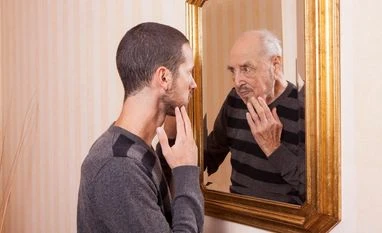 "National Youth Day, healthy ageing")
Subtle daily habits can quietly speed up biological ageing, doctor warns. (Photo: AdobeStock)
Listen to This Article
Tired eyes, sunken skin and body stiffness, if you feel you look older than your age, you are not imagining it.
According to Mumbai-based orthopaedic surgeon and sports medicine specialist Dr Manan Vora, many urban professionals are ageing biologically faster than their chronological age because of daily routines that affect sleep, movement and metabolism, but do not show obvious warning signs early enough.
“I’m shocked when some of my corporate patients tell me their age. They say “32” but they look 52,” he wrote in a recent social media post.
He said that in many cases, before prescribing medicines, he first asks patients to fix six daily habits that are affecting people’s health the most.
1. Late-night phone scrolling and poor sleep
You may think a few minutes on your phone before bed is harmless, but late-night screen exposure suppresses melatonin, the hormone that tells your brain it is time to rest. Over weeks and months, this disrupts your circadian rhythm, the internal clock that regulates sleep, metabolism, immunity and even heart health.
Also Read

 "handwriting benefits brain")
 "Prime Minister Narendra Modi and German Chancellor Friedrich Merz")
 "National Youth Day - health concerns")
 "TCS")
 "Germany")
Poor sleep does not just mean grogginess the next morning. It starts affecting memory, mood, blood sugar control and long-term cardiovascular risk. Hence, the tired look you see on your face. Dr Vora stresses changing this habit as a priority and focusing on fixing sleep.
2. Walking less than 2,000 steps a day
According to Dr Vora, walking fewer than 2,000 steps daily is linked to higher risks of heart disease, diabetes and early mortality, even if you hit the gym a few times a week. Long hours of sitting slow metabolism and weaken insulin sensitivity.
He said it does not help much if you exercise for 45 minutes and stay still for the remaining 15 hours. “So, even if you ‘work out’ occasionally, long hours of inactivity slow metabolism and weaken insulin sensitivity,” he said.
3. Heating food in plastic containers
He highlighted that heating food in plastic containers can release harmful industrial chemicals such as BPA and phthalates, which are known endocrine disruptors, meaning they interfere with hormone signalling in the body.
Repeated exposure has been linked in long-term studies to hormonal imbalance and fertility issues. While the food may still taste fine, the hormones inside your body get disrupted.
4. Sitting for long periods without breaks
Prolonged sitting has emerged as a risk factor in its own right. Dr Vora said that even among people who exercise, long uninterrupted sitting raises cardiovascular risk. Blood sugar regulation worsens, inflammation creeps up and circulation slows. The body simply is not designed to be folded into a chair all day.
Standing up, stretching or walking for even a few minutes every hour can change how your body handles glucose and blood flow over the day.
5. Skipping meals regularly
Skipping meals is often worn as a badge of productivity. However, Dr Vora warns that irregular eating patterns can impair glucose control and cause sharper insulin spikes at the next meal. Over time, this pattern nudges the body towards metabolic dysfunction, even in people who appear slim.
Research shows the human body prefers rhythm. When meals become unpredictable, it responds by becoming metabolically jumpy, which shows up as fatigue, cravings and accelerated ageing.
6. Chronic dehydration and low water intake
Many people do not drink enough water every single day. According to Dr Vora, even mild dehydration can reduce attention, memory and physical performance. Skin looks duller. Energy dips faster. The brain works harder for the same tasks.
Dr Vora stressed that age is not just about the number of years you have lived. It is also shaped by how old your cells, organs and systems behave. According to him, correcting even three of these habits can begin to reverse biological ageing markers and help you start looking and feeling more like your actual age again.
For more health updates, follow #HealthWithBS
This content is for informational purposes only and is not a substitute for professional medical advice.
More From This Section
 "Tilak Verma")
 "Google AI Overviews")
 "bedroom temperature heart health, sleeping")
 "Cancer cells, infection")
 "short videos, Reels, Shorts, TikTok, social media")
Don't miss the most important news and views of the day. Get them on our Telegram channel
First Published: Jan 12 2026 | 5:11 PM IST