


US immigration backlog nears 12 million, deportation risk rises: Report
US immigration backlog: NPR analysis shows growing US immigration delays, with millions waiting months for confirmation, raising risks of losing legal status
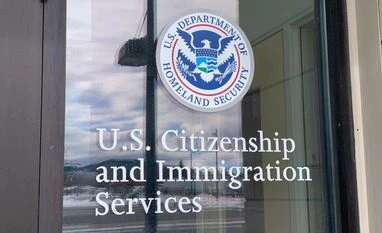 "USCIS")
USCIS growing backlog of immigration application
Listen to This Article
Millions of immigrants are caught in legal limbo as they wait to change their status under the second administration of Donald Trump, an analysis by NPR shows, leaving many at risk of deportation.
Since the start of last year, the Department of Homeland Security has taken longer to process applications. As a result, more people are waiting months without even a confirmation that their application has been received, let alone reviewed.
Data reviewed by NPR from US Citizenship and Immigration Services, the agency responsible for processing immigration applications, shows that nearly 12 million requests are awaiting a decision. These include applications for citizenship, work permits, and permission to live in the United States.
Growing backlog and delays
The number of pending applications has risen sharply, including during the first three months of the current administration. Analysts say this reflects a broader effort to slow legal migration, with delays making it harder for applicants to secure or maintain lawful status.
Immigrants are also struggling to get confirmation that their applications have even been received. Without that acknowledgement, some risk falling out of status and facing deportation.
Also Read

 "national stock exchange, NSE, markets")
 "Heatwaves")
 "Donald Trump")
 "CSR, corporate social responsibility")
 "Donald Trump, Trump")
“That is a really incredible representation of what this administration is trying to do when it comes to immigration. It's ‘throttle everything, focus entirely on deportations and arrests as your measure of success,’” said David Bier, Director of Immigration Studies at the Cato Institute, in a social media post.
“If those are your only measures of success, then who cares about opening applications that could prevent someone from being arrested and prevent someone from having to self-deport?”
What the numbers show
The backlog includes around 11.6 million applications across categories such as citizenship, green cards, work permits, and asylum.
In addition, there are 247,974 applications in what USCIS calls the “frontlog”, tracked separately. These are applications, often submitted by post, that have not yet been opened or assigned to a processing category.
Together, these figures point to delays not just in decision-making but even at the earliest stage of processing.
Why processing has slowed
The slowdown comes as USCIS has taken a stricter approach to enforcing immigration laws over the past year. The administration has argued that slower processing, or halting some applications, is necessary on national security grounds.
At the same time, changes to immigration policy have made legal pathways more difficult, adding to pressure on the system.
“It’s a very tense conversation happening with clients trying to brace for impact,” NPR quoted Luis Cortes Romero, an immigration attorney based in Seattle.
Real-life impact on applicants
Cortes Romero described to NPR how one of his clients had a green card interview cancelled in January due to a paperwork delay, after already waiting a year. The interview has not yet been rescheduled.
Cases like these fall under the “pending” category. Others, in the frontlog, have not yet entered the system for processing.
“Our clients are facing immediate anxiety. The conversations we’re having with clients are like, ‘Did you really send it?’” he said, adding that USCIS does not confirm receipt until applications are opened.
Backlog rises sharply
Pending applications include all cases that have not yet been approved or denied, regardless of when they were filed. According to NPR’s analysis of data since October 2016, this number has more than doubled over the past decade.
The increase has accelerated recently. The backlog rose by 2 million in the first year of the current administration, more than the growth recorded across all four years of Trump’s first term.
Immigration lawyers say the experience varies widely. Some applications move quickly and are approved within months, while others remain unacknowledged for long periods.
Different views on the surge
Elizabeth Jacobs, Director of Regulatory Affairs and Policy at the Center for Immigration Studies, said the rise in backlog may partly reflect the closure of programmes that offered legal status outside USCIS, such as humanitarian parole.
“Processing immigration benefits efficiently is in both the interests of immigrants and this administration with their enforcement priorities because the longer someone has a pending application, not only are they denied those benefits but could be incurring unlawful presence,” she said.
Meanwhile, Sarah Pierce, Director of Social Policy at Third Way, pointed to staffing pressures.
“USCIS lost thousands of employees last year. Its application backlog is at a record high—nearly double its 2020 level. And its Fraud Detection division is larger than ever,” she wrote in a post on X.
Other observers have also raised concerns about how resources are being used.
“With fewer staff and a growing backlog, shifting resources away from adjudication only makes things worse. Legal applicants who followed every rule are paying the price with delays, uncertainty, and job loss,” one social media user wrote.
What is the ‘frontlog’?
The USCIS “frontlog” refers to applications that the agency has received but not yet opened or categorised. It is the earliest stage before formal processing begins.
Congress mandated tracking of this data starting in 2023.
More From This Section
 "Hajj")
 "US visa")
 "finland")
 "EB-5 visa")
 "US green card, US Passport, US immigration")
Topics : US immigration BS Web Reports immigration
Don't miss the most important news and views of the day. Get them on our Telegram channel
First Published: Apr 21 2026 | 10:54 AM IST