


Wellness expert moves SC to declare air pollution national health emergency
Health coach Luke Coutinho has filed a PIL in the Supreme Court seeking urgent action on India's worsening air pollution, citing violations of citizens' right to life and health under Article 21
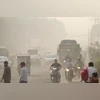 "air pollution, AQI")
The plea states that annual averages of pollutants such as PM2.5 and PM10 in major Indian cities — including Delhi, Mumbai, Kolkata, Chennai, and Bengaluru — remain far above the permissible limits set under the National Ambient Air Quality Standards


Listen to This Article
A public interest litigation (PIL) has been filed before the Supreme Court seeking to declare air pollution across Indian cities a national public health emergency.
The plea, filed by health coach and wellness expert Luke Christopher Coutinho on October 24, argues that the air pollution crisis has reached emergency proportions, violating citizens’ fundamental right to life and health under Article 21 of the Constitution.
The petitioner has named the Centre, Central Pollution Control Board (CPCB), Commission for Air Quality Management (CAQM), several Union ministries, NITI Aayog, and the governments of Delhi, Punjab, Haryana, Uttar Pradesh, Bihar, and Maharashtra as respondents.
Interestingly, current air pollution controls such as the switch to mandatory CNG-based mass public transport and Graded Response Action Plan grew out of similar PILs filed almost four decades ago.
Also Read

 "Vodafone Idea")
 "Supreme Court, SC")
 "Supreme Court, SC")
 "Supreme Court")
What does the PIL highlight about pollution levels?
The plea states that annual averages of pollutants such as PM2.5 and PM10 in major Indian cities — including Delhi, Mumbai, Kolkata, Chennai, and Bengaluru — remain far above the permissible limits set under the National Ambient Air Quality Standards (NAAQS), 2009.
While the national upper limits are 40 µg/m³ for PM2.5 and 60 µg/m³ for PM10, the plea says average concentrations are “extremely high” — 105 µg/m³ in Delhi, 33 in Kolkata, and 90 in Lucknow.
“In practice, annual averages are not only far above national standards but more than 10–20 times the safe limits recommended by the World Health Organization (WHO), placing millions at serious risk of respiratory, cardiovascular, and neurological harm,” the petition notes.
By comparison, the WHO 2021 guidelines set far stricter limits: 5 µg/m³ (annual) and 15 µg/m³ (24-hour) for PM2.5, and 15 µg/m³ (annual) and 45 µg/m³ (24-hour) for PM10.
How does the plea assess India’s clean air plan?
Coutinho contends that the National Clean Air Programme (NCAP), launched in 2019 to reduce particulate matter by 20–30 per cent by 2024 (extended to 40 per cent by 2026), has failed to meet its goals.
“As of July 2025, official data reveal that only 25 of 130 designated cities have achieved a 40 per cent reduction in PM₁₀ levels from the 2017 baseline, while 25 cities have in fact seen an increase,” the plea states.
It also cites government and medical studies showing that around 2.2 million schoolchildren in Delhi have suffered irreversible lung damage.
Are India’s air monitoring systems effective?
The PIL claims that air quality monitoring systems remain inadequate and unreliable. It calls on the apex court to make NCAP targets legally binding with clear timelines, measurable indicators, and penalties for non-compliance.
It further seeks:
- A National Task Force on Air Quality and Public Health led by an independent environmental health expert
- Immediate measures to curb crop residue burning through farmer incentives
- A phased withdrawal of high-emission vehicles
- Expanded e-mobility and public transport infrastructure
How severe is India’s air pollution crisis?
Poor air quality has become a recurring public health threat, with the Air Quality Index (AQI) frequently touching “severe” levels in cities such as Delhi NCR, Lucknow, and Mumbai.
According to the Energy Policy Institute at the University of Chicago (EPIC), Indians lose an average 3.5 years of life expectancy due to particulate pollution — a greater toll than that from malnutrition, tobacco use, or unsafe water and sanitation.
Despite interventions such as the Delhi government’s cloud-seeding initiative, AQI levels in many cities continue to worsen.
How bad is the current air quality?
As per CPCB classification, an AQI between 0–50 is “good”, 51–100 “satisfactory”, 101–200 “moderate”, 201–300 “poor”, 301–400 “very poor”, and 401–500 “severe”.
On Thursday morning, Delhi’s AQI touched 600 at 5:30 am, while neighbouring Noida and Gurugram recorded levels above 500. Lucknow’s air quality worsened post-Diwali to 254, while Kolkata reported several days between 200 and 300 AQI.
The plea argues that without urgent, coordinated national action, India risks normalising these “severe” conditions as seasonal, ignoring their catastrophic impact on public health and fundamental rights.
More From This Section
 "Vande Bharat Express, Vande Bharat")
 "identify thief, hacking, scam, fraud")
 "IMD")
 "Modi, Narendra Modi")
 "IPL 2018, Suresh Raina, Dhoni")
Topics : Air Quality Index Supreme Court air pollution in India Delhi air quality BS Web Reports PIL
Don't miss the most important news and views of the day. Get them on our Telegram channel
First Published: Nov 06 2025 | 9:54 PM IST