


6 years of abrogation of Article 370: Why it matters and what has changed?
Six years after Article 370 was scrapped, debates continue over its impact on J&K's security, development, and political future, with statehood restoration still a key demand on the ground
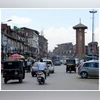 "Lal Chowk, Kashmir, Srinagar")
Article 370 was drafted as a temporary provision under Part XXI, giving J&K autonomy in internal administration and the power to have its own constitution. (Photo/Shutterstock)
Listen to This Article
On August 5, 2019, India’s Parliament witnessed a moment of historic consequence. Home Minister Amit Shah rose in the Rajya Sabha to introduce a resolution to abrogate Jammu and Kashmir (J&K) of its special constitutional status under Article 370.
Moving the resolution, Shah had then said, “There should not be a delay of even a second to remove Article 370 from the Constitution.”
Simultaneously, the government imposed a complete communication blackout in Kashmir — shutting down the internet and telephone services. There was a heavy deployment of security forces, political leaders were detained, and Section 144 was imposed.
Tracing the origins of Article 370
Article 370 originated from the special circumstances after India’s partition in 1947. J&K acceded to India by signing the Instrument of Accession, with Maharaja Hari Singh as ruler. At that time, Sheikh Abdullah was appointed as the head of an interim government. Later, intense discussions between Prime Minister Jawaharlal Nehru and Sheikh Abdullah led to Article 370, which entered the Constitution in October 1949.
Article 370 was drafted as a temporary provision under Part XXI, giving J&K autonomy in internal administration and the power to have its own constitution. A related order, Article 35A — introduced through a 1954 Presidential Order — prohibited outsiders from acquiring property or government jobs in the state, shaping its rules on citizenship and economic opportunity.
Also Read

 "Mallikarjun Kharge, Mallikarjun, Rahul Gandhi, Rahul, congress leader")
 "Parag Jain RAW chief")
 "Salman Khurshid")
 "Salman Khurshid")
 "Farmer, Agriculture")
What changed on August 5, 2019
On August 5, 2019, the government revoked Article 370 through a Presidential order and reorganised the state. J&K was split into two Union Territories (UTs): J&K (with legislature) and Ladakh (without legislature), effective October 31, 2019.
The region was put under a strict security lockdown, with leaders from major political parties detained and communication suspended. As J&K was under President’s Rule, the Centre acted through the Governor in the absence of an elected Assembly.
Govt’s justification for abrogation of Article 370
The union government justified the act on several grounds:
• Security: To curb terrorism and separatism that plagued the valley.
• The government believed Article 370 hindered Jammu and Kashmir’s integration with the rest of India and limited its development.
• Supporters argued its abrogation would promote socio-economic development.
• They said it would help ensure equal rights and opportunities for the people of the region.
• Better governance was another expected benefit cited by supporters.
• The move was also seen as a way to apply national laws and programs that were earlier not fully enforceable in Jammu and Kashmir.
Reactions and political fallout of the decision
• Domestic: The ruling BJP and its allies celebrated the move as “historic”, while Congress, National Conference (NC), People’s Democratic Party (PDP), and Left parties called it undemocratic.
• International: Pakistan immediately condemned the move, calling it illegal and a violation of United Nations Security Council resolutions. The country argued that India's actions had “no legal value” under international law, and insisted that Kashmir is an internationally recognised dispute, whose final status should be determined in accordance with UN resolutions and the wishes of the Kashmiri people.
China expressed its “serious concern”, particularly regarding the reorganisation of Ladakh as a Union Territory, saying that it undermined China’s territorial sovereignty claims over parts of Ladakh.
Legal challenges to abrogation of Article 370
Over 20 petitions challenged the Centre’s move in the Supreme Court, raising critical questions: Can Article 370 be removed unilaterally by Parliament? Is the process under the President's Rule constitutional? The matter went to a five-judge Constitution Bench, which ultimately upheld the abrogation in December 2023, calling Article 370 a temporary provision.
On the ground: What has changed?
There have been both positive and negative developments. While the government claims improved law and order, incidents like targeted attacks in Pahalgam highlight ongoing security concerns.
However, Jammu and Kashmir Chief Minister Omar Abdullah has said that the region’s infrastructure development is not connected to the abrogation of Article 370 on August 5, 2019. Speaking to India Today TV, he urged people not to politicise development, adding, “Let’s not link the infrastructure projects in Jammu and Kashmir to the politics surrounding Article 370.”
He clarified that these initiatives were planned earlier and would have progressed regardless of the constitutional change. On security, Abdullah acknowledged a drop in terrorism and stone-pelting but attributed it partly to strict government actions, which he said, “go against the principles of natural justice".
The road ahead for J&K
Restoration of J&K’s statehood remains a major demand. The Modi government has promised to restore it “at the right time”, but petitions in the Supreme Court urge faster action for statehood restoration, emphasising the need to uphold federal principles.
Article 370’s abrogation marked a turning point in India’s constitutional history, with its full impact still unfolding across J&K.
More From This Section
 "Ram Rahim Singh, Ram Rahim, Ram, Gurmeet")
 "strike, workers strike")
 "Security, Manipur Security")
 "Red Fort, Independence Day")
 "Fire, Fire accident")
Topics : Article 370 Amit Shah Omar Abdullah Jammu and Kashmir Centre Jammu and Kashmir politics BS Web Reports BJP Congress Decoded Explained
Don't miss the most important news and views of the day. Get them on our Telegram channel
First Published: Aug 05 2025 | 10:08 AM IST