


'Ghost' litigant, phantom lawyers, and fake deal: SC duped in land dispute
A fake respondent, forged compromise, and mystery lawyers led the Supreme Court to quash real orders-until the true party exposed the fraud
 "SC, Supreme Court")
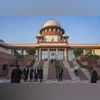
The Supreme Court slammed the fraud, warning the court can't be taken for a ride, and ordered a probe with a possible FIR.


Listen to This Article
The Supreme Court was allegedly misled into delivering a favourable verdict based on a fake settlement in a land dispute case—thanks to a "ghost" litigant, mystery lawyers, and a forged compromise agreement, reported The Times of India.
According to the report, a man from Muzaffarpur in Bihar discovered that a verdict had been passed in his name without his knowledge. The Supreme Court had quashed earlier orders of a Muzaffarpur trial court and the Patna High Court, based on an alleged compromise between the petitioner and the respondent.
But five months after the judgment, the real respondent appeared before the court and revealed a truth: he had never agreed to any compromise, nor had he hired a lawyer to represent him before the apex court.
A bench of Justices PS Narasimha and Joymalya Bagchi expressed strong disapproval of the deception. “The court cannot be taken for a ride,” the bench said, directing the Supreme Court registry to conduct an inquiry and submit a report within three weeks. The bench also said that an FIR would be ordered if necessary.
A carefully orchestrated fraud
The December order of the Supreme Court had relied heavily on a 'compromise agreement' allegedly submitted by the parties. Court records from that day list four lawyers, including advocate-on-record (AOR) JM Khanna and his daughter Shefali Khanna, as having appeared on behalf of the fake respondent.
Also Read

 "BR gavai")
 "Justice Yashwant Varma")
 "Supreme Court, SC")
 "Lawyer, Supreme Court")
 "Sanjiv Khanna, Sanjiv, New CJI")
The trick went a step further when a caveat—filed in the name of the fake respondent—prevented the court from issuing a notice. This move effectively kept the real respondent in the dark about the ongoing case.
It wasn’t until the real respondent’s son-in-law happened to see the Supreme Court judgment online that the fraud was uncovered. Alarmed, the family approached the apex court through advocates Gyanant Singh and Abhisek Rai.
“The order was obtained by means of fraud, deception, and calculated suppression of truth,” Singh and Rai told the bench, urging the court to recall its earlier judgment.
Mysterious appearances in court
Adding to the confusion, a lawyer appearing for JM Khanna informed the bench that the senior lawyer, now 80 years old, had not practised law for several years and had no idea how his name came up in the case. Shefali Khanna, his daughter, also denied appearing in court or handling the matter.
The respondent, in his submission, stated, “The petitioner has not only acted in violation of legal and ethical norms but has also committed a fraud upon this court, which, if not rectified, will embolden such mala fide litigants to continue their deceitful practices.”
Agreeing with the plea, the bench withdrew the December order and ordered a detailed investigation into how the court was misled so systematically.
More From This Section
 "Omar Abdullah, Omar")
 "Paradip Port")
 "Ajay Kumar")
 "Confederation of Nagaland Chamber of Commerce and Industry (CNCCI)")
 "Ashwini Vaishnaw, Ashwini, Vaishnaw")
Topics : Supreme Court Land deal scam BS Web Reports
Don't miss the most important news and views of the day. Get them on our Telegram channel
First Published: May 14 2025 | 2:24 PM IST