


Tamil Nadu Governor withholding bills passed by Assembly 'illegal': SC
The Supreme Court said that Tamil Nadu Governor's move to reserve 10 bills for President's assent 'illegal and arbitrary;' says bills are deemed cleared from date they were re-presented to Governor
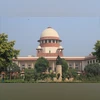 "Supreme Court, SC")
The Bench, comprising Justices JB Pardiwala and R Mahadevan, concluded that the Governor acted in bad faith. (Photo: Shutterstock)
Listen to This Article
In a big win for the Tamil Nadu government, the Supreme Court on Tuesday stated that the state Governor's decision to reserve 10 bills for the President's assent is "illegal" and liable to be set aside, LiveLaw reported. The court also noted that Governor RN Ravi acted in "bad faith."
In October 2023, the DMK-led government in Tamil Nadu moved the Supreme Court against Governor RN Ravi, alleging that he has unreasonably delayed or failed to act on numerous bills passed by the state legislative assembly. The Bench, comprising Justices JB Pardiwala and R Mahadevan, noted that after keeping the bills pending for an extended period, the Governor chose to refer them to the President shortly after the Supreme Court’s ruling in the Punjab Governor case, which clarified that Governors are not permitted to indefinitely delay action on bills.
The top court also ruled that any subsequent actions taken by the President concerning the 10 bills in question hold "no legal validity." It further held that the 10 bills should be considered as having received the Governor’s assent on the date they were re-submitted after being passed again by the Tamil Nadu Legislative Assembly.
Justice Pardiwala said the Constitution does not allow for an "absolute veto" or a "pocket veto." Referring to Article 200 of the Constitution, the court explained that a Governor must either assent to a bill, withhold assent, or reserve it for the President — but this reservation must happen at the initial stage.
"As a general rule, it is not open for the Governor to reserve a Bill for the President after the bills have been re-presented by the Government after being passed again by the Assembly. The only exception is when the bill presented in the second round is different from the first version," Justice Pardiwala said.
Stalin hails SC judgment
Chief Minister M K Stalin expressed strong support for the Supreme Court's ruling concerning Governor R N Ravi's delay in granting assent to bills passed by the state Assembly, describing the judgment as "historic" and a win for all state governments.
"The Constitution mandates Governor to approve the bills once adopted for the second time but he didn't... he was also delaying..." Stalin said, as quoted by news agency PTI.
Also Read

 "West Bengal Chief Minister Mamata Banerjee")
 "Supreme Court, SC")
 "Mamata Banerjee, Mamata")
 "Supreme Court")
 "Sanjiv Khanna, Sanjiv, New CJI")
He added that the apex court had upheld the state's rightful arguments and concluded that "it has to be considered as the Governor having given his assent and gave the historic verdict".
"This verdict is a victory not just for Tamil Nadu but all state governments in India," Stalin added.
Tamil Nadu govt vs Governor
The conflict between the Tamil Nadu government, led by the DMK, and Governor RN Ravi stems from delays and perceived overreach in clearing state legislation. The dispute revolves around 12 bills, many related to reducing the Governor's role in state university governance, which were sent to him between 2020 and 2023.
Governor RN Ravi has withheld assent to several bills passed by the Tamil Nadu Assembly, including significant legislation such as the abolition of NEET for medical admissions and regulations on online gambling. The DMK government accused him of deliberately delaying these bills, undermining democratic processes, and stalling governance.
In November 2023, Ravi returned ten bills to the Assembly without providing substantive reasons. This action was criticised by CM MK Stalin as unconstitutional and an affront to elected representatives. The Assembly subsequently readopted these bills and sent them back to the Governor for assent.
The Governor also reserved several bills for the President's consideration under Article 200 of the Constitution. This move was challenged by the Tamil Nadu government in the Supreme Court, which questioned whether a Governor could reserve bills after withholding assent.
Beyond legislative matters, Ravi has been accused of interfering in administrative decisions, such as dismissing jailed minister Senthil Balaji without consulting CM Stalin. He also made controversial remarks suggesting that Tamil Nadu should be renamed "Thamizhagam," further straining relations with the DMK.
Why Tamil Nadu moved the Supreme Court
The Tamil Nadu government filed a writ petition under Article 32 of the Constitution against Governor RN Ravi, citing his failure to comply with constitutional mandates. The petition highlighted delays in clearing bills, signing remission orders, approving recruitment policies, and granting prosecution sanctions for corruption cases. It argued that these actions amounted to a "malafide exercise of power" and created an adversarial relationship between the Governor and the state administration.
More From This Section
 "Supreme Court, SC")
 "Jalandhar blast")
 "indigo airlines, indigo")
 "heat waves, heat wave, summer, hot, heat")
 "Pollution, India Pollution")
Topics : Supreme Court BS Web Reports Tamil Nadu
Don't miss the most important news and views of the day. Get them on our Telegram channel
First Published: Apr 08 2025 | 10:58 AM IST