


Timeline: How Rajasthan became India's top solar hub in just a decade
From Bhadla to hybrid plants, Rajasthan's solar journey over the past decade shows how policy, investment, and geography turned it into India's clean energy leader
 "Energy, Solar energy, Wind Energy")
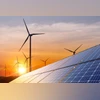
With great policy support, billions in investment, and overwhelming geography, Rajasthan has vastly climbed to the top of India's renewable energy map. (Photo: Shutterstock)
Listen to This Article
A decade ago, Rajasthan’s vast desert stretches, scorching in the day and freezing at night, were seen as empty, unforgiving land, hostile to most forms of development. Today, those same empty plains sparkle with millions of solar panels, making the Thar one of the most powerful clean energy engines in the world. From the dusty villages of Jodhpur to the futuristic sprawl of Bhadla, the state has dramatically transformed–no one could have seen that coming.
With great policy support, billions in investment, and overwhelming geography, Rajasthan has vastly climbed to the top of India's renewable energy map. What once was a story of survival in the desert has become one of scale, ambition, and leadership in the race to a low-carbon future. Here is how the journey unfolded.
The journey of solar power production over a decade
The foundation for Rajasthan’s solar success was laid in December 2014, when the Centre launched the Solar Parks and Ultra Mega Solar Power Projects Scheme. Rajasthan was among the earliest states to sign up, with Bhadla identified as the flagship site for large-scale development. Just a few years later, in 2017, the Bhadla Solar Park in Jodhpur district began to take shape, attracting major developers such as ACME, Adani, and Hero Future Energies through Solar Energy Corporation of India Limited (SECI) auctions.
The same year proved decisive for India’s tariff story as well. In May 2017, Bhadla’s competitive auctions discovered a record-low solar tariff of ₹ 2.44 per unit, a benchmark that redefined expectations for solar pricing nationwide and continued to shape auctions through 2018. By 2020, Rajasthan’s installed solar capacity had grown to about 5.1 GW, a figure that positioned it for the surge to follow.
That surge came between 2021 and 2022, when Rajasthan added capacity on an unprecedented scale. In 2022 alone, the state brought online 6.7 GW of new solar and wind power, about 43 per cent of all renewable capacity added in India that year. By June 2022, Rajasthan’s large-scale solar had already reached close to 13 GW, thanks largely to central auctions conducted by SECI.
Also Read

 "Ukrainian President Volodymyr Zelenskyy and US President Donald Trump")
 "Donald Trump, Zelenskyy")
 "US President Donald Trump greets Ukrainian President Volodymyr Zelenskyy in the Oval Office on Monday")
 "Ukrainian President Volodymyr Zelenskyy and US President Donald Trump")
 "Telecom")
The growth story soon began drawing global capital. In 2023, funds such as Brookfield poured money, financing projects in Rajasthan through a ₹3,380-crore pool. Masdar, the Abu Dhabi-based developer, tied up with Hero Future Energies on a 2.2 GW India platform, with 1.5 GW of that capacity linked to projects in Rajasthan and Haryana. Indian companies like ReNew were also continuing to create their presence across the solar clusters in the state.
By early 2024, Rajasthan is estimated to be above 20 GW, even tracker companies placing its operational solar base above 21 GW, and this is a lead which none of the other states can match. This trend continued till mid-2025, and official MNRE data demonstrated that Rajasthan had achieved 32.32 GW of solar capacity by July 31. Not only does this establish Rajasthan as India’s undisputed leader in renewables, but it also calls itself home to the world’s largest solar park in Bhadla at 2,245 MW installed capacity.
Why Rajasthan leads in solar power production
Rajasthan’s dominance in solar energy is rooted in its geography, policy, and scale. The state enjoys consistently high solar irradiation of around 5.5-6.5 kWh/m²/day, coupled with vast stretches of arid land across its western districts that are ideally suited for gigawatt-scale solar parks. The early decision to participate in the Centre’s Solar Park Scheme gave Rajasthan a head start, while a clear state framework for aggregating land and setting up park-specific special purpose vehicles reduced developer risk and shortened project timelines.
Scale has also been central to Rajasthan’s rise. The Bhadla Solar Park, spread across about 56 square kilometers and was developed in multiple phases starting from 2015, became the world’s largest single solar park with an installed capacity of 2,245 MW and a showcase of pooled land, ready infrastructure such as roads and pooling stations, and competitive auctions that pushed tariffs to record lows of under ₹2.50 per kWh.
Alongside this, investments in transmission under the Green Energy Corridor ensured that power could be evacuated both within and outside the state. Phase II of the corridor, approved in January 2022, is on track for commissioning by March 2026, promising even greater grid flexibility.
What’s next for renewable energy in Rajasthan
Rajasthan's clean energy journey is expanding beyond solar parks and is being taken one step further. The Centre's National Green Hydrogen Mission has already named the state one of two (the other being Ladakh) leading candidates for large-scale hydrogen production in the country. The rationale is simple and logical - Rajasthan has available land and substantial solar potential, making it a suitable area for electrolyser-based projects, resulting in competitively priced green hydrogen.
Additionally, the next wave of hybrid projects that integrate solar, wind, and storage technologies is being accommodated with additional transmission corridors under Green Energy Corridor-II. With over 32 GW of solar installed already, the state should comfortably remain India's top state for solar throughout this decade, which is key for the 500 GW renewable energy commitment by 2030, with hybrid parks and larger storage projects leading the next wave of growth.
More From This Section
 "Narendra Modi, cabinet meeting")
 "Chikungunya, dengue, malaria sting New Delhi; over 1,700 people affected")
 "Nirmala Sitharaman")
 "Floods")
 "PM Modi meets astronaut Shubhanshu Shukla | Photo: X/ @DDNewslive")
Topics : BS Web Reports India's solar energy solar power projects solar plant solar parks solar project
Don't miss the most important news and views of the day. Get them on our Telegram channel
First Published: Aug 19 2025 | 12:54 AM IST