


Explained: Flash floods, cloudbursts and how they trigger deadly disasters
Flash floods and cloudbursts are sudden and destructive but not the same; here's how they differ from regular floods, landslides, and mudslides across India
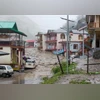 "flash flood, cloudburst, uttarkashi")
Flash floods are among the most sudden and serious forms of natural disasters (Photo/PTI)
Listen to This Article
A cloudburst led to flash floods in the high altitude villages of Uttarkashi, killing four people. At least 60 people are reportedly missing, but the number is likely higher.
Flash floods are among the most sudden and serious forms of natural disasters. They can occur with minimal warning and cause severe damage within a short span. In areas with heavy rain or narrow rivers, land can quickly transform into raging torrents, tearing apart roads, destroying homes, and claiming lives.
What is a flash flood?
A flash flood occurs when an overwhelming quantity of water rushes into an area over a very short time — often within minutes or hours of intense rainfall. In some cases, they are triggered by sudden dam breaches or obstructions in rivers giving way.
Unlike regular floods that rise gradually, flash floods strike swiftly and with force. Water levels can rise in under 30 minutes, catching people off guard and leaving little time to evacuate.
Also Read

 "Ethanol")
 "Lal Chowk, Kashmir, Srinagar")
 "bad loans")
 "The government will consider allowing higher fines on banks for not complying with regulatory guidelines amid concerns that the current penalty amounts may not act as effective deterrents for large organisations or repeat offenders. The Centre is op")
Examples of devastation
In 2018, a flash flood in Majorca, Spain, turned streets into rivers within an hour, killing more than a dozen people. Similarly, the 2021 floods in Germany washed away entire villages after days of relentless rain overwhelmed rivers and reservoirs.
India has seen several tragic instances too — most notably the 2013 Uttarakhand disaster where flash floods, triggered by melting glaciers and torrential rain, left thousands dead or missing.
What is a cloudburst?
A cloudburst refers to an extreme amount of rain falling in a very short duration over a limited geographical area, typically less than 20-25 kilometres. The India Meteorological Department (IMD) defines a cloudburst as rainfall exceeding 100 mm per hour over a small region.
Cloudbursts often occur in mountainous regions like Himachal Pradesh, Uttarakhand, or Jammu and Kashmir due to orographic lift — when moist air rises rapidly due to terrain and cools quickly, releasing massive rainfall.
While cloudbursts can trigger flash floods, especially in hilly terrain, they are not the same. A cloudburst refers to the rainfall event, while a flash flood refers to the result — the sudden overflow of water. One can occur without the other.
Flash floods vs regular floods
Traditional floods occur when rivers overflow over time, typically after sustained rainfall. These develop gradually, giving people time to prepare or evacuate.
Flash floods, in contrast, can form suddenly in narrow valleys, dry riverbeds, or even city streets, and may affect just one neighbourhood while sparing nearby areas. Their unpredictability and speed make them more lethal than slow-onset floods.
Impact on cities vs rural areas
In cities, paved surfaces prevent water from soaking into the ground. During heavy rain, water runs off rapidly into drainage systems, which may overflow if not designed to handle the load. Mumbai’s 2005 flood — nearly a metre of rain in one day — caused mass fatalities and paralysed the city.
In rural areas, flash floods can wash away fields, cut off roads and bridges, and isolate entire villages. The 2013 Uttarakhand floods remain one of India’s most catastrophic examples.
Landslides and mudslides: Not the same as flash floods
Landslides and mudslides involve the movement of earth, not just water. They are triggered when water-saturated soil loses stability on slopes, leading to the downward movement of rocks, debris, and mud.
- A landslide is the collapse of dry or wet earth and rock down a slope.
- A mudslide involves fast-flowing rivers of mud, often triggered after heavy rains.
Flash floods involve the rapid movement of water, not earth. However, the two can co-occur. For instance, a landslide may block a stream and create a temporary dam. When that dam breaks, the sudden release of water can lead to a flash flood.
Why flash floods and cloudbursts are dangerous
Are they predictable or preventable?
Cloudbursts are challenging to predict due to their hyper-local nature, but meteorologists use the following tools:
- Radar and satellite data to track storms
- Computer models to simulate rainfall and flooding
- Flash Flood Guidance Systems (FFGS), combining ground and rain data to issue alerts
However, forecasting alone isn’t enough. Mitigation depends on urban planning, public awareness, and community-level preparedness.
Steps to reduce the impact
- Design flood-resilient drainage systems in cities
- Ban construction in vulnerable floodplains
- Clear riverbeds of debris and encroachments
- Educate people on warning signs and emergency responses
In rural India, traditional knowledge is often key. In flood-prone regions, stilt homes, monsoon stockpiling, and observing animal behaviour remain vital early warning cues.
More From This Section
 "Zafar Ali, Jama Masjid president")
 "Traffic jam, Traffic")
 "Sexual harassment, harassment")
 "S Jaishankar, Jaishankar")
 "New zealand, New Zealand flag")
Don't miss the most important news and views of the day. Get them on our Telegram channel
First Published: Aug 06 2025 | 10:16 AM IST